
#Product Trends
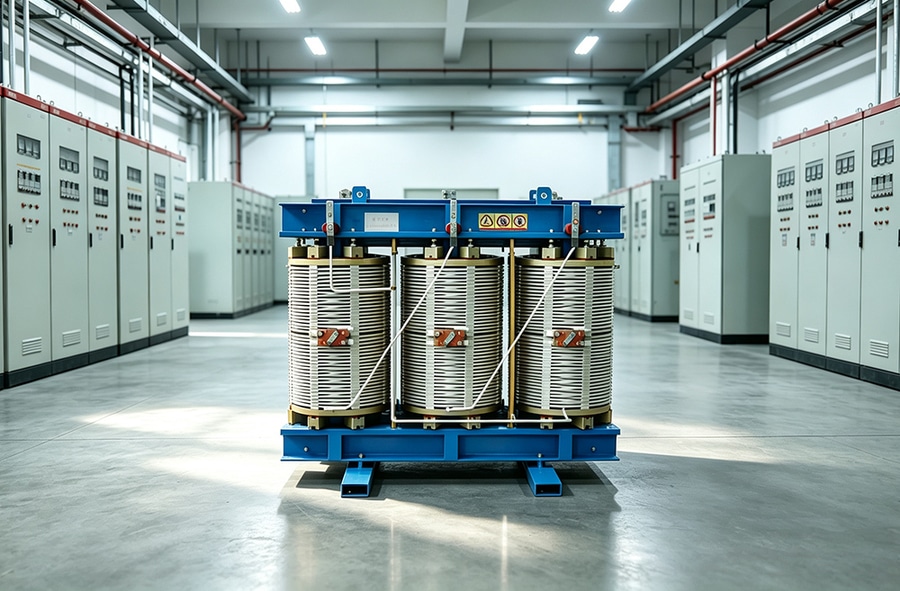
Vacuum Pressure Impregnated (VPI) Dry Type Transformer improved for fire safety, low maintenance, and efficient cooling
VPI Dry Type Transformer
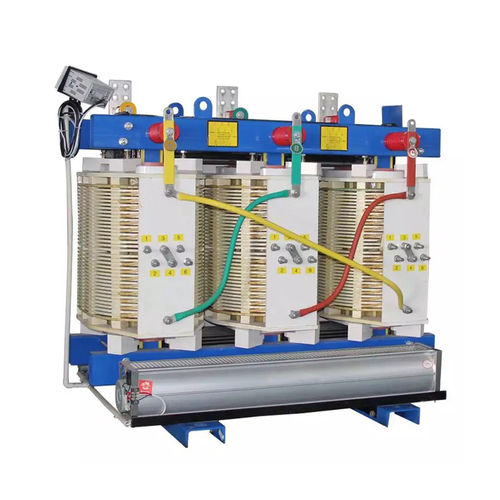
Vacuum Pressure Impregnated (VPI) Dry Type Transformer is a dry-type transformer in which the windings are impregnated with insulating polyester or epoxy varnish under vacuum and pressure, then cured in an oven. Unlike cast resin transformers, the windings are not fully encapsulated in solid epoxy resin, resulting in better heat dissipation, lighter weight, and improved overload capability.
VPI transformers are widely used in commercial buildings, industrial facilities, power plants, renewable energy systems, marine applications, and indoor substations where fire safety, low maintenance, and efficient cooling are important.
Construction
Magnetic Core
·Cold-Rolled Grain-Oriented (CRGO) silicon steel core
·Step-lap core construction to reduce no-load losses and noise
·Optional amorphous alloy core for higher efficiency
High-Voltage Windings
·Copper or aluminum conductors
·Vacuum pressure impregnated with high-grade insulating varnish
·Multiple impregnation and curing cycles for enhanced dielectric strength
·Excellent resistance to thermal stress and vibration
Low-Voltage Windings
·Copper or aluminum foil/strip windings
·Vacuum pressure impregnated or resin-coated
·High mechanical strength for short-circuit withstand
Insulation System
·Class F (155°C) or Class H (180°C)
·Moisture-resistant insulating varnish
·High dielectric strength
·Self-extinguishing insulation materials
Cooling
·AN (Air Natural) for standard operation
·AF (Air Forced) with cooling fans, increasing capacity by approximately 25–40%
Manufacturing Process
·Windings are manufactured and dried to remove moisture.
·Windings are placed in a vacuum chamber.
·Air and moisture are removed under deep vacuum.
·Insulating varnish is introduced under vacuum.
·Pressure is applied to force varnish deep into the insulation.
·Windings are baked in an oven to cure the varnish.
·The impregnation and curing process may be repeated for improved insulation quality.
Typical Technical Specifications
·Rated Power: 50 kVA – 30 MVA
·Primary Voltage: Up to 36 kV (special designs up to 72.5 kV)
·Secondary Voltage: 400 V, 415 V, 690 V, 3.3 kV, 6.6 kV, 11 kV
·Frequency: 50 Hz / 60 Hz
·Cooling Method: AN / AF
·Insulation Class: F or H
·Protection Degree: IP00, IP23, IP31, IP44, IP54 (with enclosure)
·Vector Group: Dyn11, Dyn5, Yyn0, etc.
·Impedance: Typically 4–10%
·Temperature Rise: 80 K or 100 K
·Noise Level: Typically 45–65 dB
Advantages
·No insulating oil, eliminating the risk of oil leaks
·Lower fire risk than oil-filled transformers
·Better heat dissipation than cast resin designs
·Higher short-term overload capability
·Lighter weight
·Lower initial cost than cast resin transformers
·Good resistance to vibration and thermal cycling
·Low maintenance requirements
·Suitable for indoor installations
Limitations
·Lower resistance to moisture, dust, and corrosive environments than cast resin transformers
·Windings are exposed rather than fully encapsulated
·May require periodic cleaning in dusty or contaminated locations
·Less suitable for environments with high humidity, salt spray, or chemical contamination
Typical Applications
·Industrial manufacturing plants
·Commercial buildings
·Office complexes
·Hospitals
·Universities
·Power generation facilities
·Renewable energy plants (solar and wind)
·Marine and offshore installations
·Mining operations
·Data centers (where environmental conditions are controlled)
·Indoor substations
Applicable Standards
Common international standards include:
·IEC 60076 – Power Transformers
·IEC 60076-11 – Dry-Type Transformers
·IEEE C57.12.01 – General Requirements for Dry-Type Distribution and Power Transformers
·IEEE C57.12.91 – Test Code for Dry-Type Distribution and Power Transformers
·ANSI requirements where applicable
Typical Ratings
·Distribution Transformers: 100 kVA to 5 MVA
·Industrial Transformers: 5 MVA to 20 MVA
·Large Dry-Type Power Transformers: Up to approximately 30 MVA and 36 kV (higher ratings are available as custom-engineered solutions)
Selection Guidance
·Hospitals, tunnels, airports: Cast Resin (CRT)
·High humidity or coastal environments: Cast Resin (CRT)
·Dusty or chemically aggressive environments: Cast Resin (CRT)
·Clean industrial plants: VPI
·Commercial buildings : VPI or CRT
·Data centers: VPI or CRT, depending on environmental conditions
·Marine installations: VPI (with protective coatings) or CRT for harsher conditions
Summary
A Vacuum Pressure Impregnated (VPI) Dry Type Transformer offers an excellent balance of performance, cost, cooling efficiency, and reliability. It is particularly well suited to clean, controlled indoor environments where its superior heat dissipation and overload capability can be fully utilized. For humid, dusty, or corrosive environments, an Epoxy Resin Cast (CRT) Dry Type Transformer is generally the preferred choice because its encapsulated windings provide greater protection against environmental contaminants.