
#Product Trends
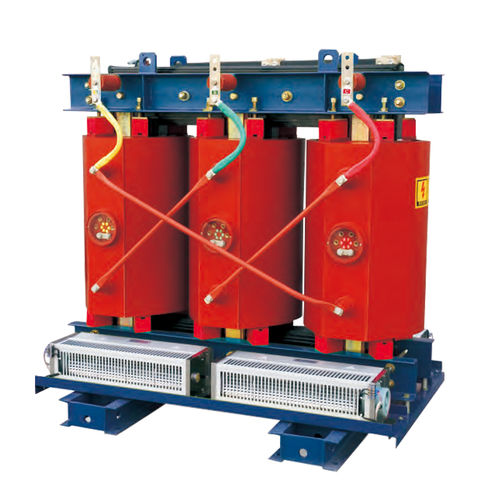
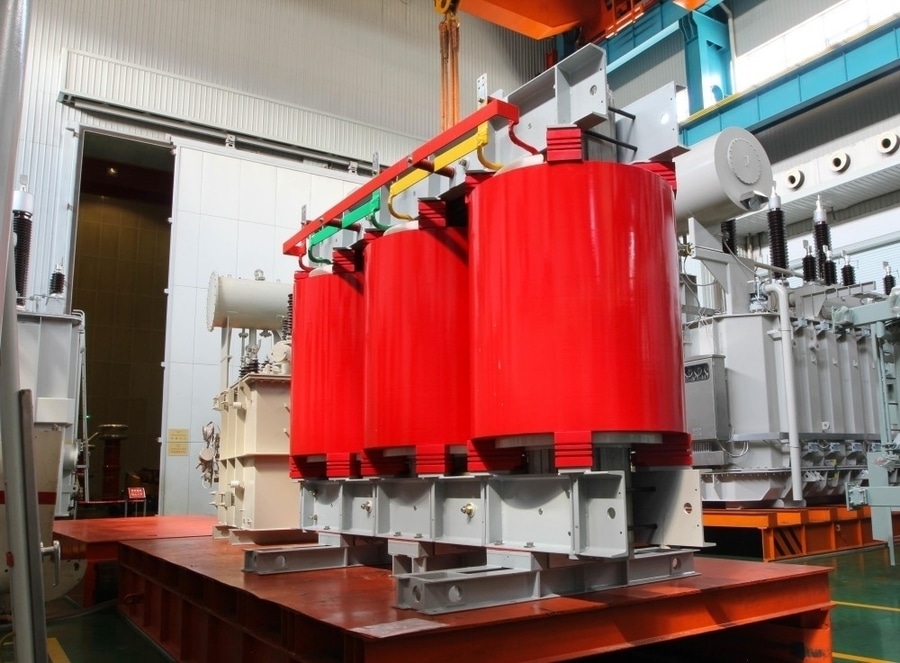
Epoxy Resin Cast (CRT) Dry Type Transformer the best solution for where fire safety, environmental protection, minimal maintenance, and reliable operation in humid
Coil Casting Dry Type Transformer
Epoxy Resin Cast (CRT) Dry Type Transformer, also known as a Cast Resin Transformer, is a dry-type transformer in which the high-voltage (HV) windings are encapsulated in epoxy resin under vacuum, while the low-voltage (LV) windings are typically vacuum-pressure impregnated (VPI) or resin-coated. Because the windings are completely enclosed in solid insulation, no insulating oil is required, making CRT transformers a popular choice for indoor installations where fire safety and environmental protection are priorities.
Construction
Magnetic Core
·High-quality cold-rolled grain-oriented (CRGO) silicon steel or amorphous alloy core
·Step-lap core construction to reduce losses and noise
·Low vibration design
High-Voltage Windings
·Copper or aluminum conductors
·Vacuum-cast in epoxy resin
·Excellent mechanical strength
·Resistant to moisture, dust, and contaminants
Low-Voltage Windings
·Copper or aluminum foil or strip windings
·Vacuum-pressure impregnated or resin coated
·High short-circuit withstand capability
Insulation System
·Class F (155°C) or Class H (180°C)
·Self-extinguishing epoxy resin
·Excellent dielectric strength
·High resistance to thermal aging
Cooling
·AN (Air Natural) for standard operation
·AF (Air Forced) with cooling fans to increase capacity by approximately 25–40%
Typical Technical Specifications
·Rated Power: 50 kVA – 25 MVA
·Primary Voltage: Up to 36 kV (special designs up to 52 kV)
·Secondary Voltage: 400 V, 415 V, 690 V, 3.3 kV, 6.6 kV, 11 kV
·Frequency: 50 Hz / 60 Hz
·Vector Group: Dyn11, Dyn5, Yyn0, etc.
·Cooling Method: AN / AF
·Insulation Class: F or H
·Protection Degree: IP00, IP23, IP31, IP44, IP54 (with enclosure)
·Impedance: Typically 4–10%
·Temperature Rise: 80 K or 100 K
·Noise Level: Typically 45–65 dB
Advantages
·No insulating oil, eliminating the risk of oil leaks
·High fire safety due to self-extinguishing epoxy insulation
·Low maintenance requirements
·Suitable for indoor installation
·Excellent moisture and humidity resistance
·High mechanical strength and short-circuit withstand capability
·Environmentally friendly with no oil contamination risk
·Compact footprint
·High reliability and long service life (typically 25–30 years with proper maintenance)
Limitations
·Higher initial cost than oil-immersed transformers
·Lower overload capability because air cooling is less effective than oil cooling
·More difficult to repair if resin-encapsulated windings are damaged
·Generally limited to medium-voltage applications
Typical Applications
·Commercial buildings
·Hospitals
·Airports
·Data centers
·High-rise buildings
·Shopping malls
·Metro and railway stations
·Tunnels
·Offshore platforms
·Renewable energy facilities (solar and wind)
·Industrial plants
·Chemical and petrochemical facilities
Applicable Standards
Common international standards include:
·IEC 60076 (Power Transformers)
·IEC 60076-11 (Dry-Type Transformers)
·IEEE C57.12.01 (General Requirements for Dry-Type Distribution and Power Transformers)
·IEEE C57.12.91 (Test Code for Dry-Type Distribution and Power Transformers)
·ANSI requirements where applicable
Typical Ratings
·Distribution: 100 kVA to 3,000 kVA
·Industrial: 2.5 MVA to 10 MVA
·Large Dry-Type Power Transformers: Up to approximately 25 MVA and 36 kV (higher ratings are available as custom designs)
Epoxy Resin Cast (CRT) dry-type transformers are widely selected where fire safety, environmental protection, minimal maintenance, and reliable operation in humid or contaminated environments are critical. They are commonly used in commercial, industrial, and infrastructure projects where oil-filled transformers are impractical or undesirable.