#Product Trends
How to Create a Control Sample for Package Integrity Testing | ASTM F2096
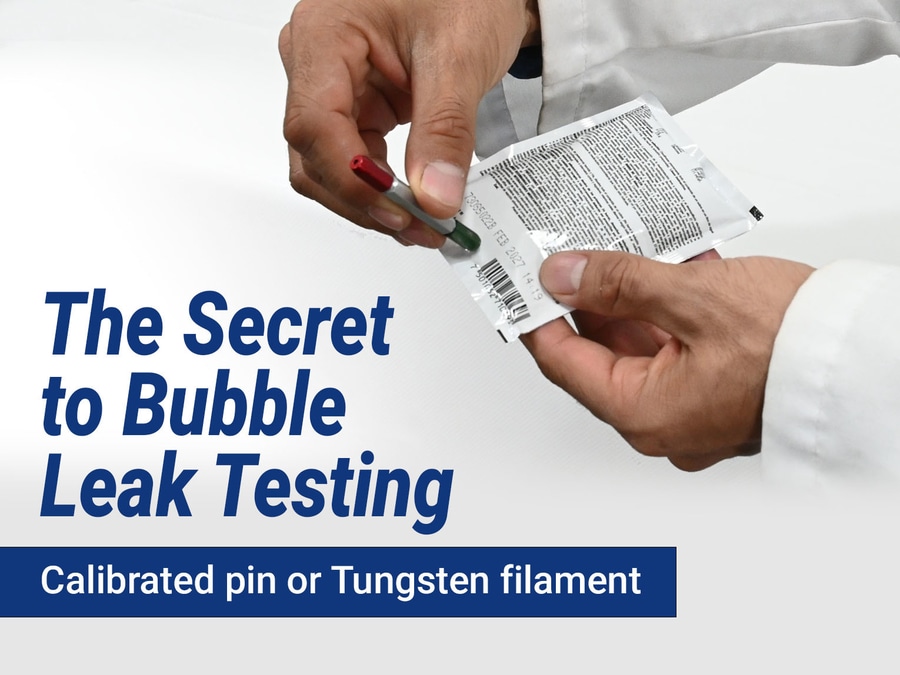
Calibrated Pin or Tungten Filament: The secret to bubble testing.
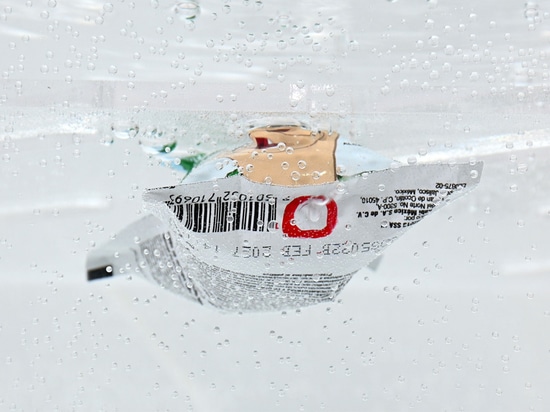
Have you ever wondered whether a bubble in your leak integrity test is a real leak or simply test noise?
The most reliable way to answer these questions is with something called a Control Sample: a package with a perfectly known leak, used to calibrate your test, confirm that your parameters are correct, and avoid misinterpreting false positives.
What a Control Sample is and what it is used for?
A Control Sample is a package with a perfectly identified leak that we use to determine test parameters and to confirm that the bubble leak test detects real defects — not false positives.
Although ASTM F2096 explains the principle of the method, it leaves several points without detail:
How to create a known defect? What tool should be used? Where can you buy it?. Here we present two practical methods to create your Control Sample, and by the end you will understand which one is best depending on your packaging type.
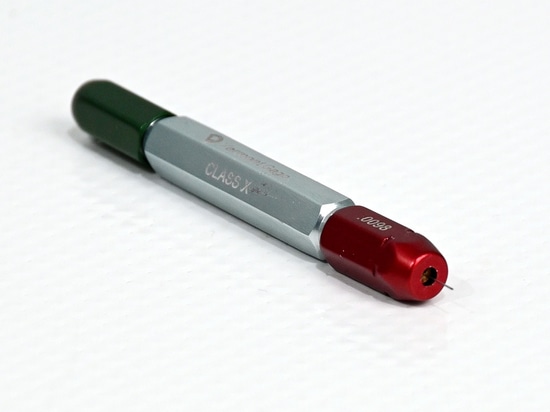
First method: Calibrated Pin.
The fastest and most accessible method to create a controlled leak.
At DVACI we offer a dual pin with two standard diameters: 250 µm and 150 µm
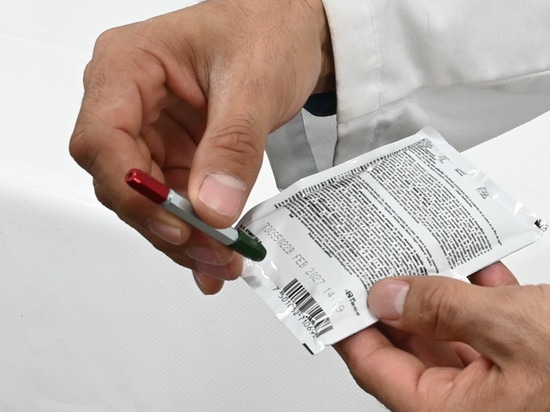
To puncture correctly, follow these steps:
- Select an area without product, where bubbles can be clearly observed. In porous packaging such as Tyvek, avoid areas containing blocking agent.
- Keep the pin perpendicular to the package.
- Puncture the package without applying excessive force—let the pin do the work.
- Mark the puncture point with a circle to identify it during the test.
There are laser techniques that allow finer perforations, but they are impractical: they depend on external laboratories and controlling the exact hole size is not always feasible.
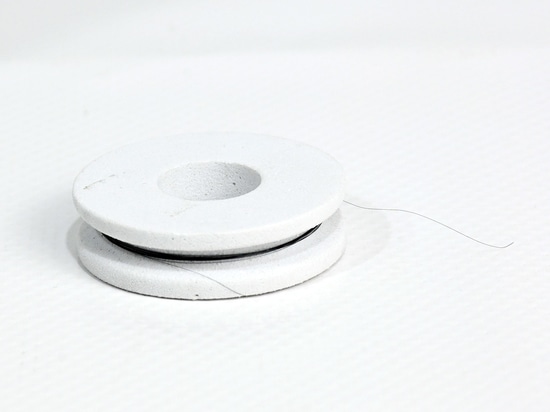
Method 2: Tungsten Filament.
This method offers higher precision and is mainly used in heat-sealed packaging.
Follow these steps:
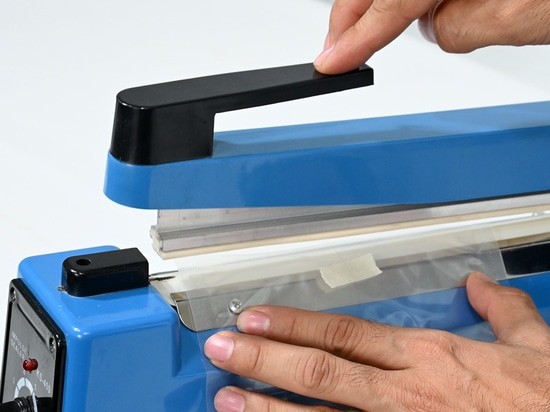
- Place a tungsten filament in the seal area before thermal sealing.
- Fix the wire with a low-adhesion adhesive to prevent movement.
- Seal the package.
- Wait a few minutes, then carefully remove the filament.
This will create a clean channel with the same diameter as the wire. A 50 µm filament is commonly used.
One important limitation: if there are folds or material obstructing the airflow, a 50-µm leak may not be visible. In those cases, a slightly larger diameter is recommended.
Which method is better?
Both methods are valid, it depends on your package and the level of accuracy required.
The Calibrated Pin is fast, accessible, and any operator can perform it.
The Tungsten Wire is more precise and ideal when a controlled channel is required in heat-sealed packages.
The Control Sample is the first step in ensuring your leak test:
- Detects actual leaks.
- Avoids false positives.
- Is calibrated for your packaging type.
- Operates under correct parameters.
If you would like to send us your samples, we can provide a free demonstration and show you the difference between a calibrated test and a test without a Control Sample.