#Product Trends
What is an automatic lubricator and how does it work?
What is an automatic lubricator? Operating principle, design, and fields of application. Explained in practical terms for maintenance technicians, production managers, and procurement professionals.
In every production environment, they run in the background: motors, pumps, conveyor systems, and fans and within them, countless rolling and plain bearings that form the backbone of every installation. Only when these components are continuously and precisely lubricated does the production flow remain smooth. Manual re-lubrication takes time, is often imprecise, and carries considerable safety risks, particularly in hard-to-reach areas. Automatic lubricators address these everyday challenges structurally.
What is an automatic lubricator?
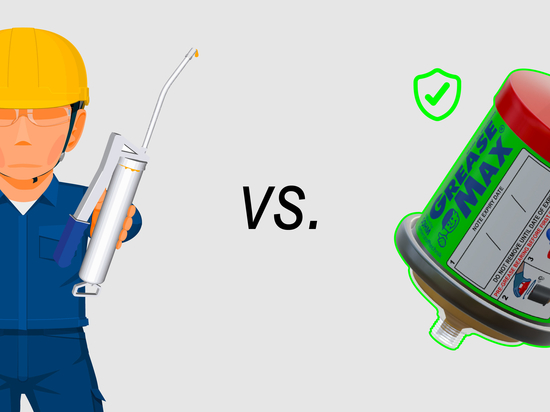
An automatic lubricator, referred to in English as a single-point lubricator, supplies a single lubrication point continuously with the exact quantity of grease or oil required over a defined period of time. It replaces the manual grease gun and takes over lubricant delivery autonomously, independent of shift schedules, personnel availability, and accessibility of the lubrication point.
The result is consistent lubrication throughout the entire operating period: longer service life of components, fewer unplanned downtimes, reduced maintenance effort, and a measurably higher level of occupational safety - because hazardous manual interventions on running machines are largely eliminated.
Design and operating principle
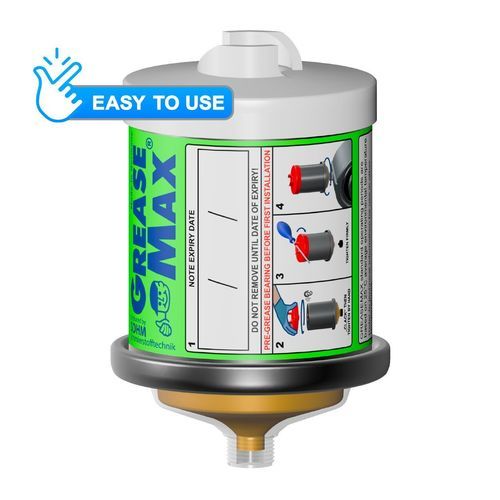
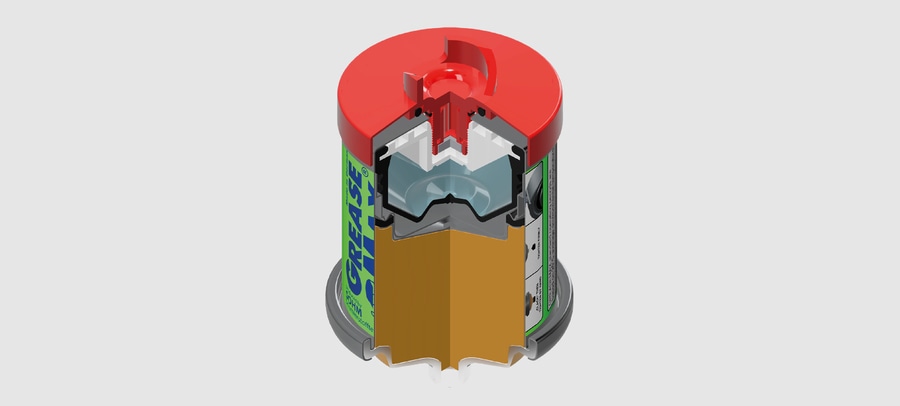
Automatic lubricators such as GREASEMAX® are based on a galvanic reaction that, once activated, builds a consistent pressure over months. GREASEMAX® operates entirely without electricity, without batteries, and without external control. The pressure generated delivers the lubricant continuously and in a controlled manner to the lubrication point over a dispensing period of 1, 3, 6, or 12 months.
GREASEMAX® is recognised worldwide by experts across industries for its robustness and reliability. For use in demanding industrial environments, the gas-pressure-driven design offers maximum reliability and completely eliminates susceptibility to interference from vibrations, moisture, or electromagnetic influences. GREASEMAX® also operates autonomously, with no dependencies on cabling, infrastructure, or maintenance work such as battery changes or software updates.
Where automatic lubricators are used
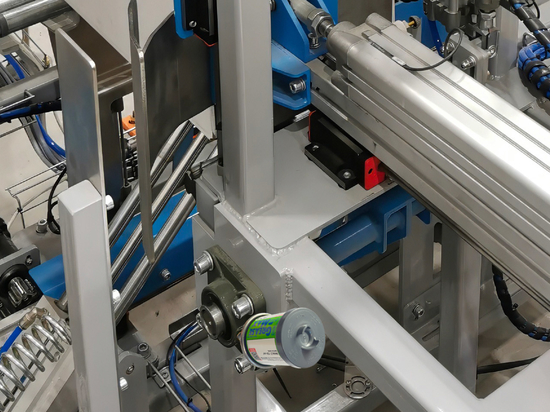
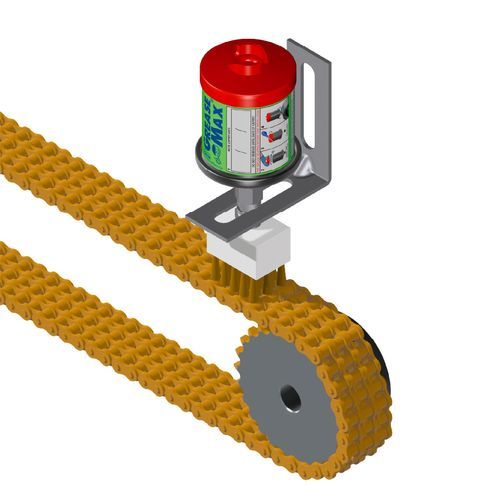
Automatic lubricators are used in virtually all industrial sectors where rotating or oscillating components require ongoing lubrication. Electric motors, fans, pumps, conveyor belts, chains, linear guides, spindles, and rolling bearings of all types are among the typical applications. From food production and the steel industry to recycling plants, crane and lifting equipment, offshore platforms, and asphalt mixing plants. Wherever lubrication points are hard to reach, hazardous to access, or subject to high loads over extended periods, automatic lubricators close the gap that manual lubrication inevitably leaves.
Thanks to their broad range of applications, they are today an established component of modern maintenance strategies - from condition-based maintenance and predictive maintenance through to TPM and lean maintenance concepts.
What automatic lubricators actually deliver
The benefits of automatic lubricators operate on several levels simultaneously and directly address three areas of responsibility:
For maintenance technicians, automatic lubrication means fewer routine tasks, plannable maintenance cycles, and significantly fewer situations requiring a reactive response to an unexpected bearing failure. Lubrication points in hazardous areas, on running machines, or at height are supplied automatically - without manual intervention, without safety risk. When replacing the lubricator, the condition of the lubrication point can be assessed at the same time: a simple, reliable early warning system.
For production managers, the focus is on higher plant availability. Lubrication errors are among the most frequent and simultaneously most avoidable causes of downtime. Automatic lubricators close this weak point systematically. More stable processes, fewer unplanned interruptions, and a maintenance approach that plans proactively rather than reacting after the fact are the direct consequence.
For procurement professionals and project managers, automatic lubrication offers an economically transparent solution. Low one-time costs, measurable savings in lubricant consumption, energy costs, and bearing replacement parts, as well as a verifiable return on investment, make automatic lubricators an investment decision that can be clearly substantiated in any total cost of ownership analysis.
What sets automatic lubricators apart from manual lubrication
The decisive difference lies not in the total quantity of lubricant used, but in the way it is delivered. Manual lubrication inevitably creates peaks: too much grease immediately after lubrication, then too little for weeks afterwards. A cycle of over- and under-supply that places a lasting strain on bearings.
Automatic lubricators, by contrast, deliver small, precisely defined quantities continuously. The lubricating film remains stable, pressure peaks are eliminated, and seals are not overloaded by safety strokes with the grease gun. Consistent lubricant delivery prevents both over- and under-dosing.
Maintenance-free operation means, for gas-pressure-driven systems such as GREASEMAX®, no power connection, no batteries, and no time-consuming refilling. Plannable maintenance intervals replace reactive damage repair with forward-looking maintenance. Higher occupational safety results from the fact that hazardous lubrication points no longer need to be approached manually. Reduced lubricant consumption of typically 20 to 25 percent compared to manual greasing simultaneously lowers procurement, storage, and disposal costs.
GREASEMAX®: Automatic lubrication without compromise
GREASEMAX® is a gas-driven single-point lubricator requiring no electricity, no electronics, and no external control. After activation via the start cap, a chemical reaction builds pressure internally, delivering the lubricant evenly and in a controlled manner to the lubrication point throughout the entire operating period — without any further manual intervention.
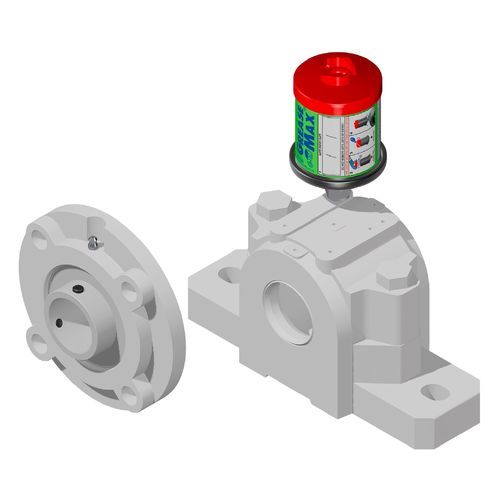
The robust, vibration-resistant, and weather-resistant design is engineered for sustained use under demanding industrial conditions. Economical through the avoidance of rare and critical raw materials; environmentally responsible through the elimination of batteries and electronic components. Direct mounting at the bearing point or via hose connection up to two metres in length enables flexible integration - even where space constraints, accessibility, or safety requirements make direct mounting difficult.
Conclusion: Automatic lubricators are not an accessory — they are a maintenance building block
Automatic lubricators ensure a continuous, loss-free lubricant supply and protect machine elements durably against dry running, abrasion, and overheating. For maintenance technicians, this means plannable maintenance and fewer emergency call-outs. For production managers, it means higher plant performance and more stable processes. For procurement professionals and project managers, it means an economical, environmentally responsible solution with a verifiable return on investment.