#Industry News
Best Practices: Lubrication as the Key to Sustained Plant Availability
How a well-conceived lubrication concept sustainably increases your plant availability, reduces failures, and relieves your maintenance team going forward.
Lubrication is not a secondary topic in maintenance. It is one of the most effective levers for the service life, availability, and energy efficiency of machines — and at the same time one of the most frequently underestimated. Between two wearing surfaces, a stable lubricating film determines whether metal slides cleanly on an oil or grease film, or whether micro-welding, abrasion, and heat generation occur. What is often overlooked: many failures that appear in hindsight as sudden bearing damage are in reality the result of weeks or months of incorrect, irregular, or simply forgotten lubrication. They can be avoided when lubrication is understood as a strategic component of maintenance and implemented accordingly.
Using lubrication automation effectively
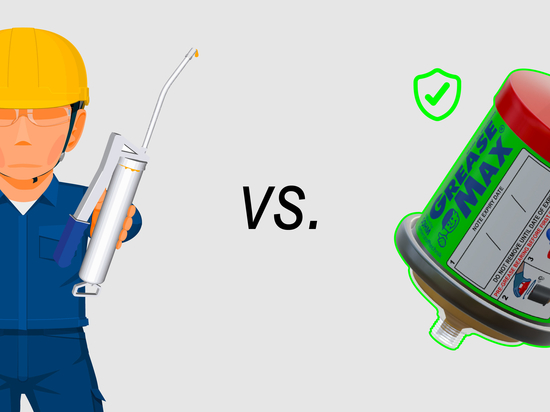
Manual lubrication works well in theory. In practice, it suffers from time pressure, shift changes, hard-to-reach lubrication points, and lack of coordination. The result is uneven grease quantities, lubrication gaps between intervals, and the familiar situation where a lubrication point is skipped — not out of negligence, but because day-to-day demands set other priorities.
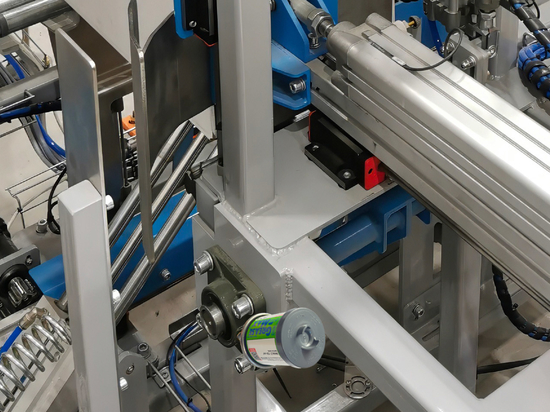
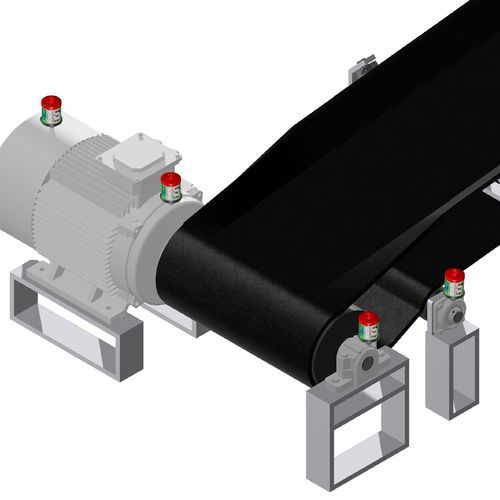
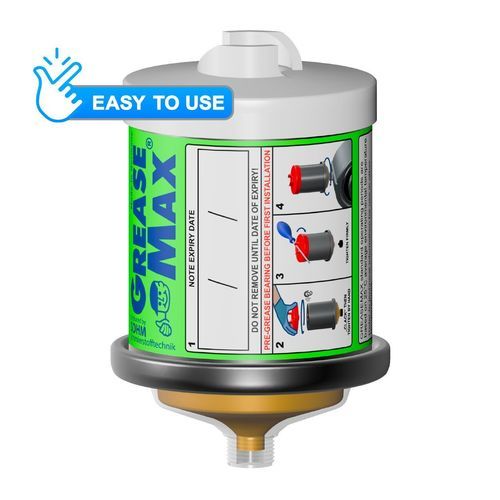
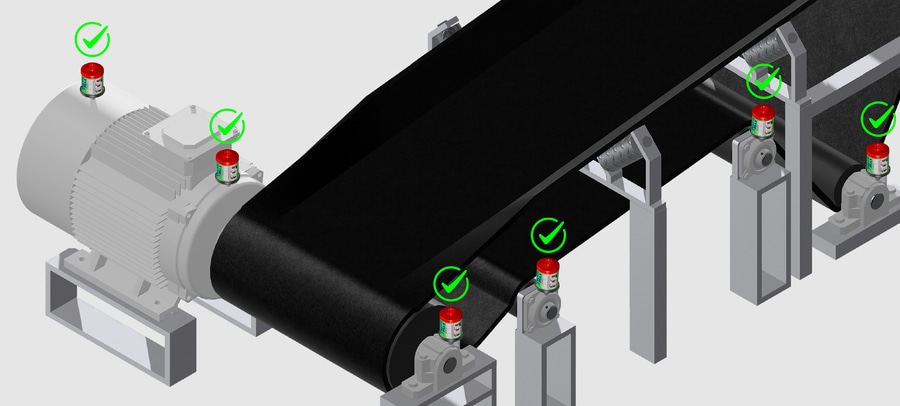
Autonomous automatic lubricators such as GREASEMAX® address exactly this. They deliver small quantities of lubricant continuously rather than supplying large quantities intermittently. They operate at low pressure, thereby protecting seals and bearings. And they supply lubrication points reliably even when maintenance personnel have no time for manual lubrication rounds, or when the lubrication point is not safely accessible during operation.
Practical experience and manufacturer evaluations consistently show: with automatic lubrication, lubricant consumption decreases while bearing service life and plant availability increase.
Selecting the right lubricant and the right quantity
Even the best lubrication interval delivers little if the lubricant does not match the application. The selection depends on several factors simultaneously: the temperature range of the lubrication point, load and speed, environmental influences such as moisture, water, chemicals, or dust — and in food production, whether food contact is possible.
For grease quantities in rolling bearings, a simple calculation formula has become established in practice:
G = 0.005 × D × B
Where G is the grease quantity in grams, D is the outer diameter of the bearing in millimetres, and B is the bearing width in millimetres. This formula provides a technically sound baseline that equally avoids over-lubrication and under-lubrication, turning what is widely practised as guesswork into a reproducible foundation. The manufacturer's tables and approvals for the respective bearing should always be consulted in addition.
Monitoring condition rather than simply working through the lubrication plan
A lubrication plan that is consistently followed is better than none. But best practice goes one step further: it combines planned lubrication with consistent condition monitoring.
Temperature deviations from normal operation are among the earliest and most reliable warning signals for lubrication problems or developing bearing damage. An increase in vibrations can indicate changes in the bearing long before they lead to a failure. Unusual running noises should never be answered reflexively with more grease. They can indicate contamination, incorrect lubricant quality, or damage that has already occurred — damage that additional grease will not resolve but only mask. Visual inspections for escaping grease, damaged seals, and contamination can be integrated into routine inspection rounds in a matter of seconds. This transforms a purely task-based maintenance approach into a condition-oriented one that identifies damage before it leads to a shutdown.
Actively protecting the environment and seals
Even the best lubricant loses its effectiveness when dirt, water, or abrasive media continuously enter the bearing. Lubrication alone is not enough — it must be supported by appropriate protective measures. These include suitable sealing systems such as labyrinth or lip seals and their regular inspection for condition and correct positioning, shielding against dust, moisture, or splash water, as well as correct installation that prevents dirt from being pressed into the lubrication point during re-lubrication.
Automatic lubricators such as GREASEMAX® support this approach through their closed design: the lubricant is protected from external contamination, and the lubrication point is continuously supplied with fresh grease without ever needing to be openly accessible.
Documentation and planning: the lubrication concept that is actually lived
A lubrication concept is only as good as it is documented and actually implemented in daily operations. Lubrication points, lubricants, intervals, quantities, and responsibilities must be clearly recorded — not in the mind of a single employee, but in a form that remains intact regardless of shift and personnel changes. Integration into maintenance plans or a CMMS ensures that lubrication tasks are not displaced. Practical experience — measured temperatures, failures that have occurred, observed re-lubrication requirements — should be systematically used to continuously fine-tune intervals and quantities.
Particularly when switching to automatic lubrication, an economic assessment is worthwhile: saved downtimes, fewer bearing failures, reduced personnel requirements, lower energy costs, and reduced lubricant consumption typically produce an immediately measurable return on investment in practice — one that continues to grow with increasing operating time.
GREASEMAX®: Four building blocks, one controlled solution
GREASEMAX® is a gas-driven single-point lubricator requiring no electricity, no electronics, and no external control. It combines the four building blocks of a well-conceived lubrication concept in a single, robust solution: correct lubricant quantities through precisely metered delivery, automated and consistent supply independent of shift schedules and personnel availability, protection of the lubrication point through the closed system, and plannable maintenance cycles through defined operating periods of 1, 3, 6, or 12 months. What was once an error-prone manual process becomes a controlled, reproducible, and economical solution.