#Industry News
Automatic Lubrication in Gravel and Aggregate Plants
Learn how automatic lubrication with GREASEMAX® structurally eliminates the most common preventable cause of failure in gravel and crushed-stone plants.
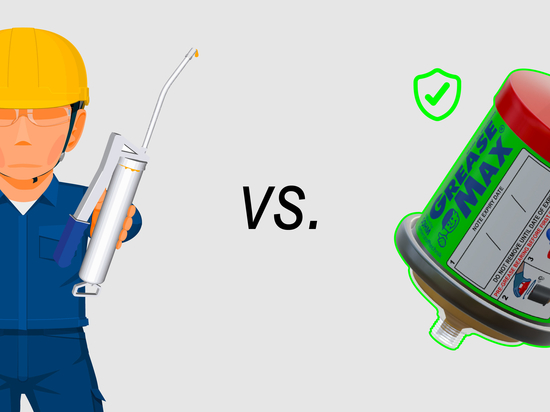
Why Manual Lubrication Reaches Its Limits in Gravel and Aggregate Plants
The challenges in gravel and aggregate plants are nothing new; they are the result of multiple unfavorable conditions acting simultaneously.
Large-scale facilities with numerous dispersed lubrication points require considerable personnel resources. Crushers, conveyor systems, screening machines, and loading stations are often located far apart, and even with careful planning, individual lubrication points are frequently missed during daily operations.
Hazardous lubrication points during operation make manual relubrication of rotating or heavily loaded machine components an avoidable safety risk.
Dust, mud, and moisture are constant enemies of effective lubrication. Abrasive dust displaces grease from bearing clearances and acts as a grinding medium on running surfaces. Moisture washes lubricant away in wet areas, while mud obstructs seals. Under these conditions, manually applied lubricant is consumed faster than fixed lubrication intervals can accommodate.
Severe vibrations at crushers, screens, and conveyor equipment place mechanical stress on the lubricant film and work lubricant out of bearings. Consistent lubrication is difficult to achieve manually.
Where Automatic Lubrication Delivers Tangible Benefits in Gravel and Aggregate Plants
In raw material processing, operating conditions are at their most extreme. Jaw crushers, cone crushers, and roll crushers operate under high compressive forces, intense impact loads, and continuous dust generation. Conveyor systems, transfer points, and screening equipment are affected just as much as the crushers themselves. Automatic lubricators continuously supply small quantities of grease, maintain a stable lubricant film, and reduce the ability of dust to penetrate properly lubricated bearings. Dry running is reliably prevented, and the service life of crushers and screens is measurably extended.
In processing operations—washing, classification, and dust control—water, fine particles, and airflow dominate the environment. Washing and classification conveyors, dust collection systems, cyclones, fans, bearing housings, and transfer stations operate under a combination of moisture, cleaning media, and fine dust contamination. In wet areas, water quickly washes away conventional lubricants. Automatic lubricators maintain the protective lubricant film even under these conditions, reduce corrosion on bearings and seals, and ensure smoother operation with noticeable effects on energy consumption.
In storage, loading, and packaging operations, logistics reliability determines delivery performance and customer satisfaction. Transport and packaging conveyors, silo systems, roller conveyors, switches, and rotary stations must operate without interruption, even when shift work and high throughput place additional strain on maintenance resources. Automatic lubrication keeps rollers, bearings, and chains moving without requiring conveyor systems to be stopped for relubrication. Small but disruptive failures in day-to-day operations are systematically reduced, and material flow remains stable even under varying loads.
Practical Benefits for Your Operation
Continuous lubrication reduces friction, prevents premature wear, and minimizes downtime. This is particularly important for crushers and central conveyor systems, where a failure can bring the entire process chain to a standstill. Fewer manual lubrication rounds, fewer emergency maintenance interventions, and more predictable maintenance windows sustainably reduce maintenance effort.
Lubrication points that were previously accessible only under hazardous conditions can be supplied safely and automatically via remote hose lines. This significantly reduces accident risks and simplifies risk assessments.
Well-lubricated bearings reduce the load on motors and gearboxes, lowering energy consumption—an important factor in operations that run continuously under heavy loads.
No lubrication point is overlooked, and no lubrication interval is sacrificed to day-to-day operational demands. Maintenance can be planned proactively rather than reacting to the next bearing failure.
GREASEMAX®: Proven Under the Harshest Conditions
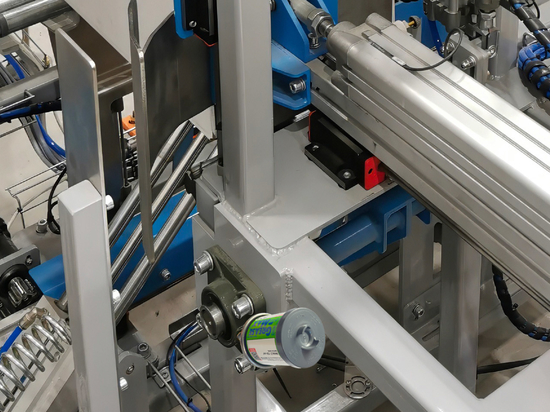
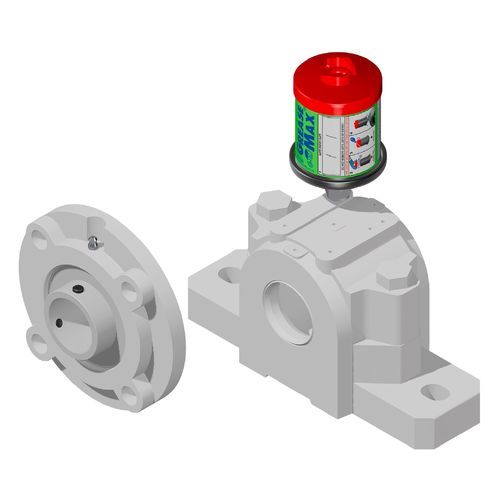
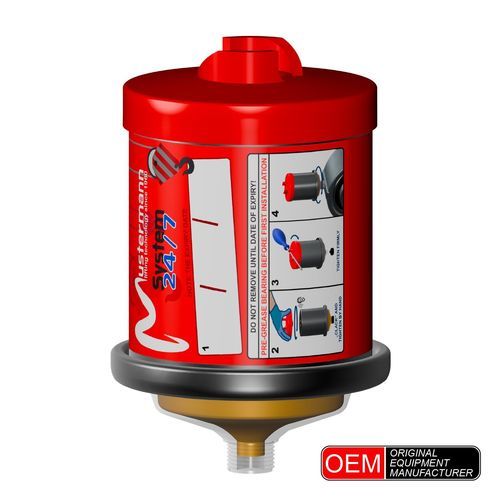
GREASEMAX® is a gas-driven single-point lubricator that requires no power supply, electronics, or external control system. For use in gravel and aggregate plants, it offers exactly the characteristics that matter most under these demanding conditions.
The sealed lubrication system reliably protects the lubricant from dust, mud, and moisture, even in environments with heavy particle contamination. Operating periods of 1, 3, 6, or 12 months with a constant and consistent lubricant output make lubricant consumption predictable, entirely without electronics or sensitive mechanical components.
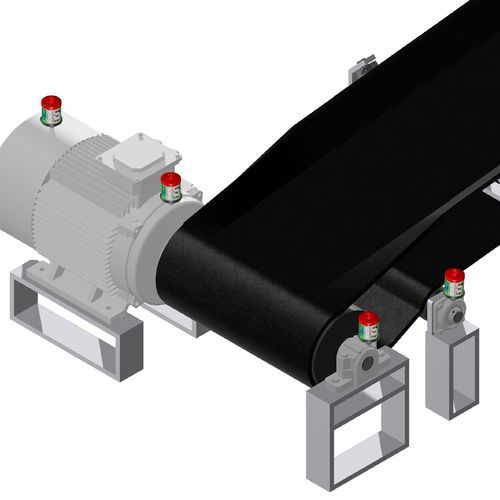
Its vibration-resistant and weather-resistant design is engineered for continuous outdoor use in quarries and aggregate plants. Flexible installation directly at the lubrication point or via a hose connection up to two meters in length allows lubrication points to be relocated away from hazardous areas and supplied safely. This represents a significant improvement in both safety and operational efficiency.
Conclusion: Automatic Lubrication Delivers the Greatest Value Where Conditions Are Most Demanding
The harshest environments, heavy loads, and constant cost pressure—this is exactly where automatic lubrication demonstrates its strengths. Reduced downtime, improved workplace safety, and significantly lower maintenance requirements make automatic lubricators a solution that delivers immediate returns and long-term value in gravel and aggregate plants.
GREASEMAX® requires no complex installation, no electronics, and no modifications to existing control systems.