#Industry News
How Automatic Lubrication Reduces Energy Costs and Lubricant Consumption
Learn how automatic lubrication reduces friction losses, lowers energy consumption, and optimizes lubricant usage in industrial machinery.
Why Automatic Lubrication Is Key to Lower Energy Consumption
Automatic lubrication is one of the most effective, yet often overlooked, ways to significantly reduce both energy consumption and lubricant usage in industrial equipment. The relationship is straightforward: every bearing that is lubricated incorrectly or inconsistently generates additional friction. Friction increases energy consumption, accelerates wear, and raises operating temperatures to levels where lubricants degrade much faster than necessary. Companies that view lubrication merely as a maintenance task overlook a measurable opportunity to improve operational efficiency and reduce costs.
How Lubrication Directly Affects Energy Consumption
In every bearing, the lubricant film determines whether rolling elements move smoothly or whether metal-to-metal contact occurs. The consequences of both insufficient and excessive lubrication are well documented.
When bearings are under-lubricated, friction increases, bearings run rougher, and motors require more torque and therefore more electrical power to overcome the additional mechanical resistance.
Over-lubrication creates excessive internal resistance through churning. Rolling elements continuously work through surplus grease, causing bearing temperatures to rise while the drive system literally has to push against dense grease. Field experience has shown that improperly lubricated bearings can increase drive energy consumption by 15 to 20 percent, depending on operating load and rotational speed. Proper lubrication keeps bearing temperatures lower and directly reduces electricity consumption.
Why Automatic Lubrication Has a Clear Advantage
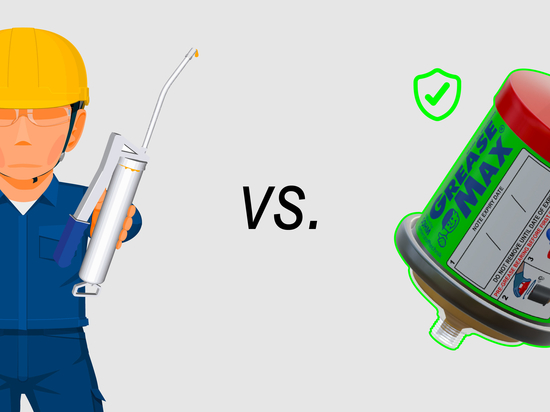
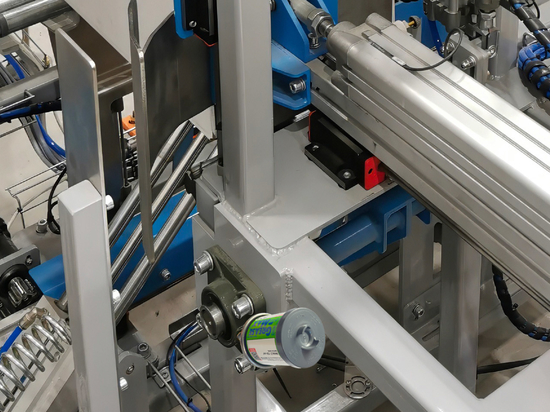
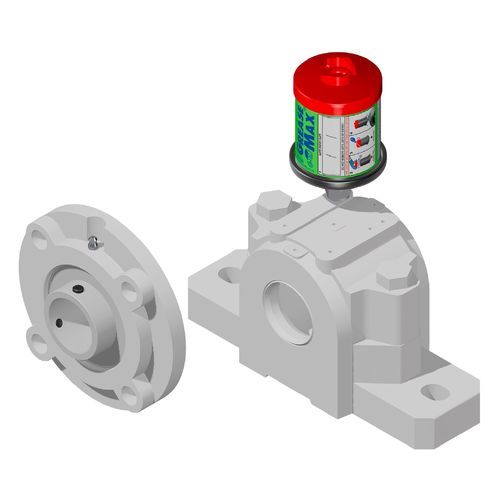
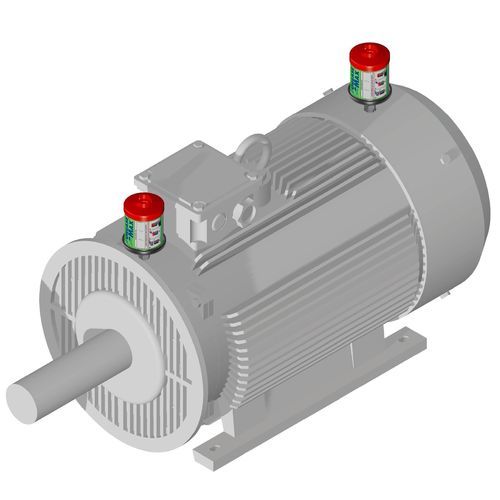
The key advantage is not the total amount of lubricant used, but how it is supplied. Automatic lubricators such as GREASEMAX® continuously deliver small, precisely metered amounts of grease instead of relying on irregular manual re-greasing intervals.
Continuous dosing prevents both pressure peaks caused by grease gun over-application and dry-running periods between manual lubrication intervals. The lubricant film remains stable, resulting in lower friction and reduced operating temperatures. Consistent lubrication minimizes churning while preventing friction peaks. Even a moderate reduction in operating temperature significantly extends lubricant service life and measurably lowers energy consumption.
Lubrication points remain clean because only the amount of grease actually required is dispensed. Excess grease does not escape, preventing grease-and-dirt contamination that would otherwise increase bearing wear. Independent of maintenance schedules and shift patterns, automatic lubricators ensure that lubrication is never interrupted simply because routine maintenance is delayed.
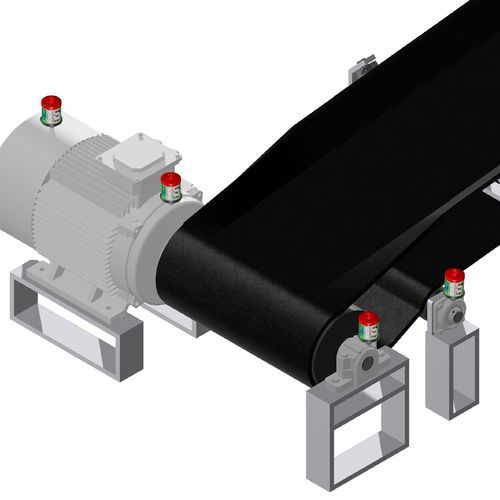
The result is smoother, more energy-efficient operation of motors, conveyor systems, fans, pumps, and all other equipment that depends on a stable lubricant supply.