#Industry News
Automatic Lubrication in the Food and Beverage Industry
Automatic lubrication for food and beverage production helps maintain hygiene, prevent unplanned downtime, and permanently reduce maintenance effort.
Why Lubrication Requires Special Attention in the Food and Beverage Industry
Food and beverage production follows one simple principle: production lines operate around the clock, hygiene standards leave no room for compromise, and every unplanned interruption costs valuable time while potentially jeopardizing compliance with quality and food safety standards such as IFS, BRC, or HACCP. At the same time, machinery operates under conditions that place continuous stress on bearings and drive components. Moisture, aggressive cleaning chemicals, frequent temperature fluctuations, and abrasive food residues all accelerate wear.
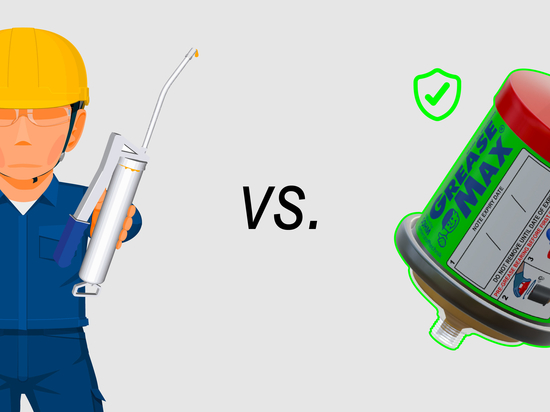
Under these conditions, manual lubrication presents several challenges. Grease quantities are often inconsistent, over-lubrication increases the risk of contamination, lubrication points can be difficult to access, and production must frequently be interrupted to perform routine maintenance. Automatic lubricators eliminate these problems by providing reliable, hygienic, and continuous lubrication without interrupting production.
Why Lubrication in Food Processing Has Unique Requirements
The challenges in food and beverage production result from an environment that combines strict hygiene standards, high throughput, and maximum equipment availability unlike almost any other industry.
Moisture and cleaning chemicals continuously affect lubrication points. Equipment is often cleaned daily using aggressive detergents and high-pressure washing systems. Water and chemicals wash conventional lubricants out of bearings and accelerate corrosion. Lubrication points that are not continuously supplied lose part of their protective lubricant film after every cleaning cycle.
Abrasive food particles such as flour dust, sugar crystals, and husks penetrate bearing clearances and gradually wear running surfaces. In processing areas with open production, this type of contamination is almost impossible to prevent.
High operating temperatures and constant temperature changes in baking ovens, pasteurization lines, and refrigerated areas cause grease to age more rapidly and lose its protective properties sooner than expected.
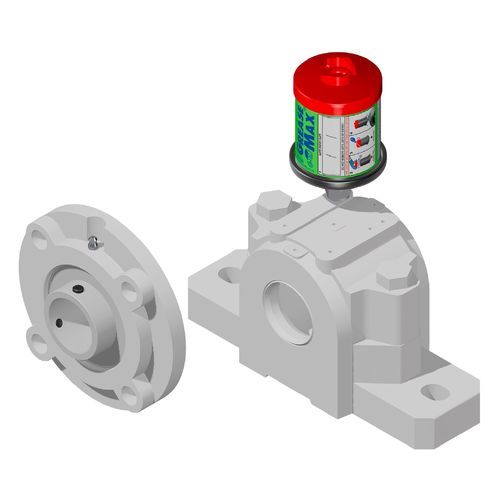
Hygiene requirements also make over-lubrication far more than a technical issue. Grease escaping from bearings can come into contact with products or packaging materials and negatively affect food safety audits. Precisely metered, closed lubrication systems eliminate this risk by design.
Where Automatic Lubrication Improves the Production Line
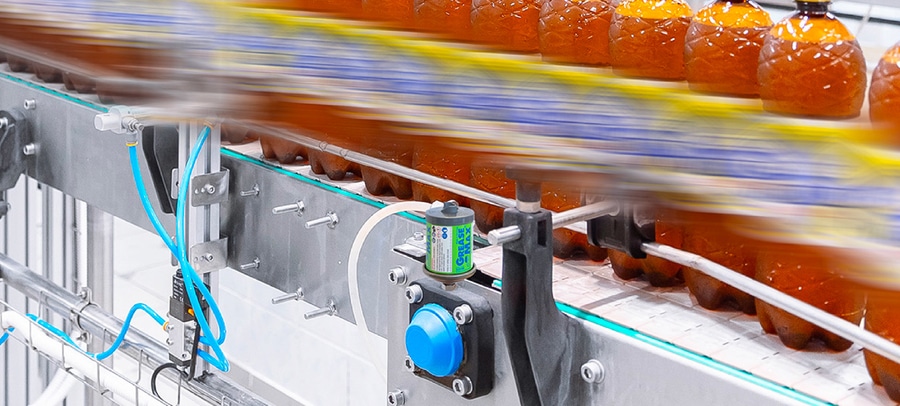
In receiving and pre-processing areas, conveyor belts, sorting equipment, washing and peeling machines, and depalletizers are exposed to the highest levels of moisture. Frequent start-stop cycles, aggressive cleaning agents, and difficult-to-access bearings make manual lubrication particularly unreliable. Automatic lubricators continuously protect bearings against washout and corrosion, even when equipment is cleaned every day. Manual maintenance in wet and slippery environments is minimized, while unplanned downtime of conveyor and drum drives is significantly reduced.
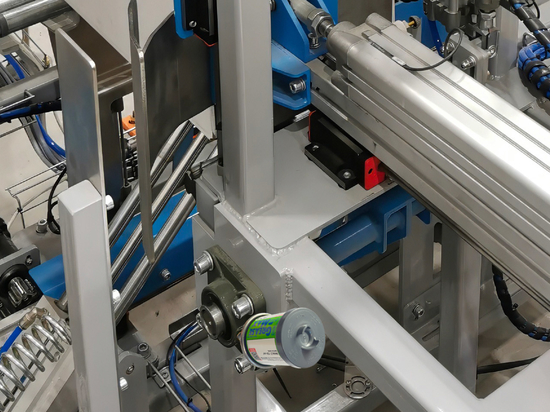
Within the processing area, presses, chain conveyors, cutting machines, baking ovens, mixers, and other production equipment operate under high temperatures, abrasive food residues, and continuous vibration. Precision is critical. Excess lubricant leads to grease leakage and particle adhesion, while insufficient lubrication causes overheating and premature wear. Automatic lubricators continuously supply precisely metered amounts of grease regardless of whether the equipment operates at full capacity or in intermittent production cycles. Chains and bearings in both hot and cold processing zones receive consistent lubrication, ensuring stable production even when operating conditions change.
In filling, packaging, and palletizing operations, fillers, labeling machines, roller conveyors, and palletizers operate at high speeds with precise movements in hygiene-sensitive environments. A failure immediately before shipment can generate disproportionately high costs. Automatic lubrication ensures reliable lubrication of rollers and guide systems even at high operating speeds. The closed lubrication system eliminates the risk of grease contaminating products while reducing maintenance effort in areas where service windows are extremely limited.