#Product Trends
Automatic Lubrication in the Steel Industry
Automatic lubrication in the steel and metal industry makes maintenance intervals predictable, ensures reliable lubrication of hazardous lubrication points, and measurably reduces maintenance effort.
Why Lubrication in the Steel Industry Is Especially Challenging
Steel plants operate under conditions that push machinery to its mechanical limits like almost no other industry. Temperatures reaching several hundred degrees Celsius, extremely heavy loads, continuous vibration, shock loads, and around the clock operation place enormous stress on bearings, chains, guide systems, and gearboxes. Under these conditions, unreliable lubrication significantly accelerates wear.
At the same time, the working environment often makes manual lubrication dangerous or simply impossible. Lubrication points are located near high temperature furnaces, rotating machinery, or process areas that cannot be accessed safely during operation. Automatic lubricators eliminate this challenge by delivering lubricant continuously, precisely, and independently of whether a lubrication point is easily accessible or maintenance personnel are available.
Why Lubrication in Steel Plants Is So Demanding
The operating conditions in steel production rarely occur in isolation. It is their combination that pushes lubrication points to their limits.
Extreme heat around furnaces, continuous casting lines, and rolling mills accelerates lubricant degradation considerably. Grease that would normally last for months quickly loses viscosity and protective performance when exposed to these temperatures. Without continuous replenishment, bearings begin operating under dry-running conditions with immediate consequences for both bearings and surrounding components.
High mechanical loads and shock loads in rolling mills, crane systems, and conveying equipment continuously destabilize the lubricant film and place bearings under far greater stress than steady operating loads.
Dust, mill scale, and abrasive particles generated during coking, sintering, and rolling processes penetrate bearing clearances and act as grinding media directly on bearing surfaces.
Lubrication points located near furnaces, rotating equipment, or high temperature process zones are often difficult or dangerous to reach, making manual lubrication either impossible or associated with significant safety risks.
Where Automatic Lubrication Delivers Measurable Benefits in Steel Plants
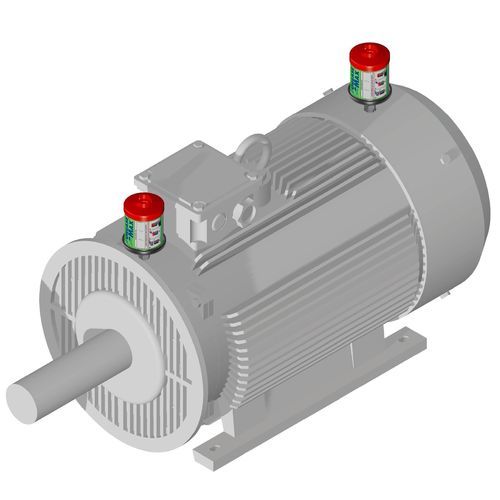
Within coke plants and sintering facilities, high temperatures, abrasive dust, and heavy conveying loads occur simultaneously. Electric motors driving mixing equipment, coke and sinter conveyors, screw conveyors, drag chain conveyors, vibrating screens, and belt tensioning systems operate under conditions where manually applied grease is quickly displaced or thermally degraded. Automatic lubricators continuously replenish lubricant, maintain a stable lubricant film, and make failures of critical conveying equipment less frequent and far more predictable.
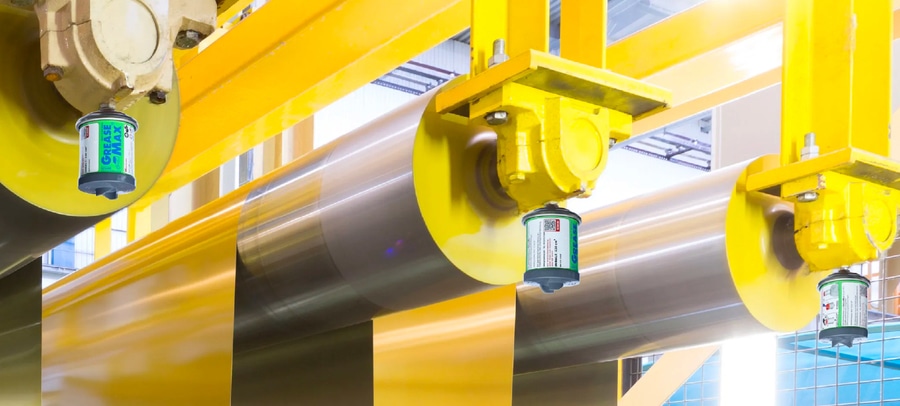
Rolling mills, continuous casting lines, and finishing processes represent the heart of steel production and place the highest demands on lubrication. Roll bearings operate under extreme pressure and temperature, strip tensioning systems are subjected to constant tensile loads, while drive motors and gearboxes run continuously under heavy load. Coating lines and strip accumulator systems require an even higher level of precision, as lubrication inconsistencies can directly affect product quality. Automatic lubrication ensures that every lubrication point receives a continuous and precisely metered supply of grease, regardless of operating conditions or maintenance schedules.
Transport, storage, and logistics systems connect every stage of steel production. Crane systems, conveyor lines, coilers, and shearing equipment are responsible for maintaining uninterrupted material flow throughout the plant. Automatic lubrication continuously protects bearings and chains without requiring conveyors or cranes to be stopped for routine lubrication. As a result, unplanned interruptions in internal logistics that could disrupt the entire production process are significantly reduced.