#Industry News
Thread Milling Vs. Tapping: What’s The Difference?
Thread Milling Vs. Tapping
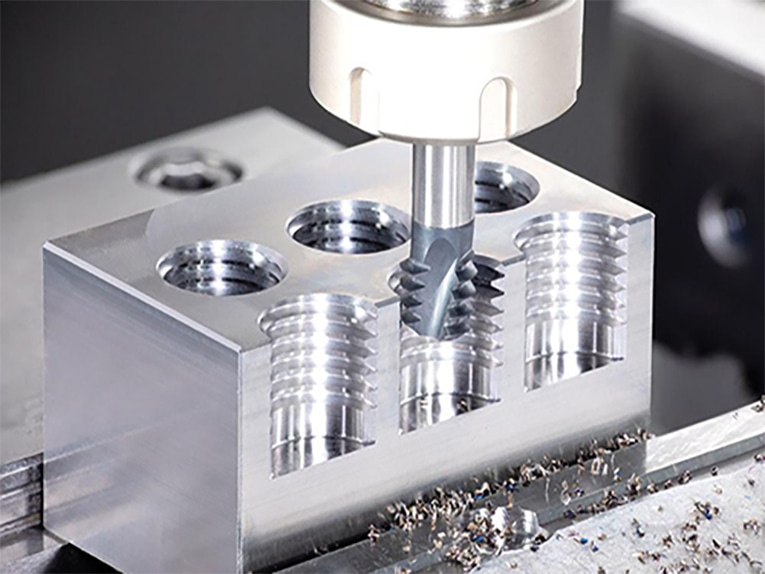
Tapping and thread milling are two common methods for creating internal threads, but they differ significantly. Tapping uses a size-specific tool to cut threads directly into pre-drilled holes, making it faster and more cost-effective for soft materials like aluminum and mild steel. In contrast, thread milling uses a CNC-controlled cutter moving in a spiral path, offering higher precision, flexibility, and the ability to handle tough materials such as titanium and Inconel.
Tapping is ideal for high-volume production where speed and cost are critical, especially when working with soft to medium-hard materials. It's commonly used in automotive and general manufacturing. Thread milling is better suited for applications requiring high precision, tight tolerances, or threading in hard materials. It also allows for custom thread designs and reduces tool inventory, making it popular in aerospace, medical, and high-end engineering sectors.
Use tapping for fast, economical threading when working with large quantities and standard materials. Choose thread milling when you need flexibility, superior thread quality, or when machining difficult materials. For small threads, tapping remains the quicker option; for larger or critical threads, thread milling ensures durability and accuracy. A smart production strategy often combines both methods to balance speed, precision, and cost.