#Industry News
MIG Vs TIG Welding: Key Differences And When To Use Each Method
MIG Vs TIG Welding
1. Overview of MIG and TIG Welding
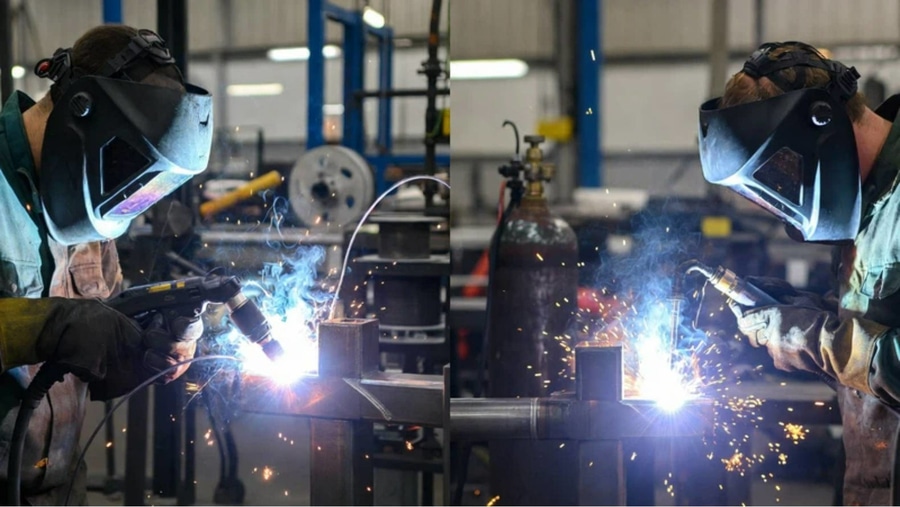
MIG (Metal Inert Gas) welding and TIG (Tungsten Inert Gas) welding are two widely used arc welding processes that differ in technique, equipment, and application. Both use shielding gas to protect the weld area from contamination, but they vary in how the arc is generated and how filler material is applied. Understanding these differences is essential for selecting the right welding method for specific manufacturing needs.
2. MIG Welding: Process and Characteristics
MIG welding uses a continuously fed consumable wire electrode that acts as both the electrode and filler material. The process is semi-automatic or automatic, allowing for fast welding speeds and high productivity. It is relatively easy to learn and operate, making it suitable for beginners and high-volume production environments.
3. TIG Welding: Process and Characteristics
TIG welding uses a non-consumable tungsten electrode to create the arc, while filler material is added manually if needed. This method provides greater control over the weld pool, resulting in cleaner, more precise welds. However, it requires higher skill levels and is generally slower than MIG welding.
4. Key Differences in Performance
The main differences between MIG and TIG welding lie in speed, precision, and ease of use. MIG welding is faster and more efficient, making it ideal for thicker materials and long weld runs. TIG welding, on the other hand, offers superior accuracy and weld quality, especially for thin materials and detailed work. MIG tends to produce more spatter, while TIG produces cleaner, more aesthetically pleasing welds.
5. Materials and Applications
Both processes can be used with a wide range of metals, including steel, stainless steel, and aluminum. MIG welding is commonly used in automotive manufacturing, structural fabrication, and general industrial production. TIG welding is preferred in aerospace, precision fabrication, and applications where appearance and weld integrity are critical.
6. Advantages and Limitations
MIG welding’s advantages include high speed, ease of use, and suitability for automation, but it has limitations such as less control and lower weld quality in precision applications. TIG welding offers excellent weld quality, minimal spatter, and strong joints, but it is slower, more expensive, and requires skilled operators.
7. Choosing Between MIG and TIG Welding
The choice between MIG and TIG welding depends on factors such as material thickness, required weld quality, production speed, and operator skill level. MIG is typically chosen for efficiency and high-volume production, while TIG is selected when precision, aesthetics, and high-quality welds are the priority. In many manufacturing environments, both methods are used together depending on the stage of production and performance requirements.