#Industry News
Types Of Grinding Machines: A Complete Guide
Types Of Grinding Machines
1. What Grinding Machines Are
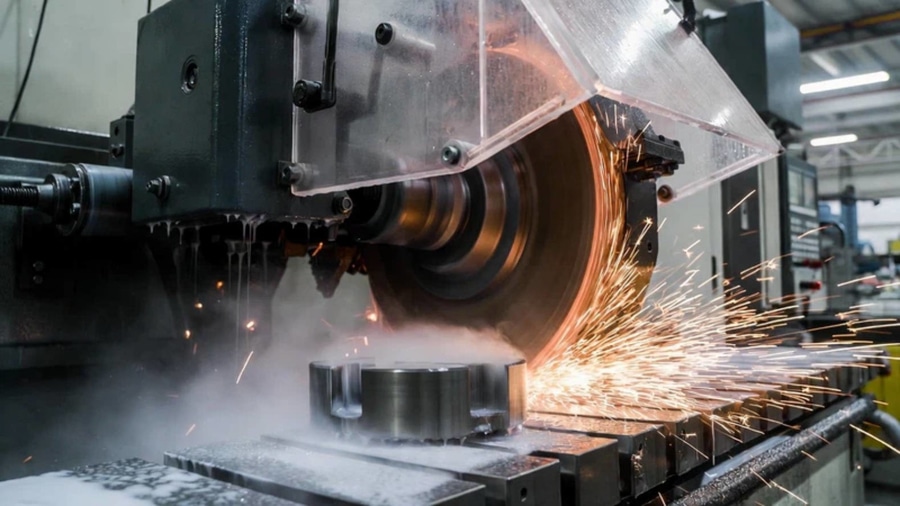
A grinding machine is an abrasive machining tool used to remove small amounts of material from a workpiece to achieve high precision, smooth surface finish, and tight tolerances. It operates using a rotating grinding wheel composed of abrasive particles that act like microscopic cutting edges. Grinding is typically a finishing process and is essential for producing high-accuracy components in modern manufacturing.
2. Range and Classification of Grinding Machines
Grinding machines vary widely in size and capability, from simple handheld tools to advanced CNC precision systems. They can be broadly categorized into portable grinders (such as angle grinders and hand grinders), bench or pedestal grinders for workshop use, and industrial precision grinders used for high-accuracy machining. Each category serves different levels of precision, production scale, and application requirements.
3. Major Types of Grinding Machines
The article outlines many types of grinding machines, including surface grinders (for flat surfaces), cylindrical grinders (for round parts like shafts), centerless grinders (for high-volume cylindrical parts without clamping), and internal grinders (for holes and bores). Other types include tool and cutter grinders, belt grinders, and precision grinders, each designed for specific geometries and finishing needs.
4. Applications and Industrial Uses
Grinding machines are widely used across industries such as automotive, aerospace, tooling, and electronics. They are essential for finishing parts like gears, shafts, molds, dies, and precision components. Grinding is especially valuable for machining hard materials and achieving very fine tolerances and surface finishes that cannot be easily obtained through other machining processes.
5. Advantages, Limitations, and Selection Considerations
Grinding offers key advantages such as high precision, excellent surface quality, and the ability to machine very hard materials. However, it removes material slowly compared to other machining methods and often requires skilled operation and proper cooling to manage heat. Choosing the right grinding machine depends on factors like workpiece shape, material, required accuracy, production volume, and cost considerations, ensuring the best balance between efficiency and quality.