#Industry News
Lead Screw 101: Everything You Need to Know
Lead Screw 101
1. What a Lead Screw Is
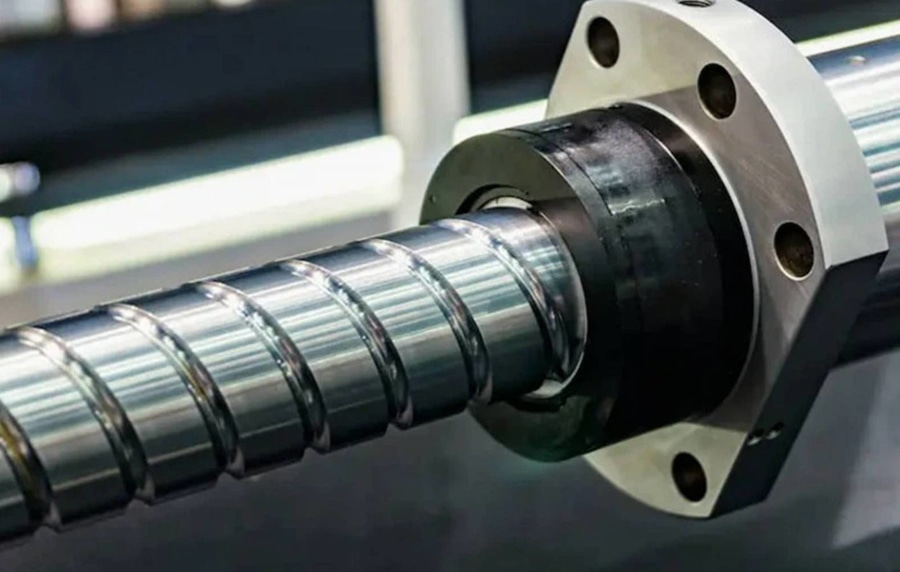
A lead screw is a mechanical transmission component used to convert rotational motion into linear motion. It consists primarily of a threaded shaft and a matching nut. When the screw rotates, the nut moves along its axis, enabling controlled and precise linear movement. This simple but effective mechanism is widely used in machines that require accurate positioning.
2. Working Principle
The working principle of a lead screw is based on the interaction between the screw threads and the nut. As torque is applied, usually by a motor, the screw rotates, and the nut translates along the thread path. The distance the nut moves per rotation is called the lead, which determines how fast linear motion is achieved. This mechanism transforms rotary energy into linear force efficiently for positioning tasks.
3. Key Components of a Lead Screw System
A typical lead screw system includes the screw shaft, nut, drive mechanism, and support components such as bearings and couplings. The screw shaft provides the threaded path, while the nut engages with it to generate motion. Additional components help maintain alignment, reduce vibration, and ensure smooth operation, especially in precision applications.
4. Types of Lead Screw Threads
Lead screws can be classified based on thread geometry, including square threads, ACME (trapezoidal) threads, and buttress threads. Each type offers different advantages in terms of load capacity, efficiency, and ease of manufacturing. For example, square threads provide high efficiency, while ACME threads are stronger and easier to produce.
5. Materials and Performance Characteristics
Lead screws are commonly made from materials such as carbon steel, stainless steel, or alloy steel, while nuts are often made from bronze or plastic to reduce friction. They offer advantages such as high load capacity, simple design, precise positioning, and self-locking capability. However, due to sliding contact between threads, they also experience higher friction and lower efficiency compared to systems like ball screws.
6. Applications in Industry
Lead screws are widely used in CNC machines, 3D printers, linear actuators, jacks, presses, and automation equipment. Their ability to deliver stable and precise linear motion makes them suitable for applications where accuracy is more important than speed or efficiency. They are especially common in medium-load and positioning systems.
7. Advantages, Limitations, and Selection Considerations
While lead screws are valued for their simplicity, low cost, and reliability, they have limitations such as friction losses, heat generation, and slower operating speeds. Choosing the right lead screw depends on factors like load requirements, precision, speed, material, and operating environment. Engineers must balance performance, cost, and durability when selecting a lead screw system for a specific application.