#Industry News
Yield Strength in Metal Manufacturing: A Complete Guide
Yield Strength in Metal Manufacturing
Yield strength is the stress level at which a metal begins to deform permanently. Before reaching this point, deformation is elastic and reversible, but once exceeded, the material undergoes plastic deformation and cannot return to its original shape. This property is vital in engineering as it defines the safe limit for structural components under load. The article explains key points on the stress-strain curve, including the elastic limit, proportional limit, and the yield point, each helping engineers assess material behavior under mechanical stress. For materials lacking a distinct yield point, such as aluminum, the 0.2% offset yield strength method is used to determine performance thresholds.
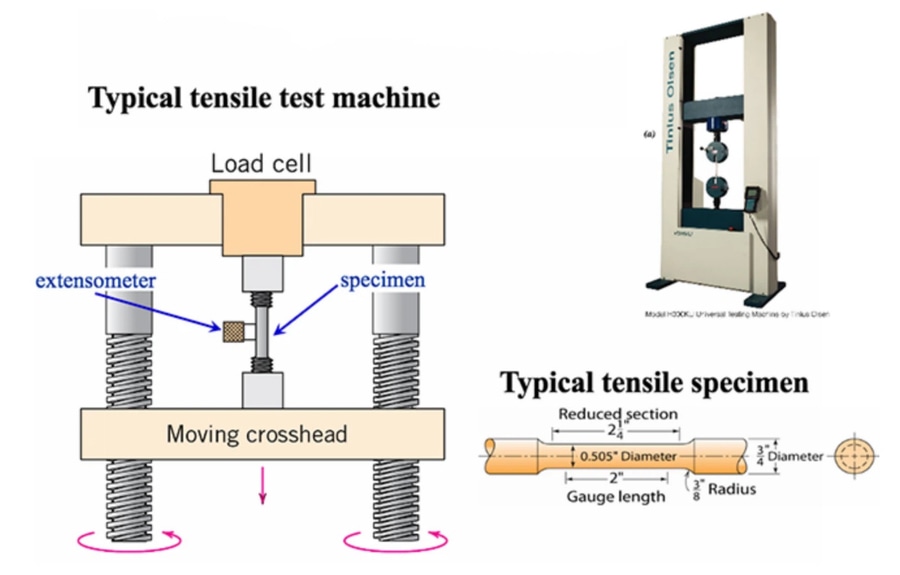
The measurement of yield strength is conducted through standardized tensile tests, such as ASTM E8, where a sample is subjected to a steadily increasing load to produce a stress-strain curve. The curve is then analyzed to identify the yield point or offset yield stress. Various materials have different yield strengths depending on their composition and processing, ranging from mild steel (~370 MPa) to titanium alloys (~880 MPa). The article also introduces the concept of the yield strength ratio, which compares yield strength to tensile strength. A high ratio implies brittleness and load-bearing suitability, while a lower ratio suggests better ductility and formability.
Yield strength is distinct from tensile and fracture strength, although all are related. Tensile strength is the maximum stress a material can endure before necking and eventual breakage, while fracture strength is the exact point of material failure. Understanding these differences is essential for choosing the right metal for specific applications, whether in forming, machining, or high-load environments. The article concludes with FAQs covering topics like proof strength, yield strength improvement methods, and the trade-offs between strength and ductility, reinforcing the role of yield strength in safe and reliable material selection.