#Industry News
Titanium Vs Steel: Which One Is Stronger?
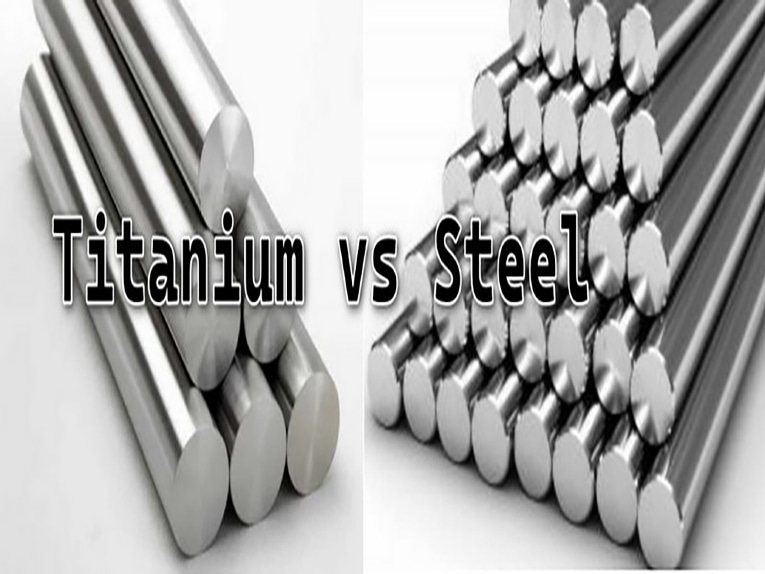
Titanium Vs Steel
Titanium and steel are two widely used engineering materials, each with distinct strengths and trade-offs. Steel is generally stronger in terms of absolute tensile and compressive strength, especially when alloyed and heat-treated, making it a preferred choice for structural applications. Titanium, on the other hand, offers a superior strength-to-weight ratio and exceptional corrosion resistance, making it ideal for aerospace, medical, and marine uses. The article compares their mechanical properties, such as tensile strength, yield strength, and compressive performance, to guide material selection.
In terms of mechanical behavior, steel often outperforms titanium in maximum strength, hardness, and stiffness. Hardened tool steels can reach tensile strengths over 2000 MPa, compared to titanium's maximum range around 1100 MPa. Steel's higher modulus of elasticity gives it an edge in compressive and impact applications, while titanium’s lower stiffness makes it more flexible under load. However, titanium’s strength-to-weight ratio and fatigue resistance allow it to excel in environments where weight savings are critical.
Titanium's key advantages lie in its resistance to corrosion, high-temperature stability, and biocompatibility. These properties enable its use in demanding environments such as aircraft engines, saltwater systems, and medical implants. However, titanium is not without drawbacks; its high cost, machining difficulty, and energy-intensive extraction process limit its widespread use. It also deforms more easily under sudden impact compared to hardened steels, making it less ideal for high-load tooling or crash-resistance applications.
Steel remains more commercially viable for many applications due to its cost-effectiveness, workability, and versatility. It can be easily modified, mass-produced, and recycled, with thousands of alloy grades tailored for specific performance needs. Despite its susceptibility to corrosion and heavier weight, steel is the material of choice in construction, automotive manufacturing, and heavy machinery due to its strength, affordability, and processing simplicity.
Ultimately, the choice between titanium and steel depends on specific project needs. Titanium should be selected when corrosion resistance, weight savings, or biocompatibility are critical, especially in aerospace or medical contexts. Steel is better suited for load-bearing, cost-sensitive, or high-impact applications. While both materials have technical and commercial limitations, understanding their core differences helps engineers and manufacturers make informed decisions for performance-driven designs.