#Industry News
Compression Molding: Process, Materials, And Type
Compression Molding
1. Overview and Historical Background
Compression molding is a well-established manufacturing method primarily used for thermoset and high-performance composite materials. It shapes preheated material in a heated mold under high pressure, producing strong, dimensionally stable parts. Originating in the early 20th century with Bakelite, it became essential for producing heat-resistant electrical components and later expanded into the automotive, aerospace, and electronics industries. Despite the rise of injection molding for thermoplastics, compression molding remains vital for thermoset applications due to its cost efficiency, mechanical performance, and low material waste.
2. Process and Mold Types
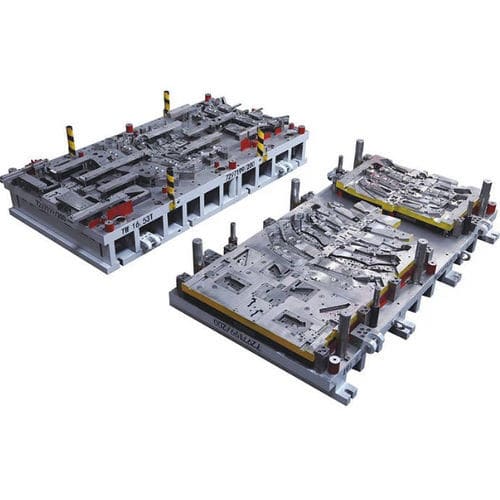
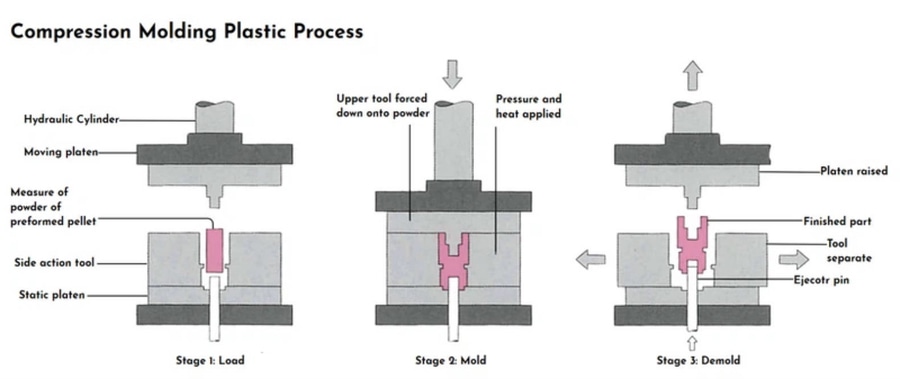
The process involves placing a pre-measured material charge into a heated mold cavity, closing the mold, and applying pressure until the material cures. Steps include mold creation, machine setup, charge preparation, insertion, compression, curing, part removal, and flash trimming. Common mold types include flash molds (allowing excess material flow), positive molds (fully enclosing material), semi-positive molds (minimal flash), and landed positive molds (precise thickness control). Mold-making methods include CNC machining, die casting, and 3D printing, chosen based on volume, durability, and design needs.
3. Materials and Equipment
Compression molding typically uses thermosets like phenolic, epoxy, melamine, polyester (SMC/BMC), urea-formaldehyde, silicone rubber, and high-performance plastics such as PEEK, PPS, and polyamide-imide. These materials offer high heat resistance, chemical stability, and durability. Equipment includes large hydraulic presses, heated molds, ovens or preheating chambers, heating lines, compressed air systems, and cutting tools. Machine types range from large industrial hydraulic presses to benchtop units for R&D, cold presses for heat-sensitive materials, and wet compression machines for resin-impregnated composites.
4. Applications, Advantages, and Limitations
Compression molding is widely used in kitchenware, automotive parts, electrical/electronic components, gaming device keypads, and medical products. Its advantages include producing strong, consistent parts, supporting composite materials, and offering cost efficiency for large or simple shapes. However, it is less suited for intricate details or thin-walled parts, has longer cycle times, and can be labor-intensive due to manual handling and flash removal. Automation can improve efficiency, but many setups still rely on manual operations.
5. Design Guidelines and Industry Role
Design considerations include uniform wall thickness, avoiding undercuts, accommodating inserts, adding draft angles, designing snap fits with reinforcement, and managing surface textures. Compression molding excels at producing thick-walled or complex-shaped parts that other methods struggle with. It remains crucial in sectors requiring high-performance, durable, and heat-resistant parts. With advancements in automation, materials, and mold technology, its precision, flexibility, and efficiency continue to improve, ensuring its place as a key manufacturing process in modern production.