#Industry News
Acetal Vs. Delrin: What's The Difference?
Acetal Vs. Delrin
1. Overview and Core Distinction
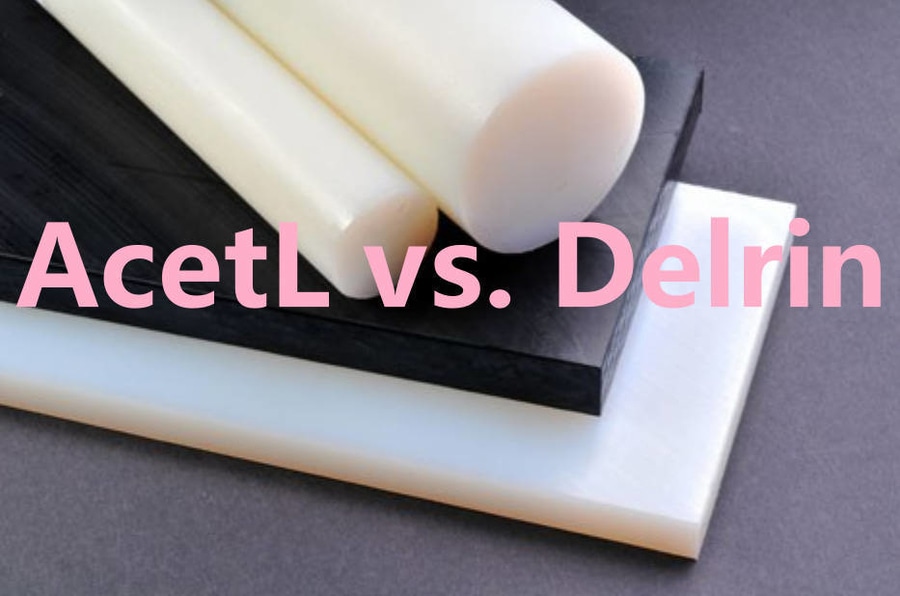
Acetal and Delrin are both forms of polyoxymethylene (POM), but they differ in structure and performance. Acetal generally refers to the copolymer version (POM-C), while Delrin is DuPont’s trade name for the homopolymer version (POM-H). Delrin offers higher tensile strength, stiffness, and crystallinity, making it suitable for structural and load-bearing applications. Acetal copolymer, by contrast, is valued for its better chemical resistance, dimensional stability, and lower cost, making it more versatile for environments exposed to moisture, heat, or corrosive substances.
2. Properties, Processing, and Applications
Acetal copolymer (POM-C) resists hydrolysis and alkalis better than Delrin, absorbs less moisture, and is less prone to centerline porosity, which is important for thicker parts. Delrin (POM-H) excels in strength, precision, and machinability, with grades such as glass-filled, PTFE-filled, and food-safe versions tailored to specific uses. While Delrin parts typically hold tighter tolerances and perform well in mechanical stress environments, acetal copolymers are easier to mold, more chemically robust, and cost-effective. Both are widely used in automotive, consumer goods, electronics, medical devices, and industrial machinery.
3. Comparisons and Practical Guidance
Choosing between acetal and Delrin depends on application priorities. Delrin is ideal where strength, stiffness, and wear resistance are critical, such as gears, bushings, and precision parts. Acetal copolymer is preferred in chemically aggressive or high-moisture environments like plumbing and food-processing equipment. Both materials share advantages such as low friction, good dimensional stability, and machinability, but acetal is typically chosen for cost-sensitive projects, while Delrin is selected for high-performance engineering needs.