#Industry News
What Is Chrome Plating: Process, Types, and Benefits
What Is Chrome Plating
1. Definition and Basic Principle
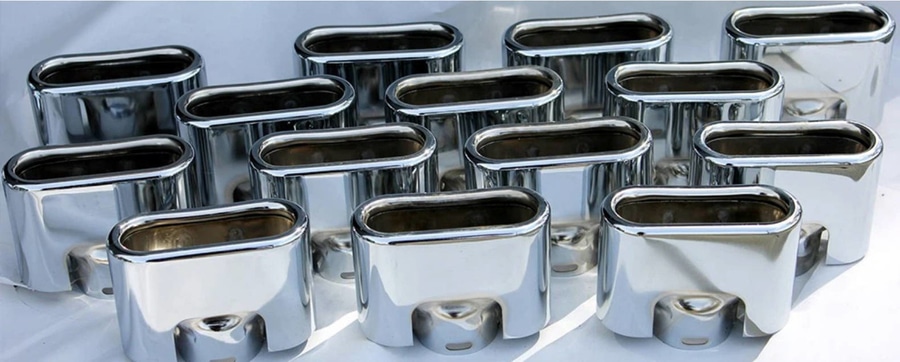
Chrome plating is a surface treatment technique where a thin layer of chromium is electroplated onto a metal or plastic substrate. The process enhances hardness, corrosion resistance, and aesthetics. During plating, the part is immersed in a chromium electrolyte bath and connected as the cathode, while an electric current deposits chromium ions onto the surface. This results in a shiny, mirror-like finish with improved durability and ease of cleaning.
2. Types of Chrome Plating and Key Steps
There are several forms of chrome plating, including decorative chrome, hard chrome, thin dense chrome (TDC), flash chrome, satin chrome, black chrome, micro-cracked chrome, micro-porous chrome, and composite chrome plating. Achieving a high-quality finish requires multiple steps such as cleaning, degreasing, polishing, etching or activation, and in some cases, undercoating with metals like copper or nickel. Critical process parameters include current density, bath temperature, plating time, electrolyte composition, and agitation.
3. Advantages and Disadvantages of Different Methods
Traditional hexavalent chromium offers superior hardness, corrosion resistance, and a distinctive mirror finish but poses significant environmental and health risks due to its toxicity, along with low efficiency. Trivalent chromium provides a safer and more environmentally friendly alternative, with better efficiency and coverage on complex geometries, though it may fall short in very thick coatings. Divalent chromium is still experimental and not yet widely adopted for industrial use.
4. Applicable Materials and Real-World Uses
Chrome plating can be applied to materials such as carbon steel, alloy steel, stainless steel, copper alloys, zinc alloys, aluminum alloys, and even plastics (after surface preparation). Its applications span across industries: decorative chrome in automotive trims, exhausts, and household fixtures; hard chrome in industrial machine components, molds, pistons, and hydraulic rods; and functional coatings in aerospace, medical devices, and electronics requiring durability and specific performance.
5. Cost, Defects, Selection, and Alternatives
The cost of chrome plating depends on plating type, substrate material, component size, surface preparation, coating thickness, and production volume. Common defects include peeling, uneven coverage, pits, roughness, cracks, discoloration, or exposed underlayers. Selection guidelines recommend decorative chrome for appearance and corrosion resistance, hard or dense chrome for wear resistance, and trivalent chromium for eco-compliance. Alternatives such as electroless nickel plating, powder coating, electrophoretic coatings, and PVD are increasingly considered in environmentally regulated industries.