#Industry News
Sand Casting: Process, Types, Materials, And Applications
Sand Casting
1. Definition and Overview
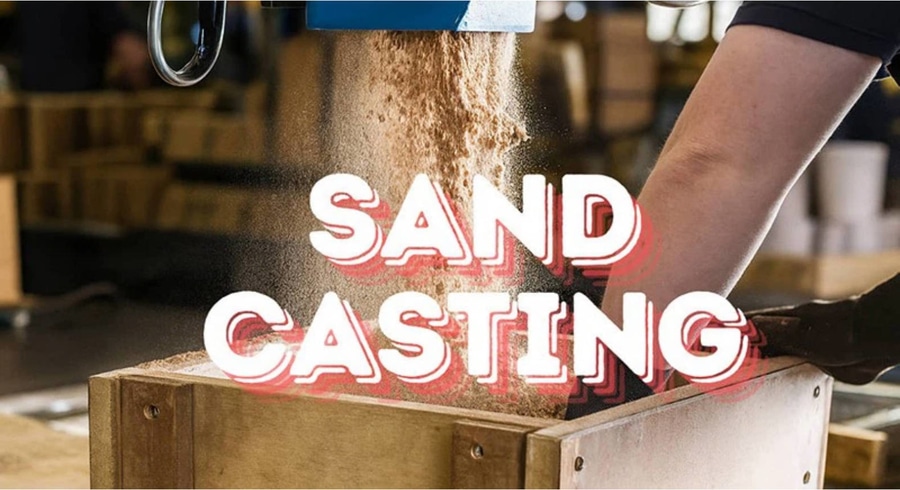
Sand casting is a traditional and versatile metal-casting method in which molten metal is poured into a mold made of sand. A pattern creates a cavity in the sand, then molten metal flows in, solidifies, and the sand mold is broken to remove the casting. The process is widely used for parts of various sizes and geometries because of its flexibility and relatively low tooling cost.
2. Process Steps
The typical steps include: (a) making a pattern of the desired part; (b) forming the sand mold around the pattern (including cope and drag halves, with cores if needed); (c) removing the pattern and placing the mold halves together with gating and riser systems; (d) pouring molten metal into the mold; (e) allowing it to cool and solidify; (f) breaking away the sand mold and extracting the cast part; and (g) post-processing such as trimming, cleaning, heat treatment or machining.
3. Materials and Mold Media
Sand casting is compatible with a broad range of metals: ferrous (like cast iron, steel) and non-ferrous (like aluminum, bronze, brass) alloys. The mold material is usually silica sand or other foundry sand mixed with a binder (clay, resin or chemical binder) and moisture to maintain shape. The sand mold is expendable (destroyed during part removal) and allows for adaptability in shape, core placement, and size.
4. Advantages and Limitations
Key advantages: low tooling cost, suitability for large and complex parts, flexibility in design changes, and ability to produce castings in relatively short lead times. Limitations: coarser surface finish compared to precision methods, greater need for machining or finishing, less dimensional accuracy, and molds that can only be used once. Also, production rates are slower and per-unit cost higher when producing very high volumes compared to permanent molds or die casting.
5. Applications and Considerations for Selection
Sand casting is used across industries: automotive (engine blocks, cylinder heads), machinery, shipbuilding, valves & pumps, heavy equipment, and large structural parts. It is especially suited when part size is large, geometries are complex, or volumes are moderate. When selecting sand casting, factors to evaluate include mold material cost, pattern complexity, required tolerances and surface finish, part size/weight, alloy selection, post-process machining requirements, and production volume.