#Industry News
What Is Plaster Casting? Process, Materials, And Applications
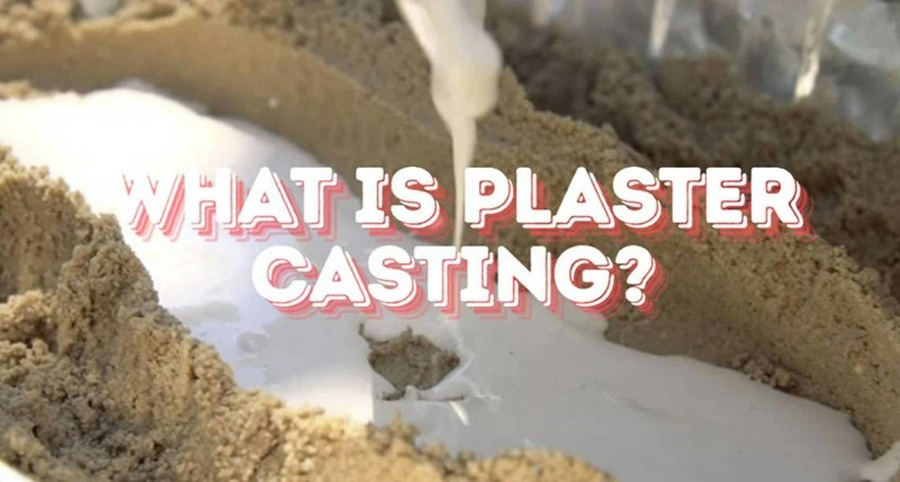
What Is Plaster Casting?
1. Definition and Overview
Plaster casting (also called plaster-mold casting) is a metal casting process that uses a mold made from plaster (rather than sand or refractory ceramic) to form the cavity into which molten metal is poured. It falls into the family of expendable mold techniques: after casting, the mold is broken and cannot be reused. Compared with traditional sand casting, the plaster mold offers finer detail and better surface finish.
2. Process Steps
The process typically involves creating a pattern (often in wax, foam or other materials), assembling any sprue/feeder/vent systems, placing the pattern in a flask or mold box, pouring in a plaster-based mixture to form the mold around the pattern, allowing it to harden, removing the pattern (often by melting, boiling or burning it out), then pouring molten metal into the mold, allowing it to solidify, breaking the plaster mold, and finally cleaning and finishing the casting.
3. Materials and Applicable Metals
Plaster casting is most commonly used with non-ferrous metals (such as aluminum alloys, zinc alloys, copper/brass/bronze) rather than high-melting-point ferrous alloys, because the plaster mold’s thermal resistance is more limited than some ceramic or sand molds. The plaster mixture may be enhanced with additives (fillers, fibers, refractory powders) to improve strength, reduce expansion, and increase temperature tolerance.
4. Advantages and Limitations
Key advantages of plaster casting include the ability to produce fine details, smooth surface finishes, thin wall sections, and complex geometries with less machining required. Additionally, the tooling/mold cost and lead time are often lower than some other precision casting methods. On the other hand, its limitations include fragility of the plaster mold, lower suitability for very large parts or high‐melting‐point alloys, shorter mold life (single use), and slower cycle times compared to high-volume methods.
5. Applications and Selection Considerations
Plaster casting is well suited for moderate-volume production runs of parts requiring good detail and finish — such as decorative pieces, gears, valves, small housings, or prototypes. It occupies a niche between simple sand casting and more expensive investment casting. When selecting it, engineers should consider factors such as part size/weight, alloy melting point, required surface finish and tolerance, mold cost and lead time, and whether complex geometry or thin walls are needed.