#Industry News
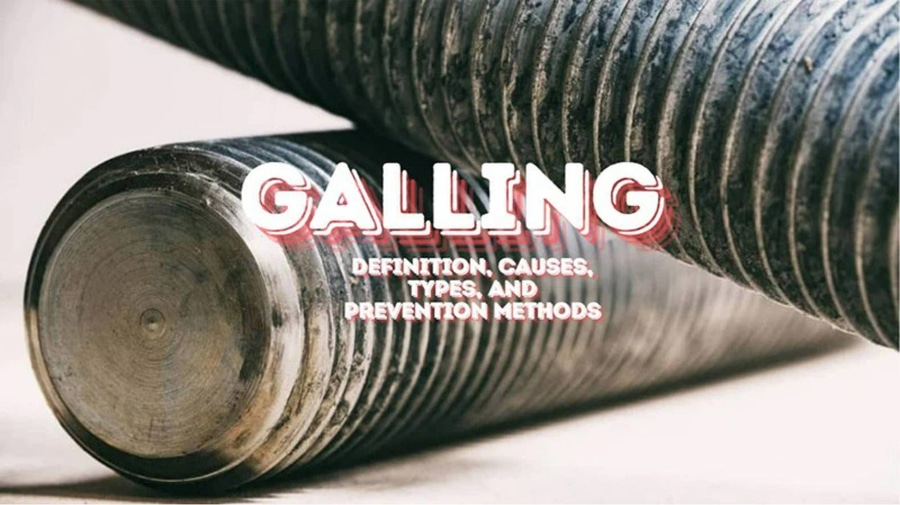
Galling: Definition, Causes, Types, And Prevention Methods
Galling
1. What is Galling?
Galling is a severe form of adhesive wear that occurs when two metal surfaces slide or rub against each other under load, causing material transfer from one surface to the other. Microscopic peaks (asperities) on the surfaces weld together due to frictional heat and pressure; as movement continues, these welds tear, pulling chunks of metal and leaving behind rough, scored marks and lumps. Unlike gradual wear, galling often begins suddenly and can rapidly lead to component seizure or failure.
2. How Galling Happens (Mechanism)
The mechanism starts when two surfaces are pressed together and sliding. The asperities generate concentrated stress and frictional heat, disrupting protective oxide layers and allowing bare metal-to-metal contact. Micro-welds form at contact points, then tear apart during motion, causing material to transfer between surfaces. The transferred material builds up, increasing friction and heat, accelerating the loop. This makes galling self-reinforcing and capable of causing rapid damage under sustained sliding contact.
3. Types and Categories of Galling
The article classifies galling into several types of wear that may accompany or lead into it:
Abrasive wear: When a harder surface or trapped particles scratch a softer one.
Seizure: The hallmark of galling — weld-stick and pulling apart leads to surfaces locking.
Fatigue wear: Cyclic loading causes microcracks and eventual spalling.
Fretting wear: Small amplitude oscillatory motion causes surface deterioration and rust/debris formation.
Corrosion wear: Chemical breakdown (oxidation, moisture, lubricant breakdown) weakens surface layers, making adhesive sticking more likely.
4. Materials & Conditions Prone to Galling
Materials that are ductile, soft, and have strong atomic bonding are most vulnerable. Examples include austenitic stainless steels (e.g., 304, 316), aluminum alloys, titanium and nickel alloys. Using two similar metals in contact (e.g., stainless against stainless) increases risk. Conditions that promote galling include high load, sliding motion, inadequate lubrication, contaminated surfaces, high temperatures, and oxidised or damaged surface layers.
5. Preventive Measures and Best Practices
While galling can rarely be eliminated entirely, it can be effectively managed. Key strategies include using dissimilar alloys or harder materials for one contact surface, applying proper lubrication and ensuring it remains intact, applying appropriate surface treatments or coatings (e.g., hard plating, nitriding), maintaining clean and well-finished surfaces, controlling assembly load and motion speed, and design choices such as reducing contact pressure or sliding distance. These combined help reduce friction, prevent micro-weld initiation, and prolong the life of sliding components.