#Industry News
What Is Annealing? Everything You Need To Know
What Is Annealing?
1. What is Annealing
Annealing is a heat treatment process applied to metals (and sometimes other materials) in order to alter their physical (and sometimes chemical) properties. The main goal is to increase ductility and toughness, reduce hardness, relieve internal stresses, and restore work-hardened metals to a more workable, stable state.
2. The Basic Steps and Mechanism
During annealing, the metal is heated to a temperature above its recrystallization point (but below its melting point), held there for a certain period (soaking), and then cooled down—often slowly. This heat provides energy for atoms within the metal’s crystal lattice to move, enabling dislocations to rearrange or be eliminated. As a result, internal stresses are relieved, and the metal’s microstructure “resets,” restoring ductility and reducing hardness.
3. What Properties Change & Why It Matters
After annealing, metals typically become softer and more ductile, making them easier to bend, form, machine or undergo further processing. It also improves toughness (less brittleness), reduces residual stresses (which helps prevent cracking or warping), and can refine the grain structure for more uniform mechanical behavior.
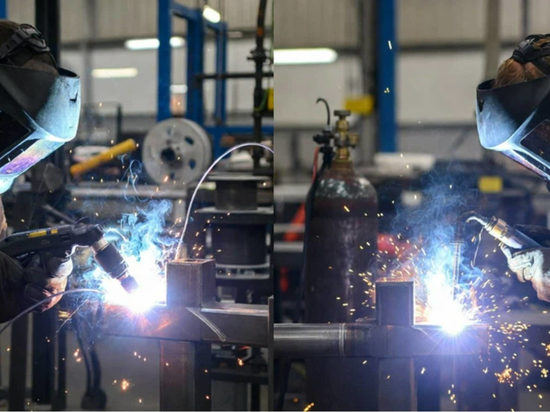
These changes make annealing a fundamental step especially after cold-working, welding, casting or machining.
4. Different Types of Annealing and Their Applications
There are several variations of annealing depending on the goal:
Full (complete) annealing, for completely softening and homogenizing a work-hardened metal.
Stress-relief annealing, focused on reducing residual stress without necessarily drastically softening the metal.
Recrystallization or process annealing, used after cold work to restore ductility before further forming.
Choosing the right type depends on the prior processing (cold work, welding, casting) and the intended subsequent operations (forming, machining).
5. Advantages and Trade-Offs
The advantages of annealing include enhanced formability, easier machining and working, reduced risk of cracking or distortion, and improved material uniformity and toughness.
On the flip side, annealing adds processing time and costs, and depending on the metal and cooling method, surface oxidation or decarburization might occur, requiring post-treatment.