#Industry News
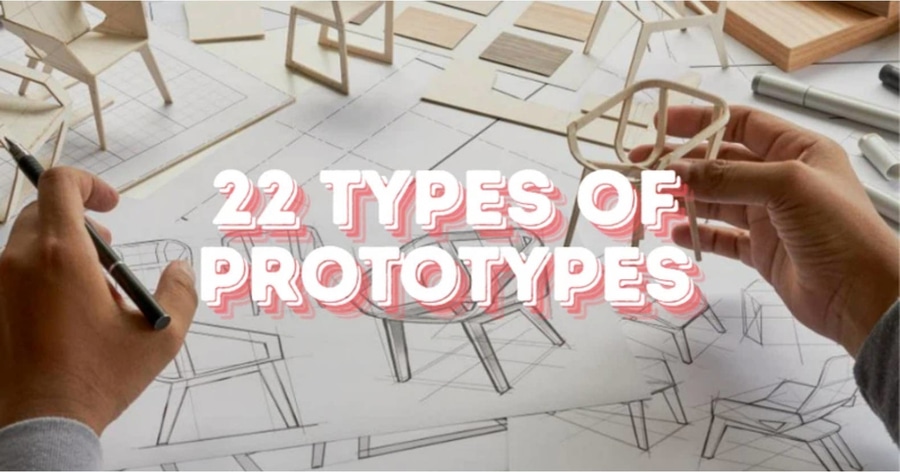
22 Types Of Prototypes
Types Of Prototypes
1. The Role of Prototyping in Product Development
Prototyping is a fundamental step in product design, engineering, software development, and manufacturing. It involves creating early models of a product to explore ideas, validate functionality, test feasibility, and reduce development risks before committing to full-scale production. As products and industries have become more complex, the concept of a “prototype” has expanded into many distinct forms, each serving a specific purpose in the development lifecycle.
2. Purpose-Based Prototypes
Many prototypes are defined by their purpose. Early-stage prototypes such as concept and visual prototypes focus on idea exploration and appearance, helping teams align on direction and aesthetics. Functional and engineering prototypes emphasize how a product works, allowing engineers to test mechanisms, electronics, and system integration. More advanced forms, such as pre-production (PVT) prototypes and MVPs, are used to validate manufacturability, production readiness, or market demand before large investments are made.
3. Fidelity-Based Prototypes
Prototypes can also be categorized by their level of fidelity. Low-fidelity prototypes are quick and simple, such as sketches, mockups, or basic models, used to test ideas rapidly. Mid-fidelity prototypes introduce more structure, interaction, or geometry to refine layouts and usability. High-fidelity prototypes closely resemble the final product in form, material, and interaction, making them suitable for user testing, design approval, and detailed engineering validation.
4. Representation and Implementation Approaches
Another distinction lies in how prototypes are represented and implemented. Paper and digital prototypes are widely used for fast iteration, simulation, and early feedback, especially in UX and engineering analysis. Physical prototypes, created through methods like 3D printing or CNC machining, allow real-world evaluation of size, ergonomics, strength, and assembly. Implementation-based prototypes such as rapid, horizontal, vertical, or Wizard-of-Oz prototypes help teams validate system structure, deep technical functions, or user interactions efficiently.
5. Engineering, Manufacturing, and Final Validation Prototypes
In later stages, engineering-focused prototypes such as looks-like, works-like, alpha, and beta prototypes play a critical role in final validation. These prototypes are used to identify mechanical issues, usability problems, reliability risks, and production challenges before mass manufacturing. The document emphasizes that selecting the right prototype at the right stage is essential for reducing cost, improving product quality, and ensuring a smooth transition from design to production.