#Industry News
Squeeze Casting: Process, Materials, Advantages, And Applications
Squeeze Casting
1. Overview and Definition of Squeeze Casting
Squeeze casting is a metal forming process that combines the design flexibility of casting with the mechanical benefits of forging. In this process, molten metal is poured into a closed metal mold and solidified under high mechanical pressure. The applied pressure significantly reduces shrinkage and gas porosity, resulting in dense parts with fine microstructure and mechanical properties close to forged components. Squeeze casting is particularly valued where high strength, low porosity, and dimensional accuracy are critical.
2. Process Principle and Development
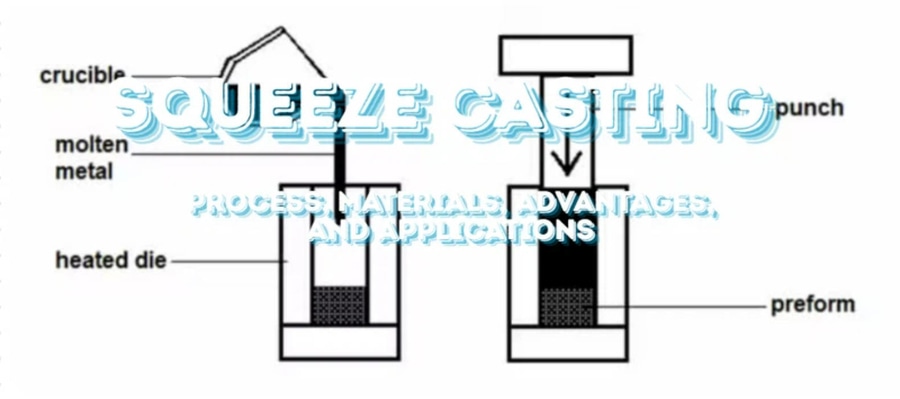
The process works by pouring molten metal into a preheated mold and applying pressure through a hydraulic punch before solidification is complete. This pressure forces the metal to fill the cavity fully and remain compact as it cools. Developed in the mid-20th century, squeeze casting gained industrial relevance with advances in hydraulic presses and mold materials. Since the 1970s, it has been widely adopted in automotive and aerospace industries for producing high-performance aluminum and magnesium alloy components.
3. Types and Key Process Parameters
Squeeze casting can be classified into direct squeeze casting, indirect squeeze casting, and liquid metal forging. Each type differs in how metal is introduced and how pressure is applied, allowing flexibility for different part geometries and performance requirements. The quality of squeeze-cast parts depends heavily on precise control of key parameters, including applied pressure, pouring temperature, mold temperature, pressing speed, timing, and pressure holding duration. Proper balance of these factors is essential to achieve low porosity, uniform grain structure, and consistent mechanical properties.
4. Materials, Properties, and Advantages
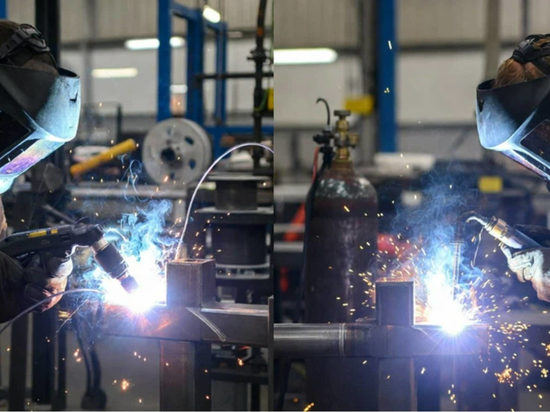
Common materials used in squeeze casting include aluminum alloys, magnesium alloys, copper alloys, zinc alloys, and certain metal matrix composites. Parts produced by squeeze casting exhibit high density, excellent fatigue resistance, improved ductility, good surface finish, and tight dimensional tolerances. The process also allows parts to be heat treated and welded reliably, which is often difficult with conventional die-cast components. These advantages make squeeze casting suitable for structural and load-bearing applications.
5. Applications, Limitations, and Selection Considerations
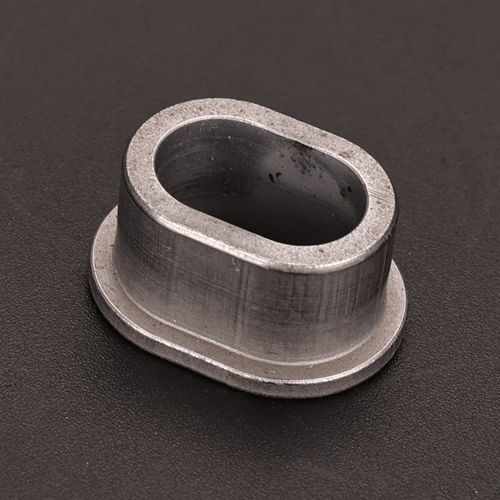
Squeeze casting is widely used in automotive suspension and steering components, aerospace structural parts, industrial machinery, and thermal management components such as motor housings and heat sinks. While it offers superior quality compared to gravity casting and better mechanical performance than high-pressure die casting, it also has limitations. These include higher tooling and equipment costs, longer cycle times than die casting, stricter process control requirements, and limited suitability for highly complex geometries. As a result, squeeze casting is most economical for medium-volume production where high strength and reliability outweigh initial tooling investment.