#Industry News
Chamfer Vs Fillet - What You Need To Know
Chamfer Vs Fillet
1. Definitions of Chamfer and Fillet
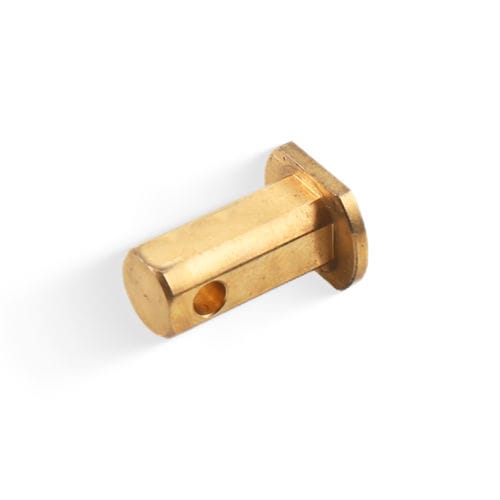
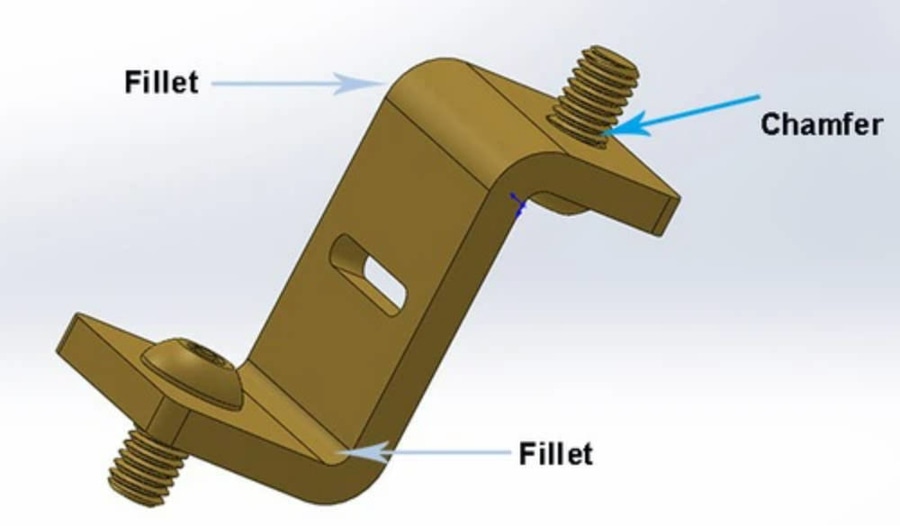
A chamfer is a beveled or angled edge created by cutting away material at a specific angle (often 45°) to remove sharp corners and create a flat, sloping transition between surfaces. In contrast, a fillet is a rounded or curved edge that smoothly blends two adjoining surfaces together. Chamfers and fillets are both common edge treatments used across machining and manufacturing to improve part handling and performance.
2. Purposes and Benefits
Both chamfers and fillets serve to eliminate sharp edges — which improves safety by reducing the risk of cuts — and can aid assembly by guiding parts into position. Fillets also help distribute stress more evenly across a part, reducing stress concentrations that can lead to cracking or failure under load. Chamfers, while mainly focused on easing assembly and aesthetics, do not distribute stress as significantly as fillets.
3. Key Differences in Shape and Function
Chamfers have flat, straight surfaces that meet at an angle, giving parts a more angular, geometric look and simpler tool paths for machining. Fillets are smooth and curved, providing stronger edges and improved wear characteristics. Compared with chamfers, fillets generally increase fatigue resistance and part durability but require more complex machining or tool paths to achieve the curved geometry.
4. Technical Drawing and Annotation
On engineering drawings, chamfers are typically annotated with a “C” and dimensions such as angle and length (e.g., C 45° x 5), while fillets are denoted with “R” followed by the radius value (e.g., R10). These conventions help ensure that designers, machinists, and engineers share a clear understanding of the required edge conditions during manufacturing and inspection.
5. Selection Considerations and Best Practices
Choosing between a chamfer and a fillet depends on functional requirements, part strength needs, manufacturing cost, and assembly considerations. Chamfers are often preferred for easier assembly, lower machining cost, and simpler geometry, while fillets are selected when stress distribution, fatigue resistance, or smoother transitions are important. Designers may also balance factors like tooling availability, secondary processes, and overall part requirements when deciding which edge treatment to apply.