#Industry News
What Is a Helical Gear and When Should You Use It?
What Is a Helical Gear?
1. What Is a Helical Gear
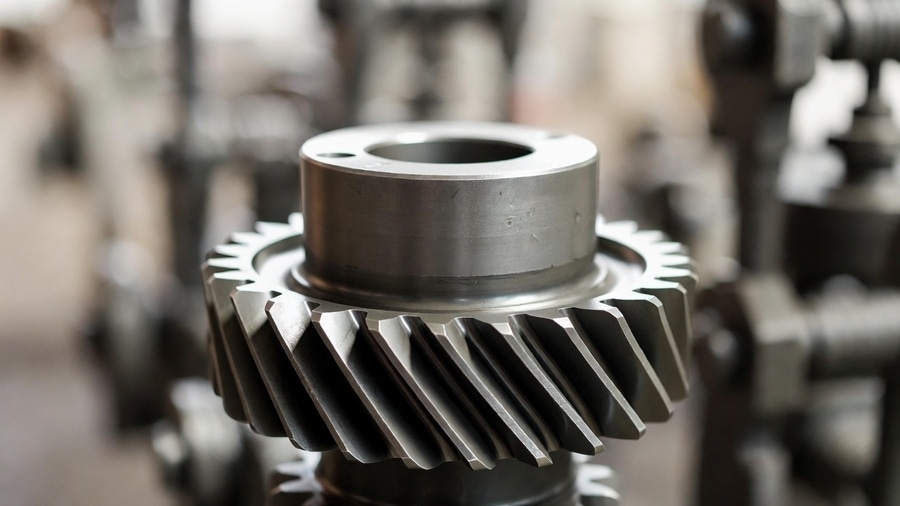
Helical gears are a type of gear with teeth cut at an angle to the axis of rotation. Unlike spur gears, whose teeth engage all at once, helical gears mesh gradually along the tooth length. This design results in smoother power transmission, reduced vibration, and lower operating noise.
Because multiple teeth are in contact at the same time, helical gears can distribute loads more evenly. This makes them particularly suitable for applications involving higher speeds, continuous operation, or increased torque requirements.
2. How Helical Gears Work
In a helical gear set, engagement begins at one end of the tooth and progresses smoothly across the face width. This gradual contact reduces impact forces during meshing and improves transmission stability. As a result, helical gears perform better than spur gears in systems where noise control and smooth motion are critical.
However, the angled tooth geometry also introduces axial thrust along the shaft. This axial force must be considered during mechanical design, especially when selecting bearings and defining shaft support structures.
3. Key Advantages of Helical Gears
Helical gears are widely used in industrial power transmission due to several technical advantages:
Smoother and quieter operation compared to spur gears
Higher load-carrying capacity due to increased tooth contact
Improved stability at medium to high rotational speeds
Better suitability for continuous-duty applications
4. Typical Applications
Helical gears are commonly used in applications where performance and reliability are critical, such as:
Automotive transmissions and drivetrains
Industrial gearboxes and reducers
Automation and motion control equipment
Heavy machinery requiring stable torque transmission
5. When to Choose a Helical Gear
A helical gear is typically the right choice when the application involves higher speeds, continuous operation, or stricter noise requirements. Designers should also account for axial loads and ensure proper bearing support to maintain long-term reliability.
6. About HLC Metal Parts
HLC Metal Parts specializes in precision gear components and custom metal parts manufacturing. With extensive experience in CNC machining, gear production, and quality-controlled mass manufacturing, HLC supports global customers with reliable and application-oriented solutions.