#Industry News
Climb Milling Vs. Conventional Milling: What Are The Differences?
Climb Milling Vs. Conventional Milling
1. Definitions and Core Difference
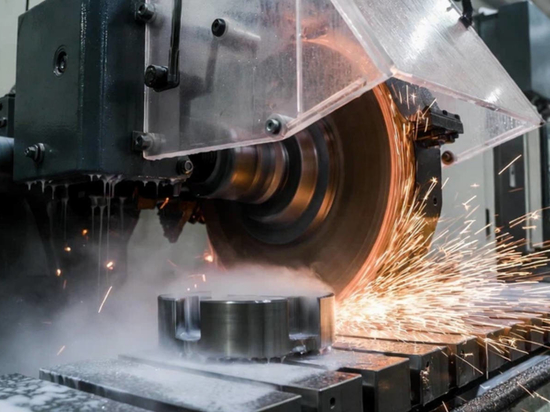
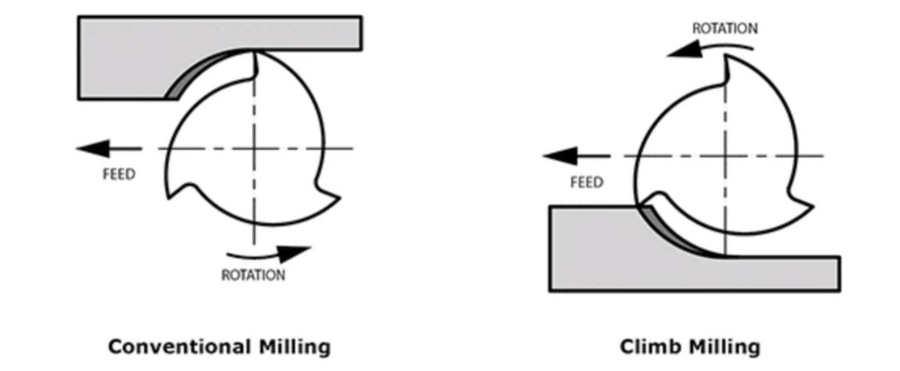
Climb milling (also called down milling) and conventional milling (up milling) are two fundamental approaches in milling operations that differ in the direction the cutter rotates relative to the feed of the workpiece. In climb milling, the cutter rotates with the feed direction, engaging the material at maximum chip thickness and reducing to zero as the cut finishes. In conventional milling, the cutter rotates against the feed direction, starting at nearly zero chip thickness and increasing to maximum as the cut progresses.
2. How Cutting Forces Act
The direction of cutting forces is a key distinction. In climb milling, the cutting forces tend to pull the tool into the workpiece, pressing the material down toward the machine table; this can reduce vibration and often yields a smoother surface. In conventional milling, the forces push the tool away from the workpiece, which can sometimes cause upward lifting of the part and increased tool deflection if fixturing and rigidity are not adequate.
3. Surface Finish and Tool Life
Climb milling generally produces a better surface finish because chips are deposited behind the cutter rather than in front of it, which minimizes recutting of chips and reduces heat build-up. This often leads to longer tool life and more efficient cutting. Conventional milling tends to generate more friction at the start of the cut, can produce rougher finishes, and may cause increased tool wear due to chip recutting and higher heat generation.
4. Machine Requirements and Use Cases
Because climb milling pulls the workpiece toward the cutter, it requires machines with minimal backlash and high rigidity, typically modern CNC machines, to avoid tool pull-in and vibration. Conventional milling, being less aggressive, is more forgiving on older machines with backlash or lower stiffness, and is often preferred for roughing operations or machining harder materials (such as cast iron) where surface finish is less critical.
5. Selection Considerations and Practical Guidance
The choice between climb and conventional milling depends on material, machine condition, and machining goals. For precision milling, smooth finishes, and improved tool life, climb milling is often the best choice when the machine and fixturing can support it. Conventional milling remains useful when working with older equipment, rougher surfaces, or conditions where backlash is a concern, or where controlled entry into the material is preferred. Understanding both methods helps machinists balance surface quality, tool wear, cutting forces, and machine limitations.