#Industry News
What Is a Bevel Gear: Types, How It Works, and Common Uses
What Is a Bevel Gear
1. What a Bevel Gear Is
A bevel gear is a type of gear used to transmit power between intersecting shafts, most commonly arranged at a 90-degree angle. Unlike spur or helical gears that operate on parallel shafts, bevel gears are designed to change the direction of rotational motion while maintaining efficient torque transfer.
2. How Bevel Gears Work
Bevel gears operate through teeth cut on conical surfaces. When two bevel gears mesh, rotational motion is transferred from the driving gear to the driven gear along intersecting axes. The contact pattern between the teeth and the accuracy of alignment directly affect load distribution, efficiency, noise, and service life.
3. Straight Bevel Gears
Straight bevel gears have straight teeth that taper toward the apex of the cone. They are the simplest bevel gear type and are relatively easy to manufacture. Straight bevel gears are typically used in low-speed and light-load applications, as their tooth engagement can generate higher noise and vibration at higher speeds.
4. Spiral Bevel Gears
Spiral bevel gears feature curved teeth that engage gradually across the tooth surface. This design allows smoother operation, higher load capacity, and reduced noise compared with straight bevel gears. Spiral bevel gears are widely used in automotive, industrial, and heavy-duty power transmission systems.
5. Hypoid Gears
Hypoid gears are similar to spiral bevel gears but operate with offset, non-intersecting shafts. This offset design enables higher torque transmission and improved load distribution while allowing more flexible system layouts. Hypoid gears are commonly used in automotive differentials and applications requiring quiet, high-load operation.
6. Bevel Gear Manufacturing Considerations
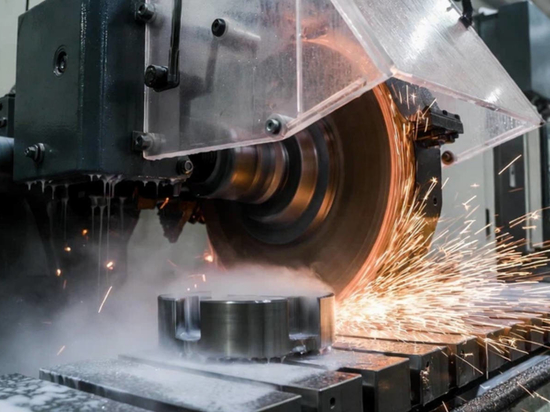
Manufacturing bevel gears requires high precision due to complex tooth geometry and sensitivity to misalignment. Material selection, heat treatment, surface finishing, and machining accuracy all play important roles in determining gear strength, wear resistance, and operational stability.
7. Applications of Bevel Gears
Bevel gears are commonly used in automotive drivetrains, industrial gearboxes, machine tools, agricultural machinery, and other mechanical systems where power must be transmitted at an angle.
8. Selecting the Appropriate Bevel Gear Type
The choice of bevel gear depends on operating speed, load conditions, noise requirements, and system layout. Straight bevel gears are suitable for simpler, lower-speed applications, while spiral and hypoid gears are preferred for higher loads, smoother motion, and demanding operating conditions.