#Industry News
HTEC-video Successfully Completes In-Furnace Infrared Monitoring System for Tsingshan Weda Bay Nickel Smelting Furnace
In-Furnace Infrared Monitoring System for Submerged Arc Furnace | Weda Bay Project
HTEC-video has officially completed the commissioning of an in-furnace infrared monitoring system for the No.1 submerged arc furnace in Area A of the nickel smelting production line at the Weda Bay Industrial Park operated by Tsingshan Holding Group.
The project forms part of the long-term cooperation between HTEC-video and Tsingshan Group, covering multiple furnace areas including Area A, Area U, and the newly constructed enclosed furnaces in Area X. HTEC-video engineers have now completed the on-site installation and commissioning work for the Area A project and returned from the project site.
Project Background
This project is applied to a large ferronickel smelting submerged arc furnace located in the Weda Bay Industrial Park. The main reaction materials inside the furnace include:
· Laterite nickel ore
· Carbon-based reducing agents
· Flux materials
· Recycled slag materials
The operating environment is characterized by:
· Extremely high temperatures
· Heavy dust concentration
· Strong thermal radiation
· Negative pressure furnace conditions
These conditions place exceptionally high demands on the long-term stability and reliability of monitoring equipment.
Engineering Challenges and System Design
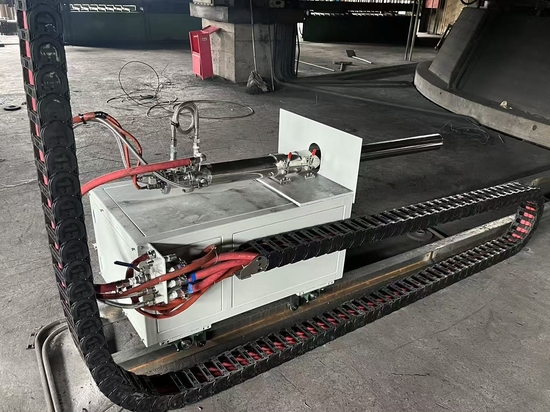
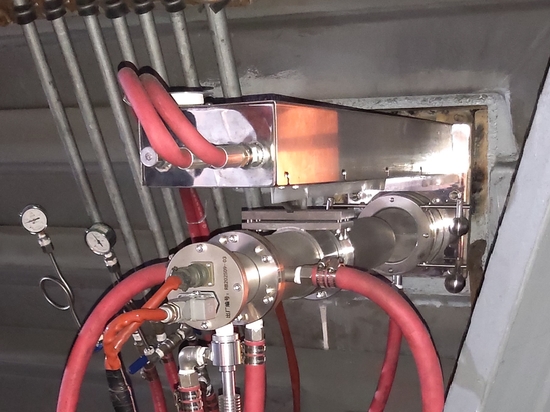
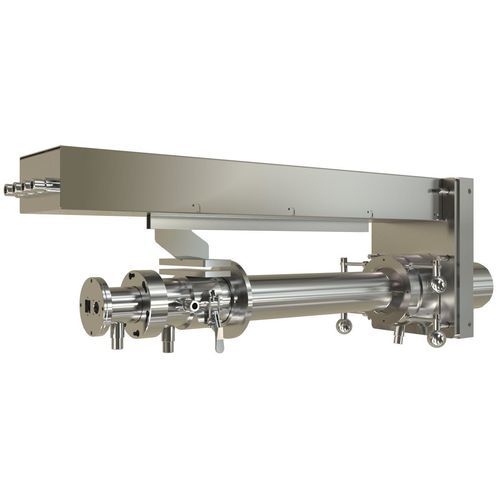
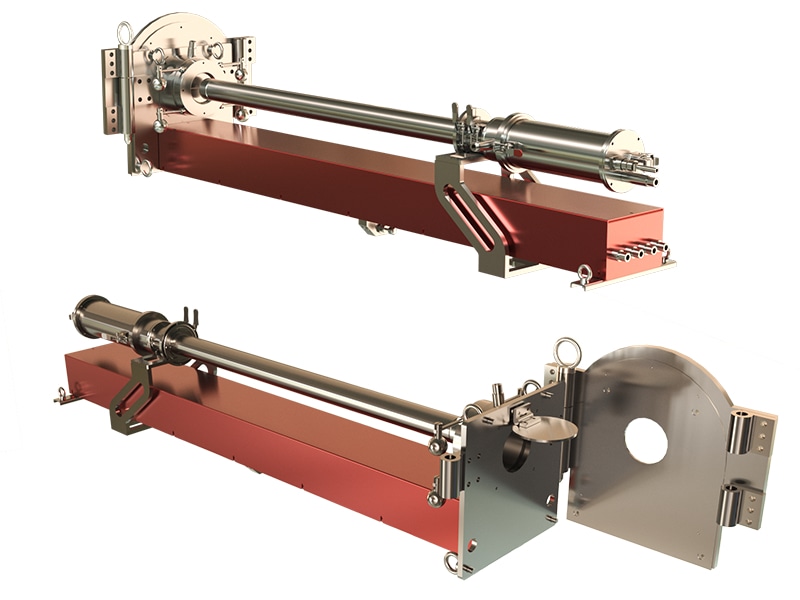
Due to site constraints and poor water quality that do not meet HTEC-video’s requirements, and with sufficient compressed air supply available on site, HTEC-video has adopted the RB-TemTV-M800 medium air-cooled in-furnace infrared monitoring system to ensure long-term stable operation under these conditions.
Area A No.1 furnace has an overall diameter of approximately 17.8 meters and is equipped with eight observation ports. However, due to the complex on-site structure, only a very limited number of these ports are suitable for equipment installation, and each usable location is subject to varying degrees of spatial constraints.
During the site survey, the engineering team also identified several concurrent challenges. Some observation ports were obstructed by structural columns, limiting both the field of view and installation angles. The available space for installation and subsequent maintenance was extremely restricted, while existing external piping systems further constrained the expansion of the maintenance platform. In addition, the relatively large observation openings posed a risk of material spillage during operation, increasing the potential operating risks for the equipment. Furthermore, routine furnace operation requires periodic clinker removal and burden pushing activities, placing higher demands on equipment accessibility.
Based on these multiple constraints, the project team carried out a targeted optimization design of the installation area following a joint technical evaluation by both parties. Without compromising structural safety, two structural columns obstructing the observation ports were relocated. The original guardrails were dismantled, and the maintenance platform was extended outward by approximately 2 meters. The platform was also elevated to avoid interference from external piping systems. Finally, new safety guardrails were welded and installed on the outer side to ensure operational safety and accessibility for future maintenance.
Due to limited installation space on site, it was not possible to additionally install a slag scraping device. Meanwhile, operators must share the observation port for routine maintenance operations. Therefore, during the design phase, HTEC-video adopted a swingable structural design.
A manual swing mechanism was installed on both sides of the equipment. After the probe is retracted from the furnace, operators can manually swing the main body of the system to the left or right as required, thereby providing sufficient space for burden pushing and slag cleaning operations.
Meanwhile, to facilitate on-site maintenance, the embedded pipe channel was enlarged during the design stage, allowing operators to insert water hoses and air hoses required for slag removal and cleaning operations into the furnace.
Equipment Features
The installed system includes the following key features:
· IP65-rated air-cooled protection structure
· Temperature measurement range from 400°C to 1800°C
· Automatic retraction system activated during air supply failure or overheating conditions
· Manual left-right swing mechanism integrated into the furnace door assembly
· Designed for long-term operation in high-temperature furnace observation environments
· Effective resistance against dust, moisture, and thermal radiation interference
System Functions
The infrared monitoring system provides multiple operational functions, including:
· Real-time online monitoring of the furnace temperature field
· Configurable high-temperature alarm thresholds
· Thermal distribution analysis of furnace burden surfaces and reaction zones
· The system ensures stable continuous operation while providing accurate and reliable temperature data in high-temperature furnace environments.
· Adaptation to complex internal smelting furnace environments
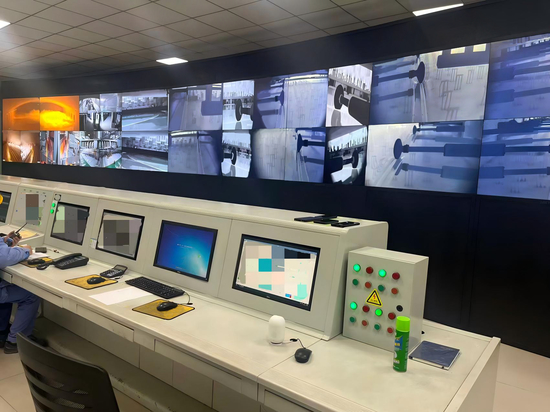
· Integration with plant industrial monitoring systems for centralized management
Operational Value
Temperature stability plays a critical role in ferronickel smelting efficiency and furnace safety. Through the implementation of this infrared monitoring solution, operators are able to observe furnace thermal conditions more intuitively and respond more effectively to process variations.
The system helps customers achieve:
· Improved visualization of the smelting process
· Enhanced energy efficiency and process optimization
· Increased furnace safety monitoring capability
· Reduced operational risks caused by abnormal temperature conditions
Project Significance
The successful implementation of this project further demonstrates the applicability and reliability of infrared in-furnace temperature monitoring technology in large submerged arc furnace environments.The project also provides a practical engineering reference for future high-temperature industrial monitoring applications in ferronickel, ferroalloy, and metallurgical industries.
For more information about HTEC-video high-temperature furnace monitoring solutions, please visit HTEC-video Official Website