#Industry News
Suspended particles: an environmental challenge for the construction sector
Reducing dust emissions through continuous air quality monitoring and smart environmental management systems
The construction industry faces one of its greatest environmental challenges: the generation and control of suspended particulate matter (PM) in urban and industrial environments — pollutants for which this sector is one of the main contributors.
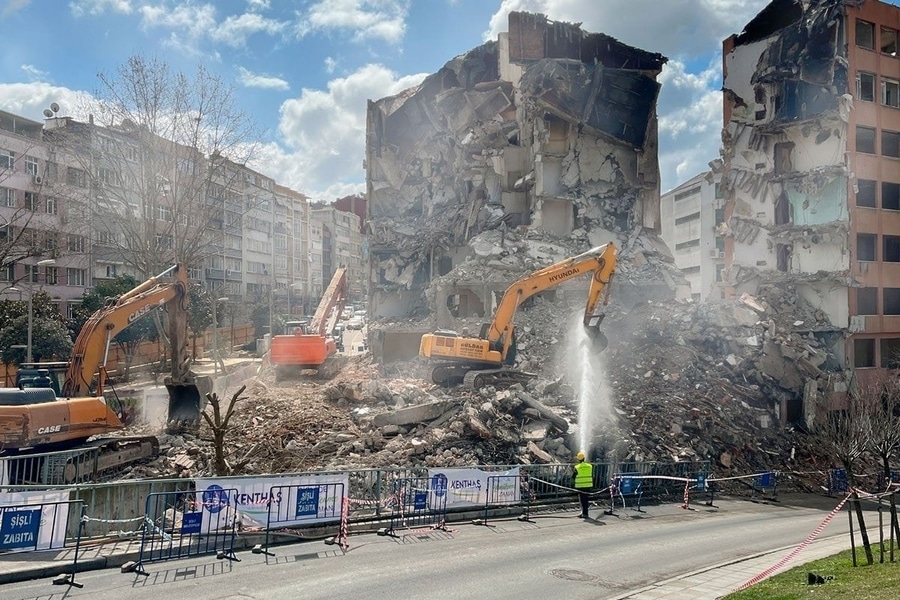
Common activities such as earthmoving, the use of heavy machinery, handling materials, or demolition works release large amounts of dust and aerosols that not only endanger the health of workers on site but also deteriorate air quality in surrounding areas.
These particles (particularly PM10 and PM2.5) consist of complex mixtures of solid and liquid compounds of microscopic size, allowing them to remain suspended in the atmosphere for long periods.
Their composition varies depending on the material released — cement, silica, gypsum, metals, or organic matter, among others.
The main public health risk lies in their minute size, which allows them to penetrate deeply into the respiratory system.
The finest particles, such as PM2.5, can even reach the bloodstream through the pulmonary alveoli, triggering inflammatory and cardiovascular effects, as well as potential carcinogenic risks.
Emission sources and challenges in particle control
In any construction project, suspended particle emissions originate from a wide range of operations: excavation, material stockpiling, heavy vehicle traffic, concrete cutting, air-blasting, and even the movement of equipment and workers on site.
When several of these activities coincide — something common on construction sites — it is easy for dust concentrations to exceed occupational exposure limits set by environmental and health and safety regulations, or by the World Health Organization (WHO) recommendations.
Additionally, controlling these suspended particles poses extra challenges due to two key factors: changing weather conditions and the temporary, dynamic nature of construction sites.
This combination makes traditional manual air quality sampling methods inefficient, as they do not allow continuous monitoring or rapid response to elevated concentrations.
The industry therefore needs intelligent solutions based on continuous air monitoring systems, equipped with automated and certified technologies that ensure compliance with standards, prevent risks, and avoid complaints or penalties — all while operating more efficiently.
Technology for real-time control
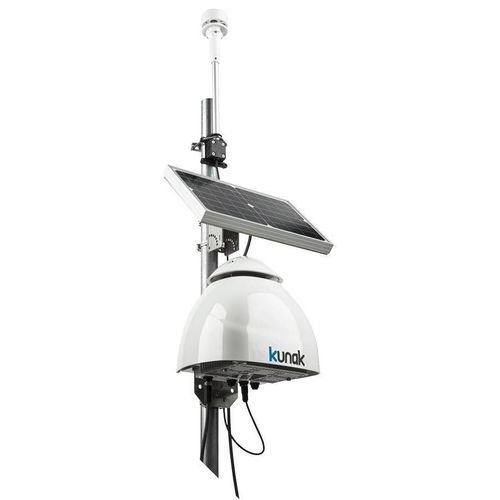
The latest generation of environmental monitoring systems, such as those developed by Kunak, make it possible to measure in real time the concentration of suspended particles, detect emission peaks, and link them to specific site activities.
These solutions, which combine high-precision optical sensors, IoT connectivity, and cloud-based analytics platforms, provide operational data that optimise processes — resulting in more efficient management and an effective reduction of the construction sector’s environmental impact.
Measuring to move forward
Beyond regulatory compliance, the construction industry benefits greatly from a continuous air quality monitoring network on site.
It strengthens its environmental responsibility and corporate commitment while adding significant value in public tenders and in projects seeking sustainability certifications.
Continuous air quality monitoring is a certified and strategic advantage that allows the early detection of incidents before they lead to penalties, protects workers’ health, and enhances the environmental reputation of a construction industry committed to efficiency and sustainability.
Kunak Technologies S.L.
www.kunakair.com