#Industry News
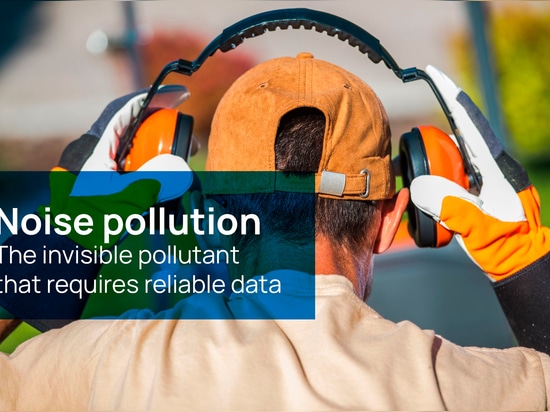
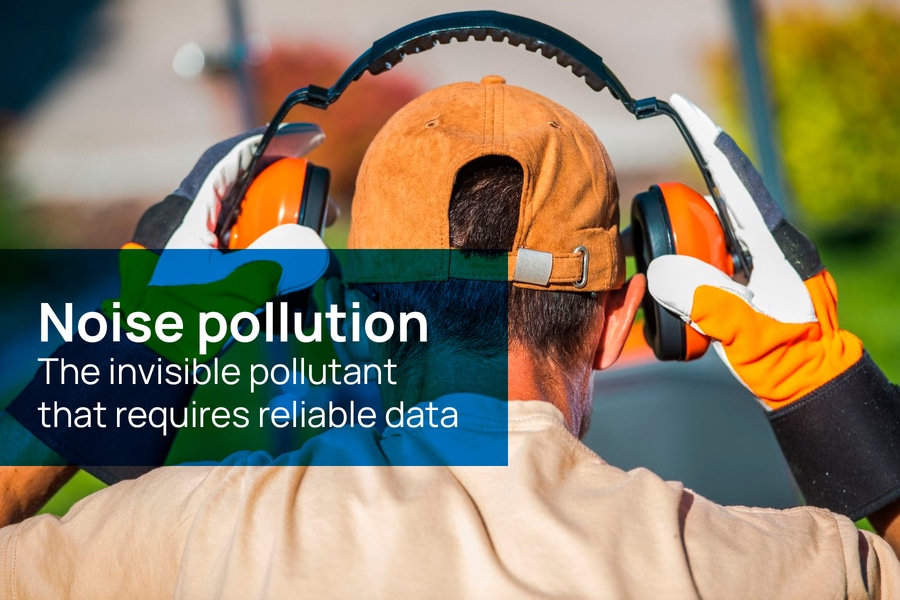
Environmental noise: an invisible pollutant that requires reliable data
We are so used to it being present on our streets, in our infrastructure and in industrial settings that noise goes unnoticed until it directly affects our health.
Environmental noise is part of urban and industrial environments, but when it exceeds certain levels it becomes another pollutant we are exposed to. A growing problem that leaves no visible residue, yet has a direct impact on health and wellbeing.
Noise pollution is an environmental issue that affects millions of people, especially in urban areas with high traffic density. As it interferes with daily life and poses risks to people, noise stands out as one of the main environmental factors impacting public health, ranking just behind air pollution in terms of its effects.
What noise levels affect health
The effect of noise on the body does not depend only on its intensity, but also on how long it lasts and how frequently it occurs. Prolonged exposure above 55 dB(A) during the day already compromises health, and at night this threshold drops to 40–45 dB(A).
In cities, these limits are exceeded daily. Traffic, construction and certain industrial activities generate constant acoustic pressure that not only disrupts rest, but also chronically activates the body’s stress mechanisms. A paradoxically silent problem that continuous monitoring data helps to make visible.
Measurable impacts on people and environment
Science has been confirming for decades what many already suspect. Sustained noise makes people ill. Continuous exposure is associated with sleep disturbances and chronic fatigue, increased stress and blood pressure, higher cardiovascular risk and cognitive impairment in those who live or work in acoustically aggressive environments.
Why measuring noise is key to managing it
Unlike other pollutants, noise does not accumulate or leave a visible trace. It changes depending on time of day, traffic, industrial activity and weather conditions. That is why general estimates are not enough. Proper management requires accurate and continuous data on what is actually happening at each location and moment.
Environmental monitoring makes noise measurable, comparable and actionable. With reliable data, it is possible to identify real emission sources, verify regulatory compliance, detect critical events and design corrective measures based on evidence rather than assumptions. Without this foundation, noise management remains difficult to justify to regulators, communities or technical teams.
Technology applied to acoustic monitoring
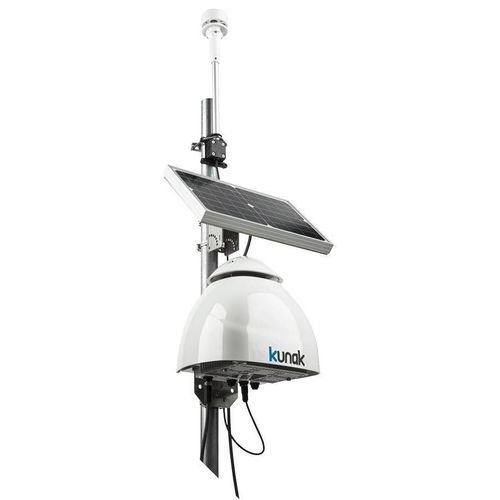
Modern measurement systems have taken a significant step forward. Distributed sensor networks are capable of recording sound levels in real time, with the accuracy required for decision-making. Some platforms, such as Kunak’s, go further by integrating noise and air quality in a single station, providing a complete view of the environment.
Applications are immediate: construction monitoring, traffic impact assessment, monitoring in ports, airports and industrial sites, and surveillance of sensitive areas such as hospitals and schools.
In this way, data enables precise action, prioritisation of interventions and reduction of population exposure. In all cases, the objective is the same: move from perception to evidence, and from evidence to action.