#Industry News
The invisible pollution of energy
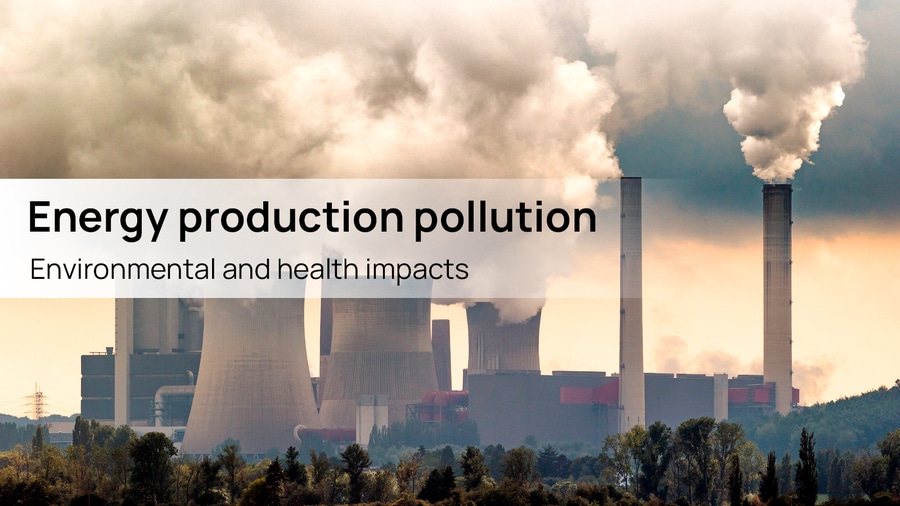
Energy production not only drives the economy, it also leaves an invisible mark on the air we breathe.
Every time we switch on a light, charge a mobile phone or activate an industrial process, an energy chain is working behind the scenes. But that convenience comes at a cost that is not always visible. Energy production remains one of the main sources of air pollution, and is a key factor in the degradation of air quality.
In the case of fossil fuels (coal, oil and natural gas), their use through combustion releases pollutants such as carbon dioxide, nitrogen oxides (NOx), sulphur dioxide (SO2), fine particles (PM2.5) and volatile organic compounds (VOCs) that stand out as pollutants that contribute to climate change. They also drive environmental episodes of smog and acid rain that worsen air quality, especially in industrial and urban settings.
An impact that does not stay at the plant
Pollution associated with energy production is not limited to the immediate surroundings of the power station or industrial facility. Pollutants can travel and affect populations situated at great distances, generating cumulative impacts on the environment and public health at the same time. In other words, measuring only at the point of emission is no longer sufficient if we want to understand the true magnitude and scope of the environmental problem it causes.
Scientific evidence confirms this. Prolonged exposure to pollutants such as PM2.5, NO2 and SO2 is associated with respiratory and cardiovascular diseases, and increases the risk of premature mortality. This is why air quality must stop being viewed as a secondary environmental variable and take a central place in energy management.
Renewable energy, yes, but also measurement
At the present time, the transition towards renewable energy is essential, but it does not eliminate the need to monitor the air. Although the operational impact of these clean energy sources is far lower than that of fossil fuels, there are also effects associated with the life cycle of each technology, such as manufacturing, construction, logistics, waste and land use. A truly sustainable transition is not based simply on changing the source, but on having reliable data to assess each decision about potential resource use.
This is where environmental monitoring makes the difference. Having continuous and comparable data makes it possible to identify emission sources, detect pollution episodes and verify whether the measures taken actually work. Because sustainability is not declared, it is demonstrated with evidence.
Measuring to protect
For an industrial sector increasingly constrained by regulation, society and climate objectives, measuring air has become a strategic tool. It helps operators, administrations and communities make more informed decisions, anticipate risks and strengthen industrial transparency. And above all, it turns environmental management into a competitive advantage based on rigour and trust.
If the goal is to progress towards a cleaner energy model, the first step requires knowing precisely what is happening in the air at every moment.
Energy for the future must not only be more efficient and renewable. It must also be measurable, verifiable and responsible.