#White Papers
The invisible revolution: how IoT is changing the air in our cities
How IoT sensor networks are transforming urban air quality management
The invisible revolution: how IoT is changing the air in our cities
How IoT sensor networks are transforming urban air quality management
Air as a pillar of urban transformation
Rapid urban growth, the electrification of services and the energy transition are reshaping the way cities function. The concept of the smart city is no longer a futuristic vision but an operational reality, evolving through incremental innovations aimed at optimising mobility, energy consumption and, increasingly, air quality to protect public health and enhance urban wellbeing.
Environmental intelligence is emerging as a new pillar of this transformation. Through IoT sensors and advanced data analytics systems, city authorities and urban managers are beginning to understand, predict and manage the air their citizens breathe with unprecedented precision.
From isolated measurements to distributed monitoring
Until recently, urban air pollution surveillance relied on a limited number of fixed reference stations. While highly accurate, these installations are expensive to maintain and provide limited spatial coverage, making it difficult to capture real-time local variability.
We now know that urban pollution is far from uniform. Concentration levels can vary up to eightfold within a single city block, influenced by traffic patterns, wind flows, building geometry or nearby industrial activity.
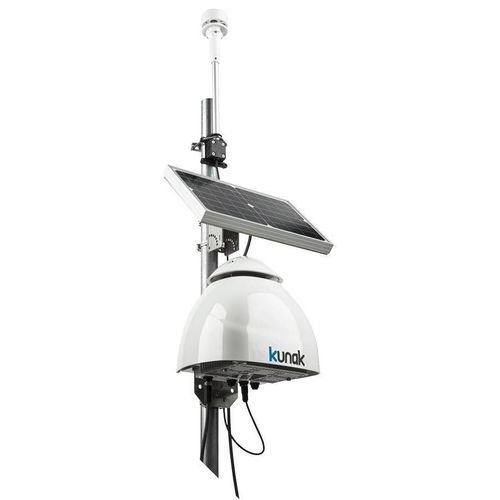
IoT technology has fundamentally changed how this challenge is addressed. Compact, autonomous sensors powered by solar energy can be installed on streetlights, transport hubs or public buildings, creating a dense and scalable monitoring network across both space and time at a fraction of the cost of traditional infrastructure.
This distributed environmental infrastructure turns air quality data into a dynamic operational resource, capable of guiding immediate decisions and supporting long-term mitigation policies.
With cloud processing and artificial intelligence algorithms, authorities can now detect specific pollution hotspots, analyse their temporal evolution and implement targeted interventions, optimising resources and increasing the effectiveness of urban policies.
Transparency, participation and trust
One of the most significant advances in environmental digitalisation is real-time data accessibility. In the past, air quality reports could take weeks to be published. Today, digital platforms and sensor networks allow citizens to access interactive pollution maps instantly from their smartphones or through public dashboards.
This transparency strengthens public trust and encourages active participation in urban sustainability initiatives. Communities can engage more directly in decision-making processes, fostering a closer relationship between local governments and residents.
Automated alerts also play a crucial role in protecting vulnerable populations, such as people with respiratory conditions. Notifications about pollution peaks improve prevention strategies and can help reduce healthcare burdens and associated costs.
Data driving climate action
The true value of intelligent environmental monitoring lies not only in observation but in evidence-based decision-making. By accurately identifying emission sources, urban managers can evaluate the real impact of their policies and measure tangible outcomes.
These data networks provide the technical foundation for initiatives such as Low Emission Zones, sustainable mobility plans and early warning systems for urban pollution episodes.
In a context of increasing climate variability, rapid response capacity and inter-agency coordination are essential. The integration of IoT sensors and analytical platforms transforms cities into more resilient and efficient environments, where clean air becomes a measurable indicator of social and environmental progress.
Towards a healthier, more connected urban future
The digitalisation of air is redefining how we approach urban sustainability.
Measuring, analysing and acting in real time enables cities to evolve into smarter and more connected systems, but also more human environments, where technology does not simply observe the air, but helps people breathe better.