#Industry News
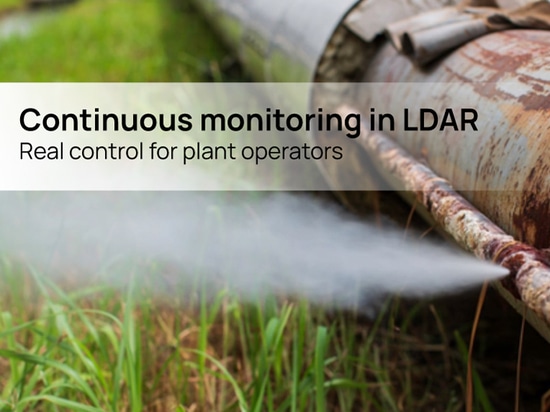
Continuous monitoring in LDAR
Real control for plant operators
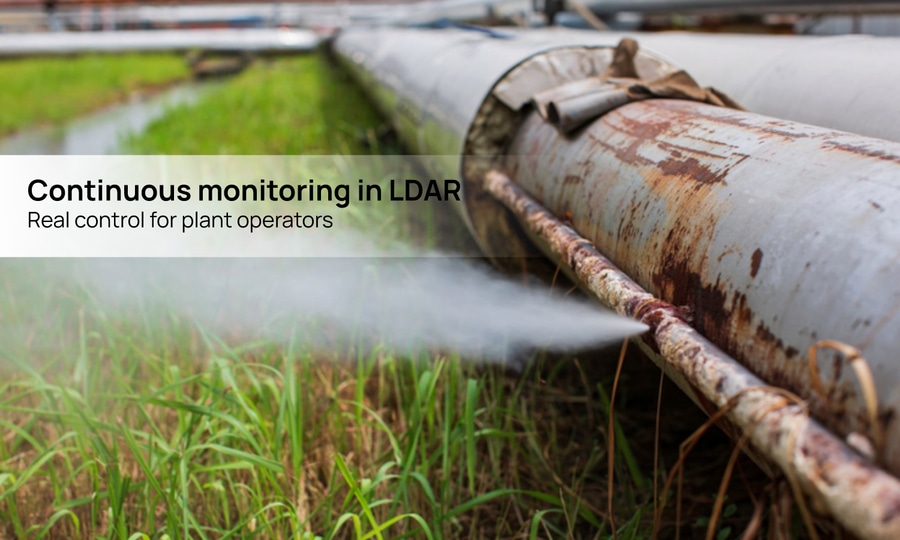
In an industrial plant, fugitive emissions do not usually trigger immediate alarms. A worn valve, a poorly fitted flange, or a damaged seal can release gas continuously without the operations team detecting it until the next scheduled inspection.
For the operator, this is not an abstract issue. It means product loss, mass balance deviations, the risk of hazardous atmospheres, and exposure to regulatory non-compliance.
The weak point of traditional LDAR
For years, LDAR programs, Leak Detection and Repair, have been the foundation of fugitive emissions control. They rely on periodic campaigns using portable detectors or optical gas imaging cameras.
This model makes it possible to comply with regulatory frameworks such as the Clean Air Act, including NSPS and NESHAP standards, or the Industrial Emissions Directive in Europe. However, from an operational standpoint, it has a clear limitation: the time between inspections.
If a leak appears the day after an inspection campaign, it may remain active for weeks or months. In facilities with thousands of potentially emitting components, that interval leads to accumulated emissions, increased risk, and hidden costs that directly affect profitability.
Reducing reaction time, the critical variable
In process control, response time is everything. The same is true for fugitive emissions. The earlier an anomaly is detected, the lower the emitted volume and the lower the operational impact.
Continuous monitoring introduces permanent surveillance at strategic points across the plant. Instead of waiting for the next campaign, the system identifies abnormal concentration increases in real time and generates automatic alerts when defined thresholds are exceeded.
For the operator, this means moving from a reactive model to a preventive one. The leak is detected when it happens, not when the inspection schedule says it should be checked.
What a continuous system must deliver in an industrial environment
A permanent control system must be rugged, stable, and easy to integrate. It cannot become an additional burden for the maintenance team.
In LDAR programs, gases commonly monitored include CH4, VOCs, H2S, NH3, HCl, HF, Cl2, CO, CO2, NO2, and SO2, depending on the type of process. The technology must adapt to these needs without requiring a redesign of the existing infrastructure.
In addition, the data must be actionable. Measuring concentrations is not enough. It must be possible to visualize information in real time, compare trends, set thresholds, and generate automatic reports for internal and external audits.
Kunak as a strategic complement to LDAR
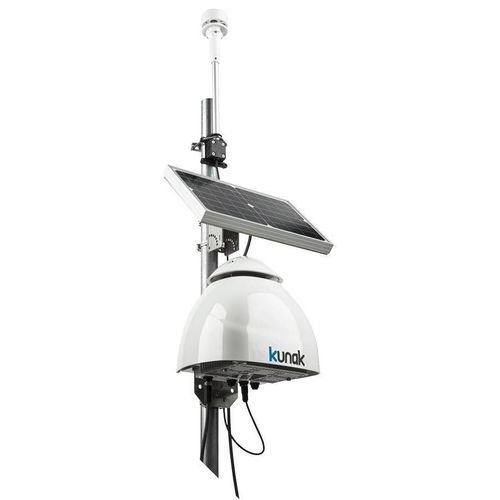
Kunak AIR stations make it possible to deploy multi-parameter sensor networks in critical areas, perimeter zones, storage areas, or near equipment with a higher probability of leaks.
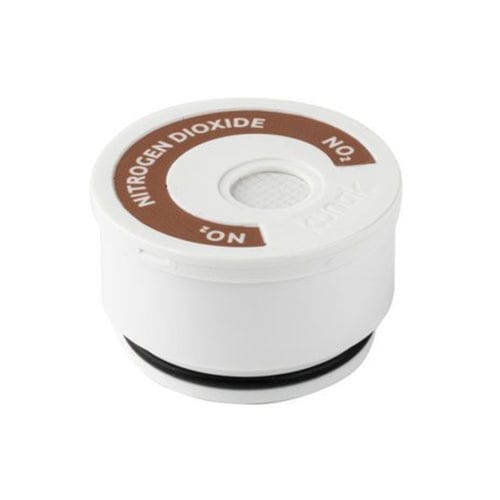
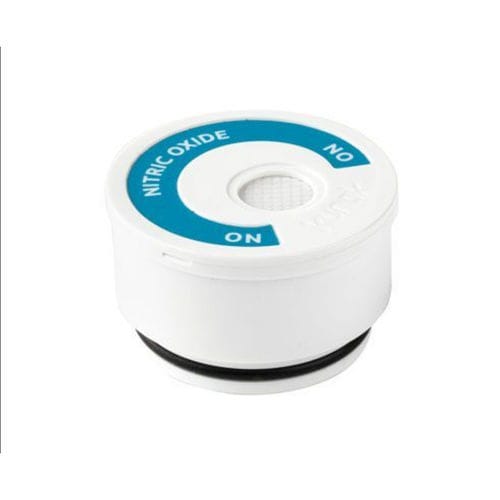
Their modular design, based on interchangeable cartridges, makes plant-specific configuration easier. This allows monitoring to be adjusted to the relevant gases without stopping operations.
Flexible connectivity enables integration with DCS or SCADA systems, so operators can view concentration levels alongside the rest of the process variables.
It is also possible to deploy autonomous systems in remote areas, expanding coverage without complex civil works.
Through Kunak Cloud, data is centralized and displayed in a geolocated format. The system allows users to configure alerts, analyze patterns, and document interventions. This traceability strengthens the plant’s position during regulatory audits and ESG reporting.
Direct advantages for operations
For plant operators, continuous monitoring provides tangible benefits:
• Reduced product losses associated with prolonged leaks.
• Early identification of deviations before they escalate.
• Improved safety in areas at risk of explosive or toxic atmospheres.
• Solid documentary evidence during regulatory inspections.
LDAR therefore stops being just a periodic obligation and becomes a tool integrated into daily management.
In an increasingly demanding industrial environment, having a continuous emissions control system is not only an environmental improvement. It is an operational decision that affects costs, safety, and compliance.
With solutions such as Kunak’s, fugitive emissions control becomes part of the core of the production process.