#Industry News
Odours in wastewater treatment plants: practical use of continuous data to prevent critical events
How to turn odour into a process variable to anticipate risks, optimise operations and avoid environmental impact
In any wastewater treatment plant (WWTP), there is one variable that rarely appears on operational dashboards: odour. It often provides the earliest warning before any sensor, yet for years it has been managed as an external issue (complaints, inspections, social pressure), when in reality it is a strategic operational indicator that reflects how the plant is performing.
The real risk is not the presence of odour, but the lack of data to interpret and anticipate it. Without continuous monitoring, management becomes reactive, events are detected too late, and operational stability is compromised.
Real challenges in the strategic management of an industrial WWTP
Most WWTP issues begin with small variations. They are subtle and difficult to detect, but odour is often the first signal. Interpreting it as a process variable enables earlier action and more informed decision-making with reduced uncertainty.
Critical points where odour emerges as a process parameter and where continuous data is essential:
Unpredictable events and lack of anticipation
In pre-treatment stages, H₂S peaks linked to high organic loads or prolonged retention in sewers are common under certain conditions. In digestion, slight deviations can lead to instability and unexpected emissions. Without continuous monitoring, these events are only detected once they impact outside the plant, forcing reaction instead of anticipation.
Complaints without technical evidence
Correlating community complaints with real process events becomes highly complex without continuous data. This prevents evidence-based management, as there is no precise information to determine when the episode occurred and how it relates to specific operations.
Dependence on isolated measurements
Odour perception campaigns and manual measurements provide value, but they are static snapshots. Odour, however, is a dynamic phenomenon influenced by load, temperature, aeration and meteorology.
Occupational risk and safety
Odour is also linked to worker safety. High concentrations of H₂S in confined spaces can quickly exceed safety thresholds, while the presence of CH₄ in digestion may indicate leaks or accumulation. At this point, monitoring is no longer just environmental, but a critical safety measure.
Gas measurement does not describe odour in abstract terms. With continuous monitoring, these become process variables that provide insight into origin and evolution. They indicate specific operational conditions and, collectively, offer a strategic understanding of plant performance.
H₂S: anaerobic conditions and septic influent
Indicates septic influent, sludge fermentation or insufficient air renewal. Detecting it helps anticipate events, adjust aeration or purging, and is essential for confined space safety.
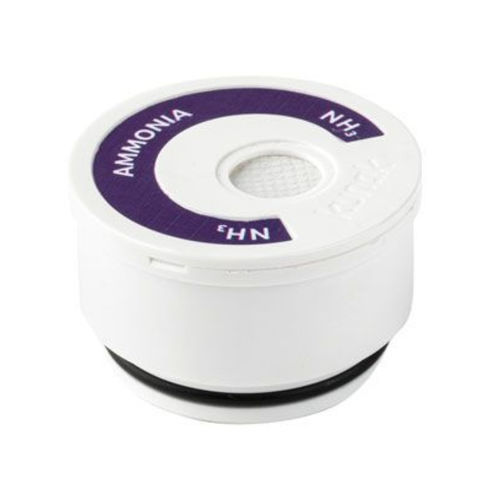
NH₃: volatilisation and biological imbalance
Volatilised from biological processes or sludge handling, it reveals nitrification instability or sludge management issues.
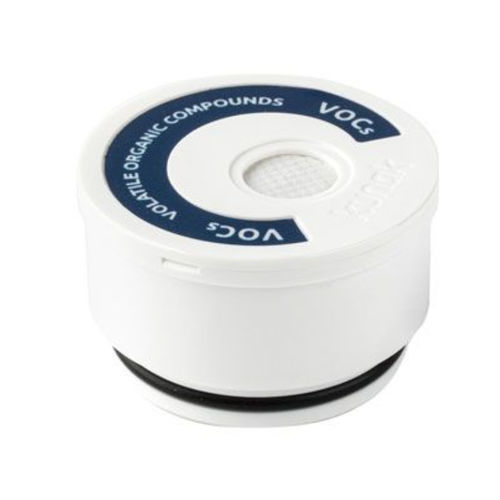
VOCs and sulphur compounds: organic decomposition
Their presence is linked to organic matter and fats. Their evolution provides insight into process stability and the effectiveness of ventilation or extraction systems.
CH₄: digestion system integrity
Detecting methane outside the biogas circuit is a critical signal of leaks or energy losses.
Meteorology: key to interpreting any data
Wind and atmospheric stability data are essential to correctly interpret pollutant dispersion.
The importance of continuous monitoring
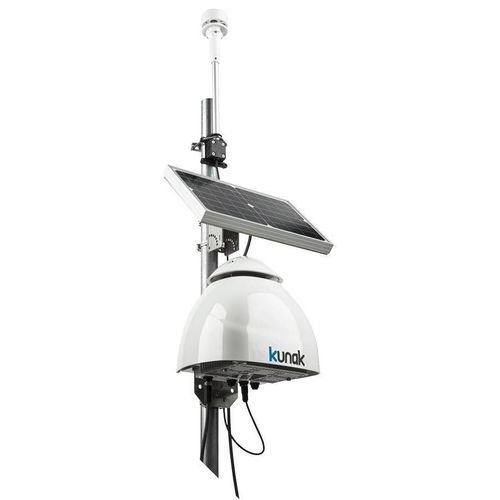
The difference between controlling an odour event in a WWTP and merely reacting lies in having continuous and traceable data. When the plant monitors gases and meteorological conditions in real time, it can detect trends, contextualise peaks and act before the impact leaves the site boundary. Correlating gas concentrations, operations and wind conditions provides technical evidence for inspections and reduces internal uncertainty.
With continuous measurement, odour stops being an unpredictable issue and becomes a manageable operational variable. In a WWTP, the difference between an incident and becoming a public issue lies in who has the data first.