#Industry News
Refineries can no longer afford to ignore what they emit
Turn invisible emissions into real-time control and actionable decisions
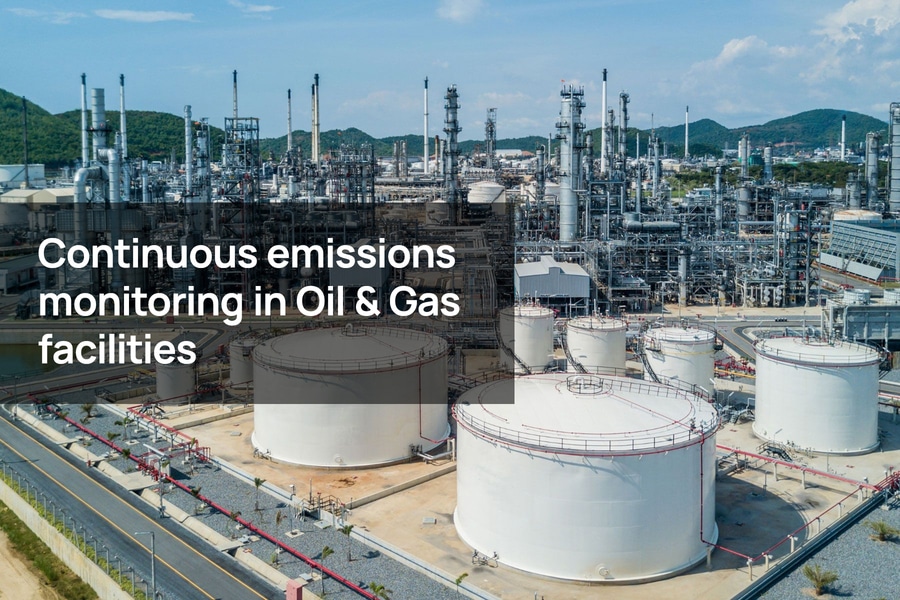
Every second, an oil refinery releases an invisible mixture of emissions into the air. But what cannot be seen is no longer the main concern. What truly matters is what is not measured.
A threat composed of SO2, NOx, VOCs, CO and particulate matter that does not remain within the immediate surroundings. It travels with the wind and amplifies its impact far beyond the industrial perimeter.
Refineries are the third largest global emitter of greenhouse gases, responsible for 6% of net industrial emissions worldwide.
This is no longer just a data issue. What a refinery emits exposes it to increasing regulatory pressure, creates reputational risk and, above all, represents a real public health concern.
Knowing exactly how much, when and from where emissions occur has become a critical necessity. It is the challenge refineries face and one for which monitoring provides the solution.
Without data, there is no control
Distillation, cracking, reforming and flaring processes generate emissions at multiple points across the entire facility. Many of these emissions are fugitive, meaning diffuse, intermittent and difficult to locate without the right technology.
And without that information, there is no control. Without control, there is no compliance. And without compliance, the consequences are inevitable, including penalties, operational disruptions and reputational damage that are no longer hypothetical scenarios.
Regulatory pressure is now operational
Regulations such as the EU Industrial Emissions Directive (IED) or EPA standards require more than estimates. They require evidence.
Refineries must demonstrate, with real-time and traceable data, that their emissions remain within established limits.
And this completely changes the approach. Monitoring is no longer a technical option. It is a strategic capability.
Real-time data, timely decisions
Having access to real-time data is the only valid response.
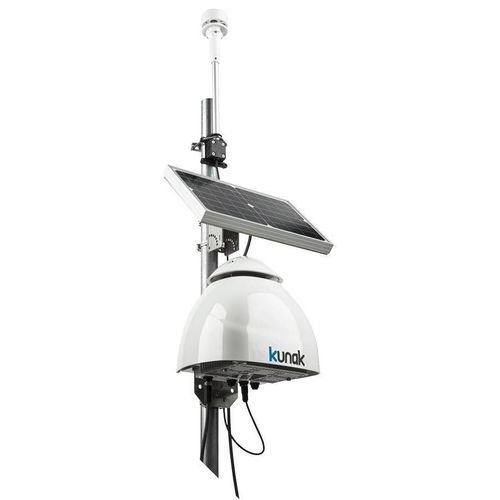
Kunak has designed solutions specifically for complex industrial environments such as refineries.
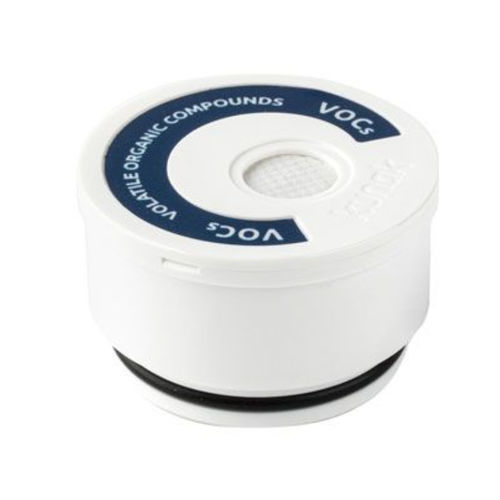
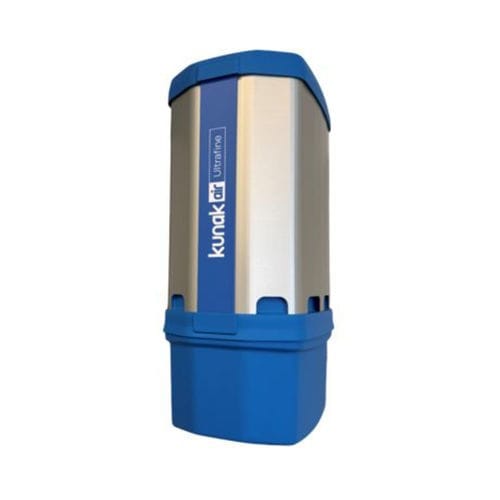
The Kunak AIR Pro and Kunak AIR Lite stations detect SO2, NOx, CO, VOCs and particulate matter in real time, providing reliable data where it truly matters.
In practice, this translates into:
- Early detection. Immediate identification of leaks before they become environmental or safety incidents.
- Precise localisation. Perimeter monitoring networks combined with sonic anemometers to identify the source of emissions.
- Operational efficiency. Remote management that reduces operational costs and enables continuous monitoring without reliance on physical presence.
- Verifiable compliance. Structured data ready for audits, reporting and communication with authorities.
From compliance to competitive advantage
Refineries investing today in advanced monitoring are not just avoiding penalties. They are building something more valuable: data-driven environmental credibility.
Because in an increasingly demanding environment, the difference is not only in compliance. It lies in demonstrating it with precision, in real time and continuously.
Monitoring is not a cost.
It means moving from reacting to anticipating. It means transforming environmental complexity into actionable information. And above all, it is about turning data into a competitive advantage.