#Industry News
The air we cannot see in landfills
Landfills emit some of the most dangerous contaminants continuously, affecting nearby populations. But do we know how much?
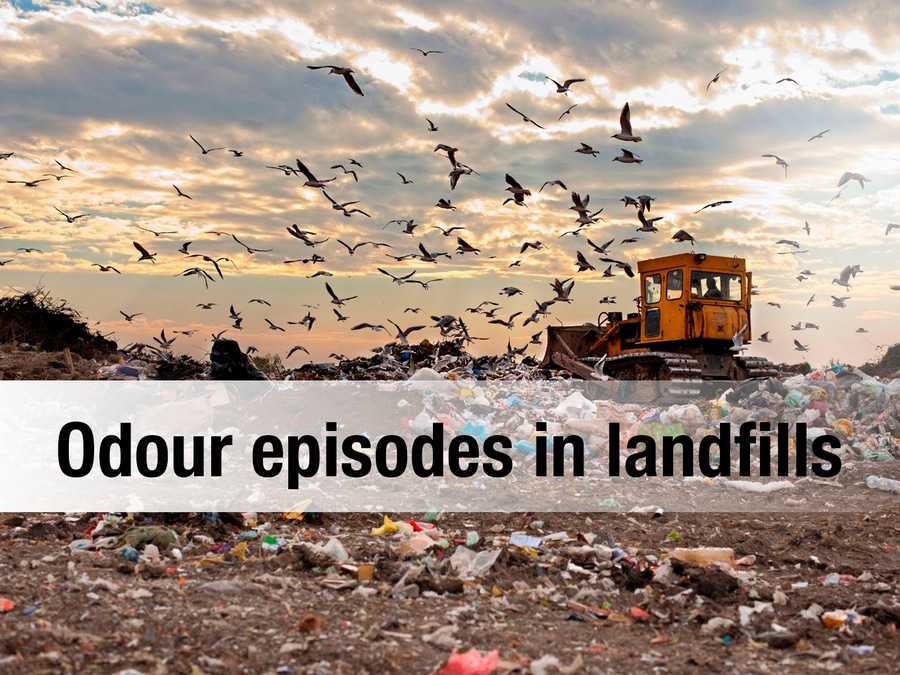
Every tonne of waste we discard does not simply vanish. It accumulates, decomposes and over time releases into the atmosphere a mixture of gases and particles that fall outside the scope of air pollution monitoring. Solid waste landfills are now the third largest source of global warming after fossil fuels and agriculture, yet they continue to operate with monitoring levels that bear no relation to the scale of the problem.
The world generates more than 2 billion tonnes of municipal solid waste annually. At least 33% of that figure is not managed safely for the environment, according to the World Bank. The result is a constant stream of emissions that accumulate in the atmosphere without being measured continuously in many cases.
A cocktail of contaminants hard to ignore
The decomposition of organic waste in landfills is not a passive process. Anaerobic degradation generates methane (CH4) and carbon dioxide (CO2), but also hydrogen sulphide (H2S), ammonia (NH3), volatile organic compounds (VOCs) and suspended particles PM2.5 and PM10. Uncontrolled burning of waste adds dioxins and furans, some of the most toxic compounds known.
Methane deserves particular attention. Although its persistence in the atmosphere is relatively short (10–12 years), its global warming potential is 25 times higher than CO2 over a 100-year horizon. Landfills are responsible for 20% of methane released globally; and according to the EPA, those in the United States emit annually the carbon equivalent of 23.1 million petrol cars running continuously.
An impact that does not stop at the perimeter
Pollution does not respect landfill fences. Emissions drift towards nearby populations, degrading local air quality and exposing residents to contaminant concentrations difficult to quantify without proper air monitoring.
Living within 5 kilometres of an uncontrolled landfill increases the incidence of asthma and COPD, and raises cardiovascular and neurological risk from prolonged exposure to benzene, toluene and fine particles. The most vulnerable groups (children, older people and those with pre-existing conditions) are the first to suffer these consequences.
Regulation is not enough without data
Both the European Union and the US EPA have tightened their regulatory frameworks in recent years, requiring biogas capture systems, impermeable covers and restrictions on the disposal of biodegradable waste. But regulation without continuous monitoring is a promise that no one can verify.
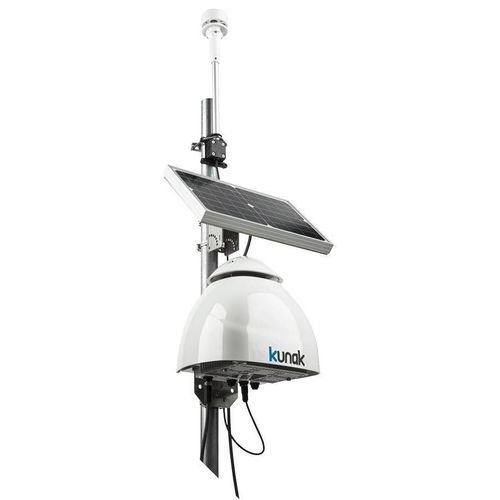
Methane capture systems and cell sealing protocols can only be evaluated if a measurement network exists to act as an objective arbitrator. Current monitoring technologies (from distributed sensors with IoT connectivity to infrared analysers) make it possible to obtain real-time data, creating an emissions map that every facility needs to act with precision.
Measure to avoid managing in the dark
Continuous air quality monitoring has proved its value beyond regulatory compliance. At Ada County Landfill (Idaho, USA), high-precision sensors and digital platforms enable constant monitoring of emissions and the establishment of mitigation strategies that have improved relationships with neighbouring communities. In Cerro Patacón (Panama), real-time control of odours and particles has measurably improved air quality in the nearby urban environment. In Valdeingómez (Madrid), a sensor network measures continuously H2S, methane, VOCs and ammonia, generating automatic alerts for potential leaks.
Three cases and one same pattern: verifiable data instead of estimates, environmental management converted into informed decision.
If by 2050 global waste exceeds current levels by 70% (as projected by the World Bank), postponing continuous monitoring of landfills is not a reasonable technical option. It is a risk we are already assuming without having chosen to.