#Product Trends
What Is the Best Insulation for an Exhaust Pipe?
A practical guide to choosing exhaust pipe insulation materials for diesel engines, generators, marine systems and other high-temperature applications.
The best insulation for an exhaust pipe depends on operating temperature, pipe geometry, available installation space, environmental exposure and the level of surface temperature reduction required. There is no single insulation material that is ideal for every exhaust system.
For industrial engines, generator sets, marine equipment and heavy-duty exhaust systems, the insulation must do more than tolerate heat. It should also withstand vibration, repeated thermal cycling, oil contamination, moisture and maintenance handling while remaining stable around the exhaust pipe.
Several high-temperature materials are commonly used for exhaust pipe insulation.
Fiberglass insulation is widely used where good thermal performance, flexibility and cost efficiency are required. It can be incorporated into removable exhaust pipe insulation blankets and jackets for many engine and generator applications.
High silica materials provide improved resistance to elevated temperatures and are often selected for more severe exhaust conditions. Silica fabrics can be used as hot-face layers, protective covers or part of multilayer insulation systems.
Ceramic fiber insulation is suitable for applications requiring higher temperature capability and stronger thermal resistance in a limited space. It is commonly used as an internal insulation core where exhaust temperatures are particularly demanding.
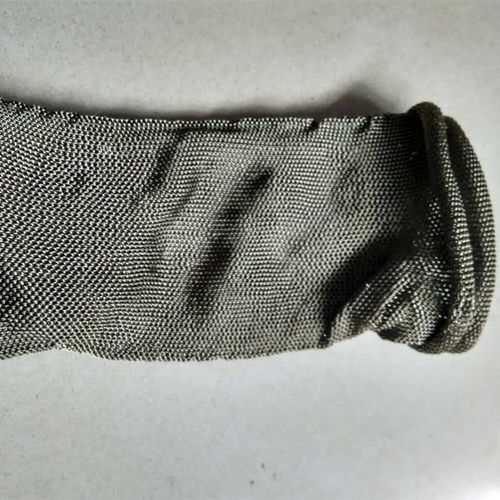
Stainless steel mesh and metallic fabrics are often used as reinforcement or hot-face protection in areas exposed to abrasion, vibration or direct contact with very hot exhaust components.
Silicone-coated fiberglass may be used as an outer protective layer where resistance to oil, moisture, abrasion and mechanical handling is important.
The insulation system should therefore be considered as a complete construction rather than as a single material.
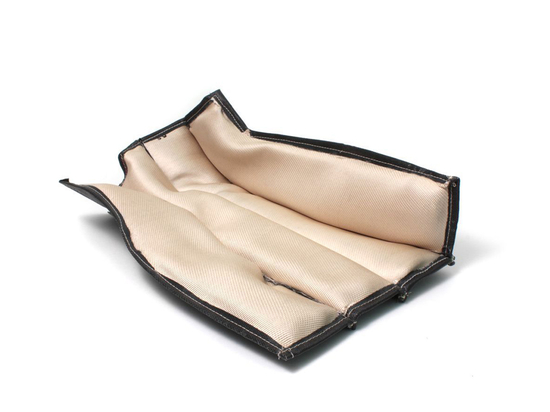
A typical removable exhaust pipe insulation blanket may include:
A high-temperature inner layer facing the exhaust pipe
A thermal insulation core
A durable external protective fabric
Stainless steel fastening hardware
Custom seams and cut-outs for flanges, sensors or brackets
This multilayer construction allows the insulation system to combine thermal resistance with mechanical durability and serviceability.
The application also influences material selection.
For diesel engine exhaust pipe insulation, vibration resistance and repeated thermal cycling are important because engine operation creates continuous mechanical movement and rapid temperature changes.
For generator exhaust pipe insulation, thermal containment inside the enclosure is often a priority. Reducing radiant heat from the exhaust piping can help limit heat buildup around electrical equipment, wiring and other engine components.
Marine exhaust systems may require insulation materials that tolerate high humidity, oil contamination and confined engine room conditions.
Industrial exhaust piping may place greater emphasis on personnel protection, process stability or maintaining acceptable external surface temperatures.
Insulation thickness is another critical factor. A thicker insulation layer generally provides greater resistance to heat transfer, but available clearance may limit how much material can be installed. The optimum thickness should therefore be selected according to actual exhaust temperature, surrounding conditions and required external surface temperature.
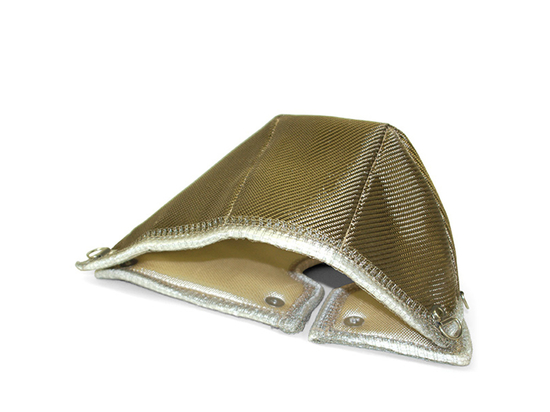
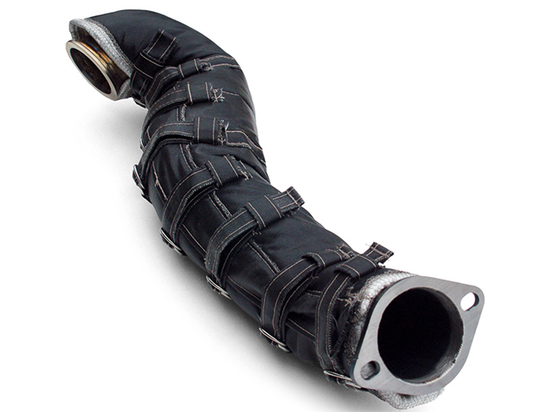
Pipe geometry also matters. Straight exhaust pipes are relatively easy to insulate, while elbows, flanges, flexible connectors, manifolds and mufflers often require custom-shaped insulation jackets. Poorly fitted insulation can leave exposed hot areas and reduce the effectiveness of the overall thermal management system.
Removable insulation blankets are often preferred where routine maintenance is required. Unlike permanent exhaust lagging, a removable jacket can be opened, taken off and reinstalled after inspection or repair. This is especially useful around flanges, expansion joints, exhaust elbows and serviceable engine components.
When selecting exhaust pipe insulation material, engineers should evaluate:
Maximum operating temperature
Continuous operating temperature
Desired external surface temperature
Pipe diameter and geometry
Insulation thickness
Available installation clearance
Vibration level
Exposure to oil or moisture
Abrasion risk
Maintenance frequency
Indoor or outdoor installation
Required service life
For many demanding exhaust systems, the most effective solution is a custom multilayer insulation blanket that combines different materials according to their specific functions rather than relying on one insulation material alone.
BSTFLEX manufactures custom exhaust pipe insulation blankets and removable thermal jackets for diesel engines, generator sets, marine systems, industrial machinery and other high-temperature exhaust applications. Material combinations, insulation thicknesses, dimensions, fastening systems and shapes can be developed according to drawings, samples, pipe dimensions and operating conditions.
Choosing the best insulation for an exhaust pipe requires matching the insulation system to the actual thermal and mechanical environment. Correct material selection can provide more effective heat containment, better protection for surrounding equipment and easier long-term maintenance.