#Product Trends
How Much Heat Can an Exhaust Insulation Blanket Reduce?
Understand what determines exhaust blanket temperature reduction and how insulation thickness, materials and operating conditions affect thermal performance.
An exhaust insulation blanket can significantly reduce the amount of heat transferred from a hot exhaust component to the surrounding environment, but the actual temperature reduction depends on the complete thermal system.
There is no single percentage or fixed temperature drop that applies to every exhaust blanket. Performance is influenced by exhaust temperature, insulation thickness, blanket materials, airflow, component geometry, ambient temperature and the method used to measure the outer surface.
For this reason, engineers should evaluate exhaust insulation performance based on operating conditions rather than relying on one universal temperature reduction figure.
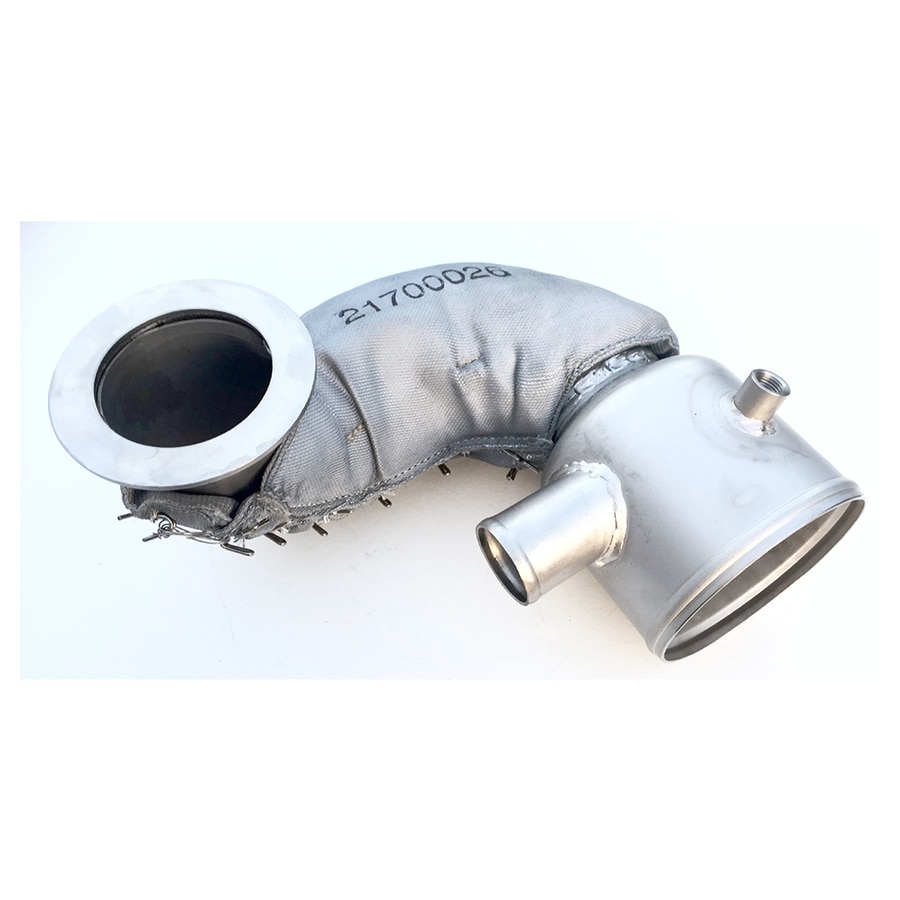
A removable exhaust insulation blanket works by slowing the transfer of heat from the exhaust component through a multilayer insulation system. The hot-face layer withstands direct temperature exposure, the insulation core provides thermal resistance, and the outer layer protects the system from mechanical and environmental damage.
The amount of heat reduction depends first on the temperature of the exhaust component.
A blanket installed on a moderate-temperature downstream exhaust pipe will behave differently from one installed directly around an exhaust manifold or turbocharger housing. Higher source temperatures generally require higher-performance insulation materials and greater insulation thickness.
Insulation thickness is another major factor.
Increasing insulation thickness normally reduces heat transfer more effectively, but installation space is often limited around engines, generator enclosures and marine machinery. The best design must therefore balance thermal performance with available clearance.
Material selection also has a strong influence on performance.
Fiberglass insulation is suitable for many general exhaust applications.
High silica materials can be selected for more severe high-temperature environments.
Ceramic fiber insulation can provide high thermal resistance where temperature capability is critical.
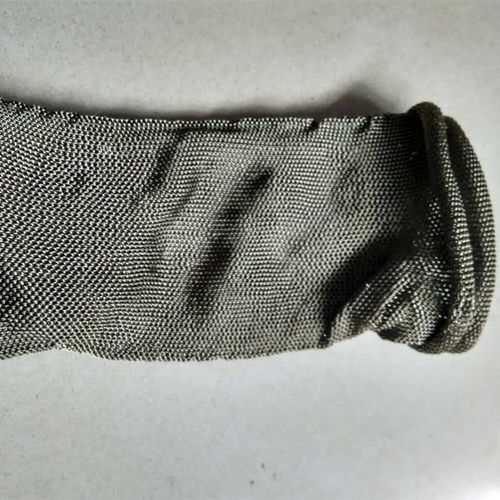
Stainless steel mesh may be added for reinforcement and hot-face durability.
Silicone-coated fiberglass may be used as an external layer where resistance to abrasion, oil and moisture is required.
The final result depends on how these materials are combined.
Airflow around the blanket also affects outer surface temperature. A blanket operating inside a closed generator enclosure may experience different surface temperatures from the same blanket installed in an open engine room with continuous ventilation.
Component geometry matters as well.
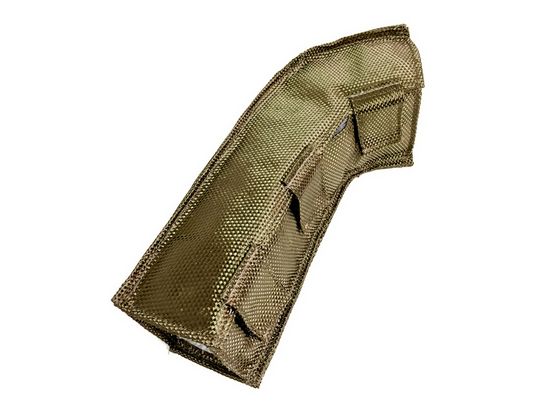
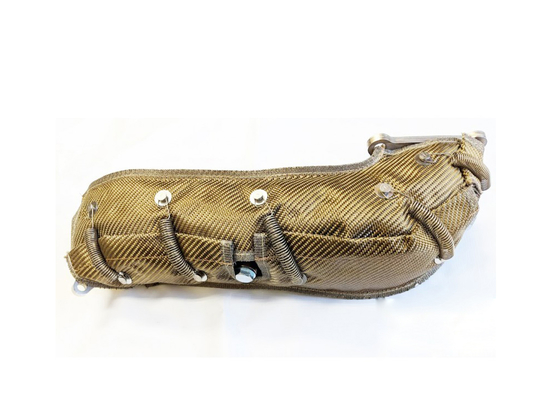
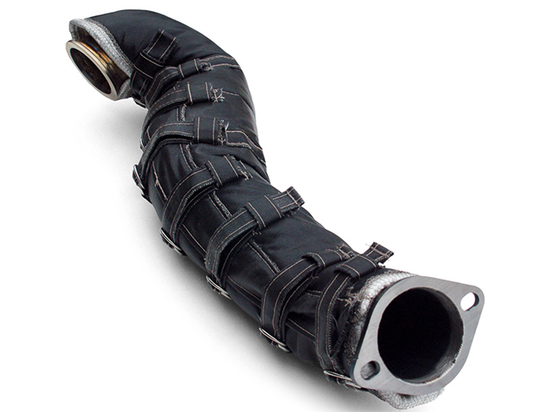
Straight exhaust pipes are relatively easy to insulate uniformly. Elbows, manifolds, flanges, mufflers and turbocharger housings can create localized hot areas where heat is concentrated. Custom fitting helps reduce gaps and improve thermal consistency across these irregular surfaces.
Typical applications where exhaust insulation blankets are used to reduce heat exposure include:
Diesel engine exhaust systems
Generator exhaust pipes
Marine engine exhaust components
Exhaust manifolds
Turbochargers
Mufflers and silencers
Industrial exhaust piping
Flexible exhaust joints
High-temperature process equipment
When evaluating exhaust blanket performance, engineers may consider both surface temperature and radiant heat.
Reducing outer surface temperature is important for personnel protection and nearby component safety.
Reducing radiant heat is equally important in compact engine compartments where wiring, hoses, sensors and electronic components are located close to the exhaust system.
A properly designed exhaust insulation blanket can help lower the thermal load on these surrounding components by containing more heat at the source.
The required temperature reduction should therefore be defined before the blanket is specified.
Important design inputs include:
Exhaust gas temperature
Exhaust surface temperature
Required outer blanket surface temperature
Ambient temperature
Airflow conditions
Insulation thickness
Component geometry
Available installation space
Operating cycle
Vibration
Oil and moisture exposure
Maintenance requirements
For example, an application may require the outside of an exhaust insulation blanket to remain below a specific temperature under continuous engine operation. In this case, blanket thickness and material selection should be calculated around that target rather than selected only by maximum material temperature rating.
Removable construction can also influence long-term thermal performance.
A blanket that is repeatedly removed and reinstalled should maintain its insulation thickness and shape. Excessive compression, damaged seams or poorly positioned fasteners can reduce performance over time.
This is why custom exhaust blankets should be designed for both thermal efficiency and repeated maintenance use.
BSTFLEX manufactures custom exhaust insulation blankets for diesel engines, generator sets, marine systems, industrial machinery and other high-temperature exhaust applications. Blanket materials, insulation thickness, outer covers, fastening methods and geometry can be developed according to drawings, component measurements and operating conditions.
The most accurate way to determine how much heat an exhaust insulation blanket can reduce is to evaluate the complete application, including source temperature, required external temperature and available insulation space.
When correctly specified, an exhaust insulation blanket can provide substantial thermal containment, reduce radiant heat around the exhaust system and improve protection for nearby equipment and personnel.