#Product Trends
How to Select an Exhaust Insulation Blanket for Industrial Applications
Key factors for choosing the right exhaust insulation blanket based on temperature, component shape, insulation thickness, maintenance and operating environment.
Selecting the right exhaust insulation blanket for an industrial application requires more than choosing a high-temperature fabric. The blanket must be matched to the actual exhaust component, operating temperature, installation environment, required surface temperature and maintenance conditions.
A properly specified exhaust insulation blanket helps reduce radiant heat, control hot surface exposure and protect nearby equipment while remaining practical to install, remove and service.
The first factor to consider is operating temperature.
Exhaust systems on diesel engines, generator sets, marine engines and industrial equipment can operate under very different thermal conditions. A downstream exhaust pipe may have a lower surface temperature than a manifold, turbocharger housing or other component located close to the combustion source.
The hot-face material and insulation core should therefore be selected according to both continuous operating temperature and possible peak temperature exposure.
The second factor is the required outer surface temperature.
In many industrial applications, the goal is not simply to use a material that survives high temperature. The objective is to reduce the external surface temperature of the insulated component to a defined level.
This requirement influences insulation thickness, material combination and overall blanket construction.
Insulation thickness is another critical consideration.
Greater thickness generally improves thermal resistance, but industrial equipment often has limited clearance around exhaust piping. The available space between the exhaust component and nearby hoses, cables, structural parts or enclosures should be measured before the blanket design is finalized.
Component geometry must also be considered.
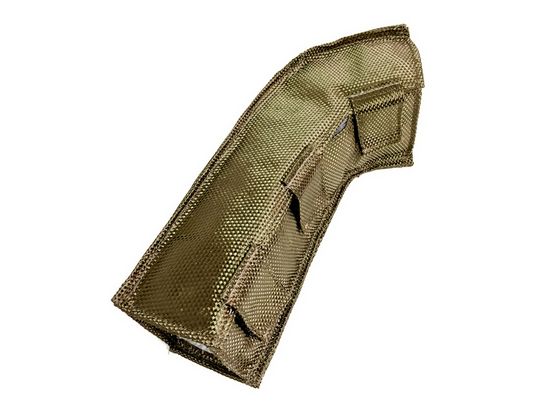
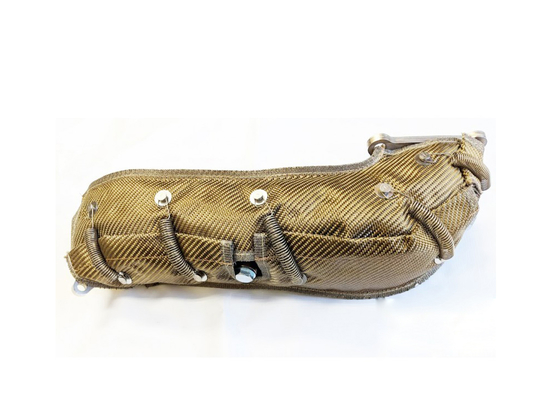
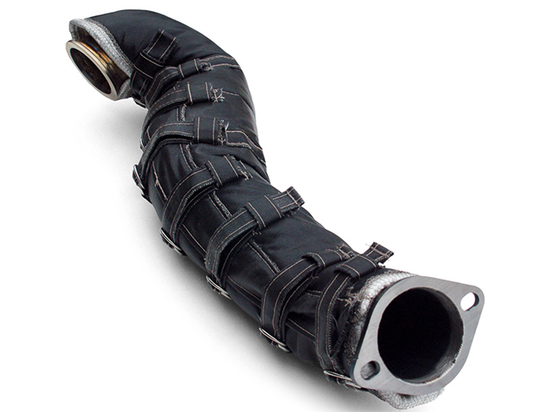
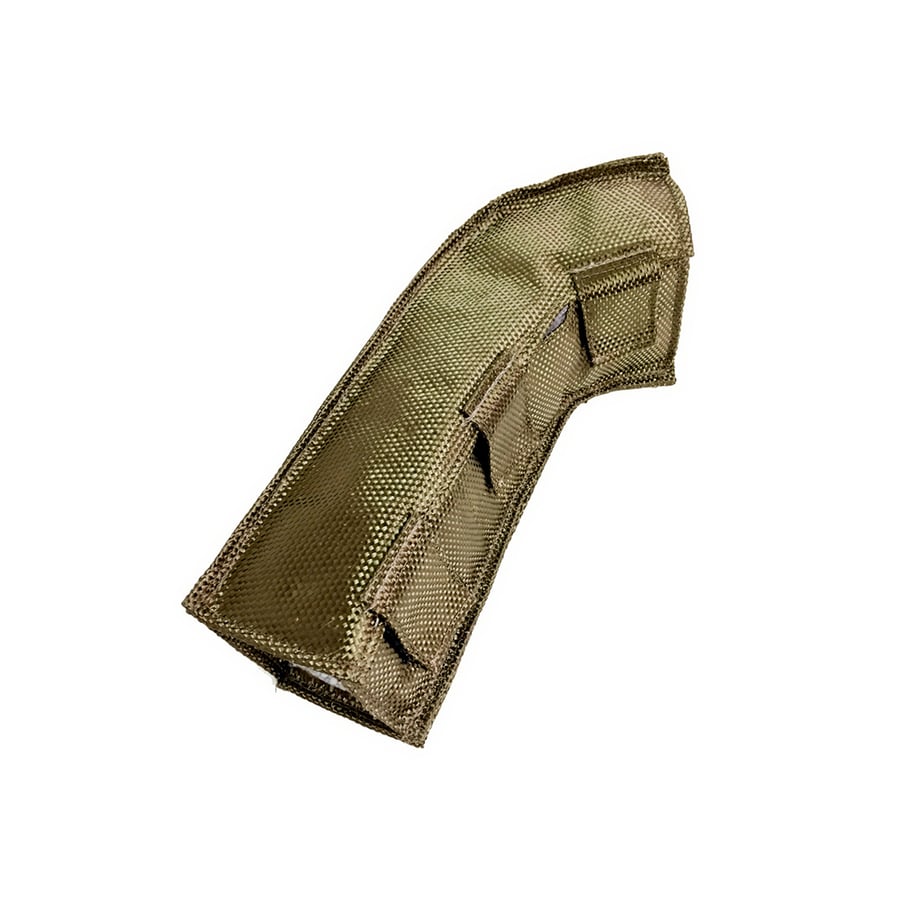
Straight pipes are relatively simple to insulate, while manifolds, elbows, flanges, turbochargers, mufflers and flexible joints often require custom-shaped blankets.
A good exhaust insulation blanket should follow the component closely without interfering with sensors, brackets, bolts, clamps or maintenance access.
For complex components, the blanket may be divided into multiple removable sections. This makes installation easier and allows individual areas to be removed during maintenance.
Material selection should be based on the complete environment.
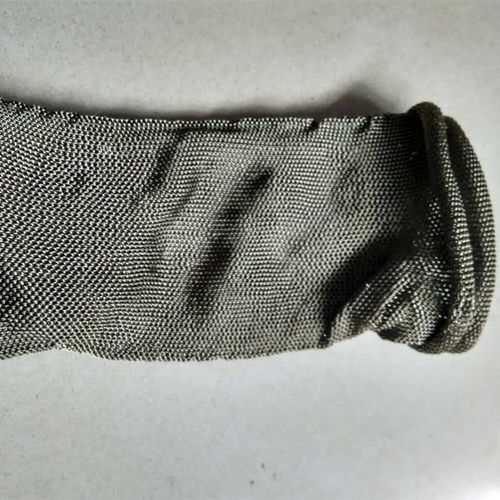
Common exhaust blanket materials may include fiberglass fabric, high silica fabric, ceramic fiber insulation, stainless steel mesh and silicone-coated fiberglass.
Each material serves a different function.
Fiberglass can provide flexible thermal insulation for many general exhaust applications.
High silica materials are suitable for more severe temperature conditions.
Ceramic fiber insulation may be used where higher thermal resistance is required.
Stainless steel mesh can improve mechanical reinforcement and hot-face durability.
Silicone-coated fiberglass can help protect the outer surface from oil, moisture and abrasion.
The fastening system is also important.
An industrial exhaust blanket may use hooks, lacing wire, springs, straps, buckles or other removable fasteners. The fastening system must hold the blanket securely during vibration while still allowing convenient removal when the exhaust component requires inspection or repair.
Vibration should not be overlooked.
Diesel engines, generator sets and marine engines generate continuous mechanical movement. The blanket construction, seams and fastening points should be designed to withstand this vibration without shifting, tearing or exposing hot areas.
Oil and moisture exposure can also affect the blanket specification.
A generator enclosure may contain oil mist and occasional fluid contamination. A marine engine room may add humidity, salt exposure and restricted ventilation. These conditions may require a more durable and contamination-resistant outer cover.
Maintenance frequency is another key factor.
Permanent exhaust lagging may be suitable in applications where access is rarely required. However, removable exhaust insulation blankets are often preferred around flanges, manifolds, turbochargers, mufflers and other serviceable components.
A removable blanket can be taken off during maintenance and reinstalled afterward, reducing the need to replace insulation each time the equipment is serviced.
When selecting an exhaust insulation blanket, engineers should evaluate the following:
Continuous operating temperature
Peak temperature exposure
Required outer surface temperature
Component dimensions
Pipe diameter
Component geometry
Available installation clearance
Insulation thickness
Vibration
Oil and moisture exposure
Abrasion risk
Maintenance frequency
Fastening method
Indoor or outdoor operation
Required service life
The application itself also influences the design.
For diesel engine exhaust systems, vibration resistance and high-temperature durability are important.
For generator exhaust systems, reducing heat buildup inside the enclosure may be a primary objective.
For marine exhaust systems, moisture resistance, serviceability and confined engine-room conditions must be considered.
For industrial exhaust piping, personnel protection, heat containment and maintenance access may be the main priorities.
A custom exhaust insulation blanket is often the best choice when the component geometry or operating conditions cannot be addressed effectively with standard insulation products.
BSTFLEX manufactures custom exhaust insulation blankets for diesel engines, generators, marine systems, automotive exhaust assemblies and industrial equipment. Blanket dimensions, material combinations, insulation thicknesses and fastening systems can be developed according to drawings, measurements, samples and actual operating requirements.
The best exhaust insulation blanket is not simply the product with the highest temperature rating. It is the one designed around the real operating environment, thermal target, component geometry and maintenance needs of the exhaust system.