#Product Trends
Diesel Engine Exhaust Pipe Insulation: Materials and Design Guide
How to select insulation materials and removable blanket designs for diesel engine exhaust pipes, manifolds, turbocharger outlets and generator systems.
Diesel engine exhaust pipe insulation is used to control radiant heat, reduce hot surface exposure and protect nearby components in high-temperature engine systems. It is especially important in generator sets, marine engines, heavy equipment and industrial power systems where exhaust piping operates close to wiring, hoses, fuel systems and other heat-sensitive components.
A diesel exhaust system can include manifolds, turbochargers, outlet pipes, elbows, flexible sections, mufflers and silencers. Each component may operate at a different temperature and may require a different insulation construction.
For this reason, diesel engine exhaust insulation should be designed as a complete thermal management system rather than as a single material wrapped around every component.
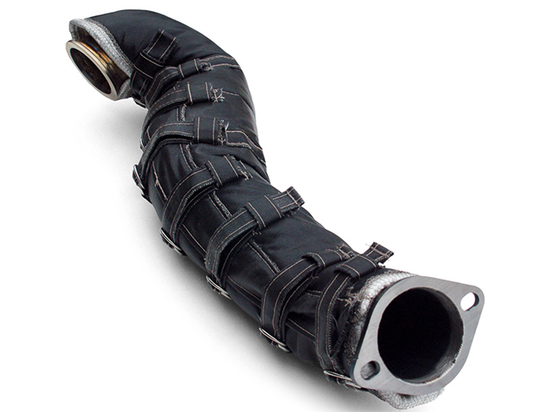
One of the most common solutions is a removable exhaust pipe insulation blanket.
This type of insulation is manufactured to fit around the exhaust component and can be removed during maintenance. It is particularly useful on diesel engines because exhaust components frequently require inspection, servicing or replacement.
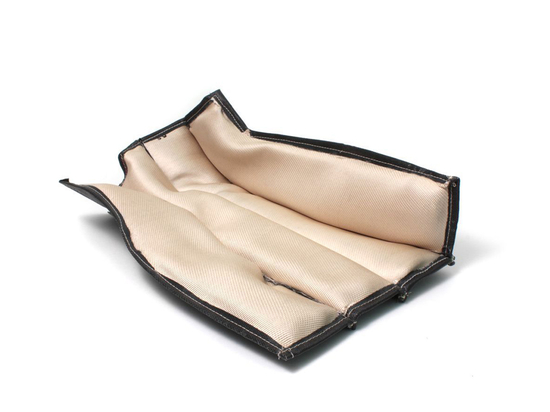
A typical diesel exhaust insulation blanket uses a multilayer structure.
The inner hot-face layer is positioned closest to the exhaust surface and must tolerate repeated exposure to high temperatures. Fiberglass fabric, high silica fabric, stainless steel mesh and other temperature-resistant materials may be selected according to the thermal conditions.
The insulation core reduces heat transfer through the blanket. Fiberglass insulation, silica-based insulation and ceramic fiber materials can be used depending on the required performance and available thickness.
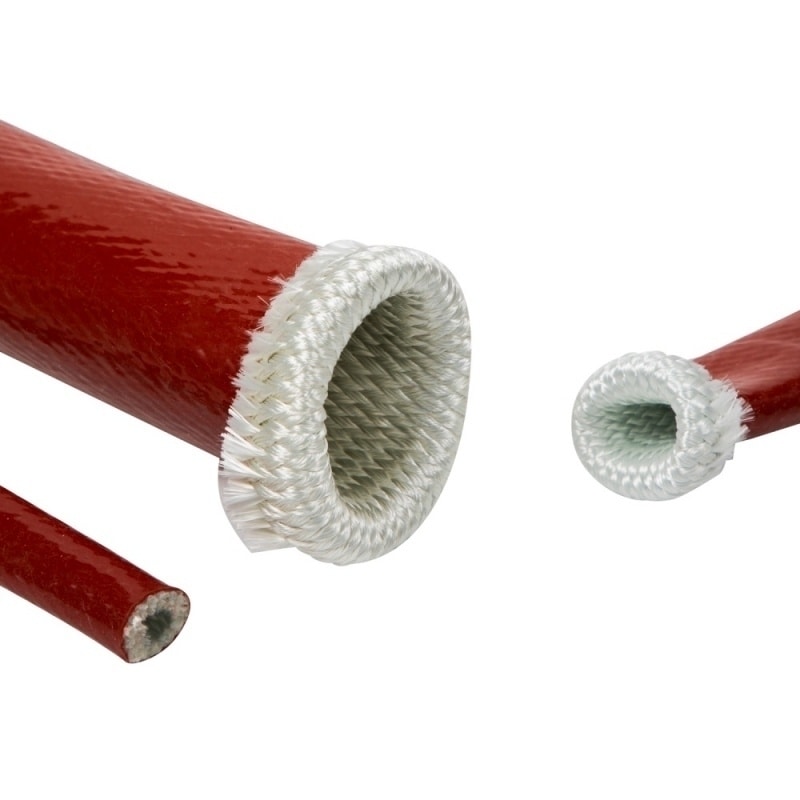
The outer layer protects the insulation system against abrasion, vibration, oil, moisture and repeated handling. Silicone-coated fiberglass is commonly selected where a durable and flexible external surface is required.
Material selection should be based on actual operating conditions.
Fiberglass is suitable for many general diesel exhaust applications because it combines thermal resistance, flexibility and practical handling.
High silica materials are often selected for hotter areas such as exhaust manifolds and turbocharger outlet sections.
Ceramic fiber insulation may be used where higher thermal resistance is required within a limited installation space.
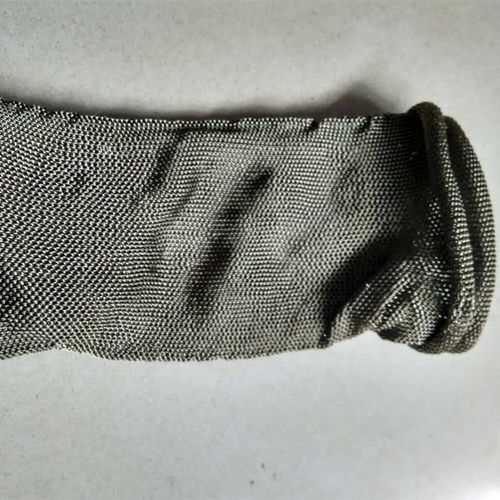
Stainless steel mesh can be incorporated into high-wear or high-vibration areas to improve mechanical durability.
Diesel engines present several design challenges that are different from stationary hot piping.
Vibration is one of the most important considerations.
The blanket must remain securely installed while the engine operates under continuous vibration. Seams, fastening points and insulation layers should therefore be designed to resist movement, abrasion and repeated thermal cycling.
Component geometry is another major factor.
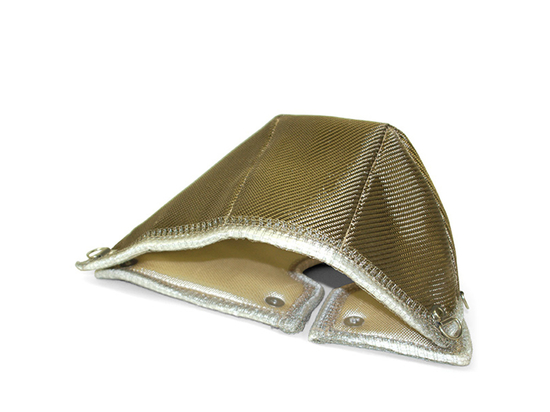
A straight diesel exhaust pipe can be insulated using a relatively simple cylindrical blanket. An exhaust manifold, turbocharger housing, flange or elbow requires a more complex custom shape.
Accurate fitting helps minimize exposed hot areas and prevents the insulation from interfering with sensors, clamps, bolts and maintenance points.
Diesel engine exhaust pipe insulation is commonly used for:
Stationary diesel engines
Diesel generator sets
Marine diesel engines
Construction machinery
Mining equipment
Agricultural machinery
Heavy-duty vehicles
Industrial power systems
Emergency generator installations
Combined heat and power systems
In enclosed generator systems, diesel exhaust pipe insulation helps reduce the amount of radiant heat released into the enclosure.
This is important because excessive heat can increase the thermal load on electrical components, alternators, control systems and surrounding engine parts.
In marine engine rooms, exhaust insulation can help control heat around confined machinery spaces while providing removable access to pipes, manifolds and turbocharger components.
In mobile machinery, insulation may be required to protect hydraulic hoses, electrical wiring and body structures located close to the exhaust system.
Insulation thickness should be selected according to the required thermal performance.
The key question is not only how hot the exhaust pipe becomes, but also how cool the external blanket surface needs to be.
A system designed primarily to reduce radiant heat may have different requirements from one intended to provide personnel protection or meet a specific external surface temperature target.
Engineers specifying diesel engine exhaust pipe insulation should consider:
Exhaust gas temperature
Exhaust pipe surface temperature
Continuous operating temperature
Peak temperature exposure
Desired outer surface temperature
Pipe diameter
Component geometry
Available installation clearance
Insulation thickness
Engine vibration
Oil and moisture exposure
Maintenance frequency
Fastening method
Operating environment
Service life expectations
The fastening system is particularly important for removable diesel exhaust blankets.
Hooks, springs, lacing wire, straps or other mechanical fasteners can be used depending on the component shape and vibration level. The design should provide secure installation without making maintenance unnecessarily difficult.
For large or irregular components, several smaller insulation sections may be more practical than one large blanket.
Segmented construction allows a technician to remove only the section required for service and can improve fit around complex exhaust assemblies.
Diesel exhaust insulation should also be designed around sensors, flanges and connection points.
Openings and cut-outs can be incorporated into the blanket so that temperature sensors, mounting hardware and other service points remain accessible.
Compared with conventional exhaust lagging, removable insulation blankets offer significant advantages for diesel engine maintenance. The insulation can be removed without being destroyed and then reinstalled after servicing.
Compared with a rigid exhaust heat shield, direct insulation provides closer thermal containment around the exhaust pipe itself.
In demanding installations, both technologies can be combined. An insulation blanket can reduce heat at the exhaust source, while an additional heat shield protects a particularly sensitive component nearby.
BSTFLEX manufactures custom diesel engine exhaust pipe insulation blankets for generator sets, marine engines, heavy machinery and industrial power systems. Materials, insulation thicknesses, shapes and fastening systems can be developed according to drawings, measurements, samples and actual operating conditions.
A well-designed diesel engine exhaust insulation system should balance temperature capability, thermal performance, vibration resistance, serviceability and component geometry. When these factors are considered together, removable exhaust insulation blankets provide an effective solution for controlling heat around diesel engine exhaust systems.