#Product Trends
Diesel Exhaust Blanket for Engine Thermal Management
Custom diesel exhaust blankets help reduce radiant heat around manifolds, turbochargers, pipes and mufflers in generator, marine and heavy-duty engine systems.
A diesel exhaust blanket is a removable thermal insulation system designed to control heat around high-temperature engine exhaust components. It is commonly used on diesel engines, generator sets, marine propulsion systems, construction machinery and industrial power equipment where exhaust manifolds, turbochargers and piping create intense radiant heat.
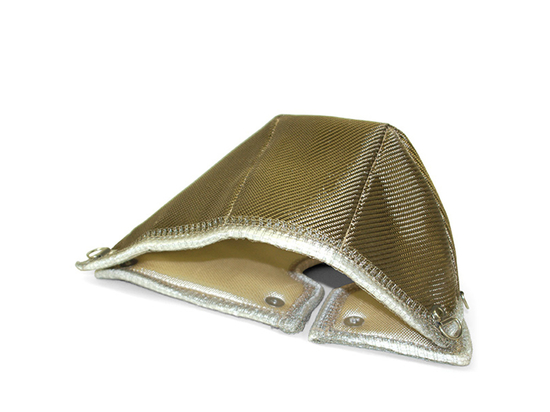
Unlike a simple exhaust wrap, a diesel exhaust blanket is usually custom manufactured to match the shape of the component. It can be designed around straight pipe sections, manifolds, elbows, turbocharger housings, flanges, mufflers and other complex exhaust assemblies.
The main objective is to contain heat closer to the exhaust source.
Diesel engines can produce substantial thermal loads during continuous operation. In compact generator enclosures, marine engine rooms and heavy equipment, this heat can raise ambient temperature and expose nearby wiring, hydraulic hoses, fuel lines, sensors and electrical components to prolonged thermal stress.
A properly designed diesel exhaust blanket helps reduce this exposure by using several functional material layers.
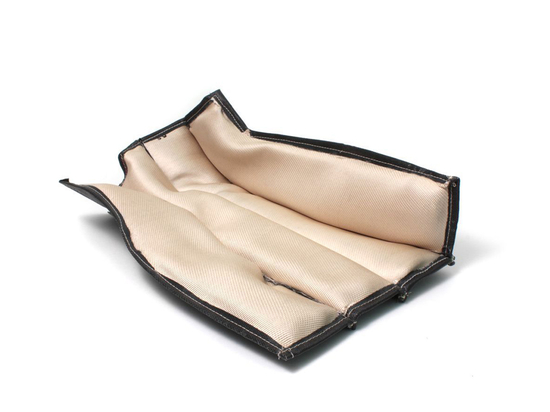
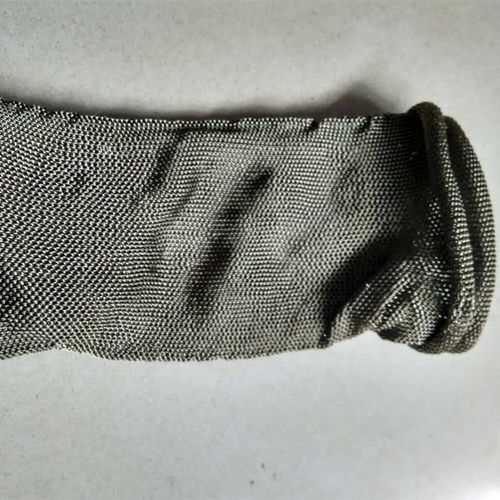
The hot-face layer is positioned closest to the exhaust surface and must withstand direct high-temperature exposure. Fiberglass fabric, high silica fabric, stainless steel mesh and other heat-resistant materials may be selected according to the thermal requirement.
The insulation core provides the main resistance to heat transfer. Fiberglass insulation, silica-based insulation and ceramic fiber materials can be used depending on the required temperature capability and insulation thickness.
The outer cover protects the blanket against abrasion, oil, moisture, vibration and repeated handling. Silicone-coated fiberglass and other durable technical fabrics can be used where stronger environmental protection is needed.
This multilayer structure allows the blanket to provide thermal insulation while remaining removable for service.
Typical diesel exhaust blanket applications include:
Diesel exhaust manifolds
Turbocharger housings
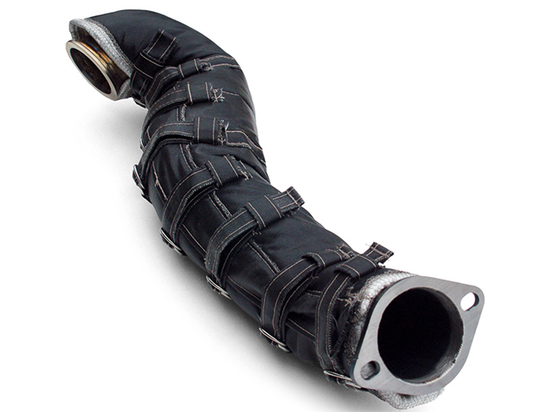
Turbocharger outlet pipes
Generator exhaust pipes
Marine diesel exhaust systems
Mufflers and silencers
Exhaust elbows
Flexible exhaust joints
Flanges and expansion connections
Heavy-duty engine exhaust assemblies
The exhaust manifold and turbocharger areas are often among the hottest parts of a diesel engine system. These components can produce strong radiant heat close to hoses, cables and surrounding equipment.
Custom blankets can be shaped around these components while maintaining access to bolts, sensors, oil lines and other service points.
For exhaust piping, removable blankets can be manufactured in separate sections. This segmented construction allows technicians to remove only the area that requires inspection or repair instead of dismantling the complete insulation system.
This is one of the main differences between a removable diesel exhaust blanket and permanent exhaust lagging.
Permanent insulation may need to be cut away before servicing. Once damaged, it may require replacement. A removable blanket can be opened, removed and reinstalled, making it better suited to equipment that requires routine maintenance.
Vibration is another critical design factor.
Diesel engines operate under continuous mechanical movement. The blanket must remain secure without shifting, loosening or exposing hot areas. Fastening systems such as hooks, springs, lacing wire, straps or buckles can be selected according to the component and vibration level.
The blanket should also maintain its insulation thickness under repeated operation.
Excessive compression can reduce thermal resistance, while loose construction can allow movement and create inconsistent coverage.
Engineers specifying a diesel exhaust blanket should evaluate:
Continuous operating temperature
Peak exhaust temperature
Desired outer surface temperature
Component geometry
Available installation clearance
Insulation thickness
Engine vibration
Oil and moisture exposure
Abrasion risk
Maintenance frequency
Fastening method
Sensor and bracket positions
Required service life
The installation environment also changes the design requirement.
In diesel generator sets, exhaust blankets help reduce heat released into the enclosure and can limit thermal exposure around electrical controls, alternators and wiring.
In marine diesel systems, the blanket may need to tolerate high humidity, oil contamination and confined machinery spaces.
In construction and mining equipment, durability and resistance to vibration can become especially important because the exhaust system operates under continuous movement and demanding working conditions.
A diesel exhaust blanket can also be used together with a secondary exhaust heat shield.
The blanket contains heat around the exhaust source, while the heat shield protects a specific nearby component from remaining radiant heat. This combination can be useful in very compact engine compartments.
BSTFLEX manufactures custom diesel exhaust blankets for generator sets, marine engines, heavy machinery and industrial diesel systems. Blanket materials, insulation thicknesses, shapes and fastening methods can be developed according to drawings, component measurements, samples and actual operating conditions.
For diesel engines where exhaust heat affects equipment reliability, component protection or maintenance conditions, a properly engineered exhaust blanket provides a practical solution for reducing radiant heat while preserving access to the exhaust system.