#Product Trends
Generator Exhaust Pipe Insulation: Why It Matters for Genset Thermal Management
How generator exhaust pipe insulation blankets help control heat inside genset enclosures and protect nearby electrical, mechanical and structural components.
Generator exhaust pipe insulation plays an important role in controlling heat inside diesel generator sets and enclosed genset systems. Exhaust piping can operate at high temperatures and release substantial radiant heat into the surrounding enclosure, affecting electrical equipment, wiring, hoses, engine components and other heat-sensitive parts.
A properly designed exhaust pipe insulation system places a thermal barrier around the hot exhaust piping to reduce heat transfer to the surrounding environment. This can help manage enclosure temperature, limit radiant heat exposure and improve the thermal conditions around the generator system.
Generator exhaust pipe insulation is commonly used on:
Diesel generator exhaust pipes
Generator manifolds
Turbocharger outlet piping
Exhaust elbows
Mufflers and silencers
Flexible exhaust connections
Flanges
Expansion joints
Other high-temperature exhaust components
The requirements for generator exhaust insulation can vary considerably between installations. A small enclosed generator package may have very limited clearance between the exhaust pipe and electrical components, while a large industrial genset may use longer exhaust runs with different ventilation conditions.
For this reason, insulation should be selected according to the actual generator configuration rather than using a standard construction for every application.
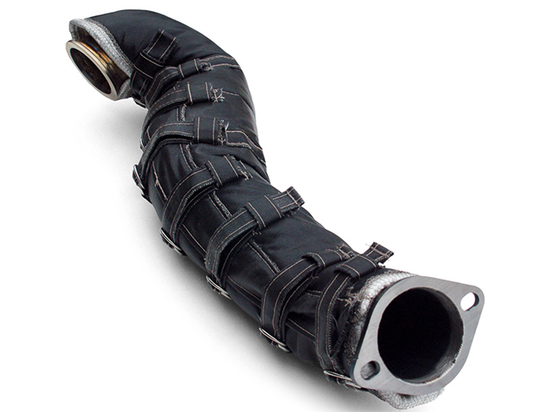
A removable exhaust insulation blanket is one practical solution for generator exhaust piping. The blanket can be manufactured to the dimensions and geometry of the exhaust component and secured using removable fastening systems.
This design provides two important functions: thermal insulation during generator operation and convenient access during maintenance.
Generator sets require periodic servicing, and exhaust components may need to be inspected, repaired or replaced. A permanent insulation system can make access more difficult because insulation may need to be removed before the component can be reached.
A removable generator exhaust insulation blanket can be opened and removed during servicing and reinstalled afterward. This makes it particularly useful around flanges, turbocharger connections, exhaust manifolds and other serviceable components.
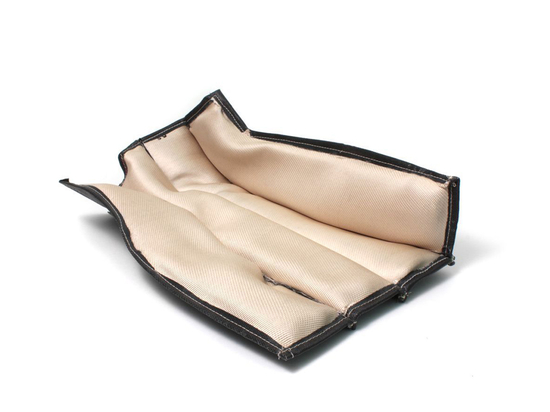
The construction of generator exhaust pipe insulation generally includes several layers.
The inner hot-face layer is selected to withstand high-temperature exposure from the exhaust pipe. Fiberglass fabric, high silica fabric, stainless steel mesh and other high-temperature textiles may be used depending on the application.
The insulation core provides the primary thermal resistance. Fiberglass, silica-based insulation and ceramic fiber can be selected according to the required temperature capability and insulation thickness.
The outer cover protects the insulation from abrasion, vibration, oil, moisture and repeated handling. Silicone-coated fiberglass and other technical fabrics may be used when additional environmental durability is required.
Material selection should consider both temperature and the generator operating environment.
Diesel generator exhaust systems experience repeated heating and cooling cycles, vibration and mechanical movement. The insulation blanket must therefore maintain its structure and fastening integrity throughout repeated operation.
The enclosure environment can also influence the design.
Oil mist, condensation, dust and maintenance fluids may come into contact with the external surface. A suitable protective outer layer can help improve the service life of the insulation system under these conditions.
Generator exhaust pipe insulation can also help protect nearby components.
Electrical cables, control wiring, sensors, hydraulic lines, fuel systems and structural components may be positioned relatively close to hot exhaust piping. Continuous radiant heat exposure can increase the thermal stress on these components.
Containing heat around the exhaust pipe can reduce the amount of radiant heat released into the surrounding enclosure.
Insulation thickness is another important design parameter.
The correct thickness depends on exhaust temperature, pipe diameter, ambient conditions, available installation space and the required external surface temperature. More insulation is not always practical because genset enclosures can have strict clearance limitations.
Engineers should therefore establish the thermal target before selecting the blanket construction.
Important specification factors include:
Exhaust pipe operating temperature
Maximum temperature exposure
Required external surface temperature
Pipe diameter
Pipe and component geometry
Available clearance
Insulation thickness
Generator vibration
Oil and moisture exposure
Ventilation conditions
Maintenance requirements
Fastening method
Expected operating cycle
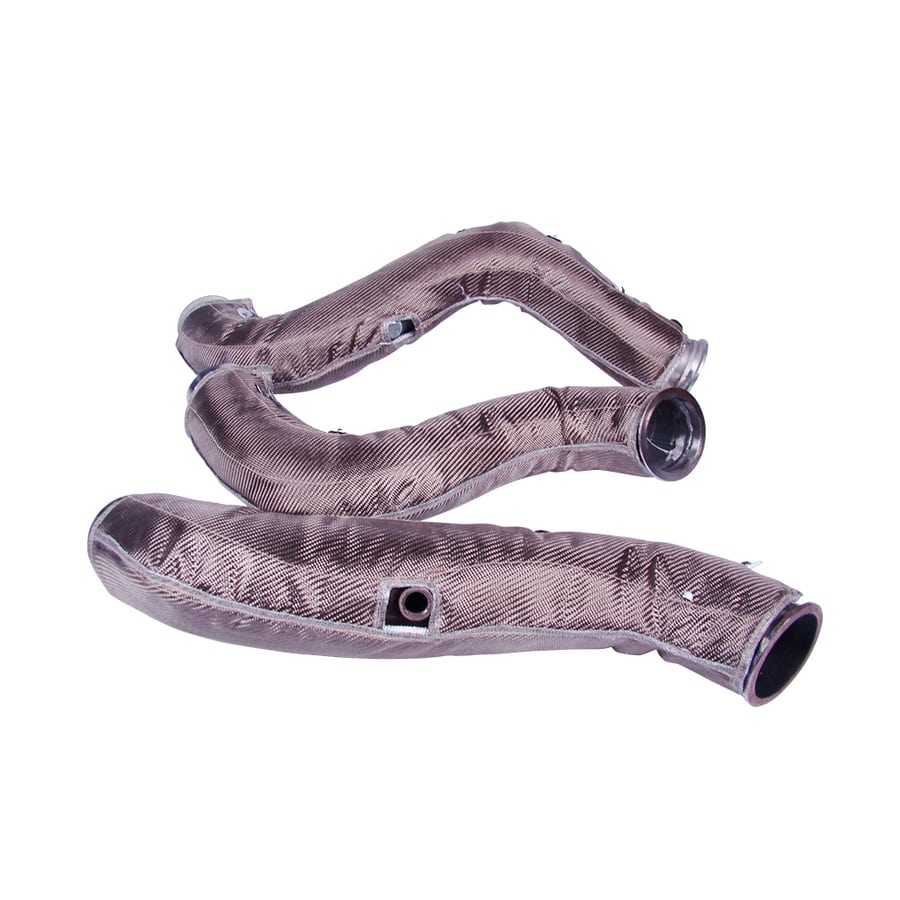
For straight generator exhaust pipes, the insulation can be manufactured in cylindrical sections that fit around the pipe.
For elbows and irregular sections, custom-shaped panels can provide better coverage.
For flanges and service points, removable sections can be designed so that technicians can access the connection without removing the complete exhaust insulation system.
Large generator exhaust systems may also benefit from segmented construction. Multiple blanket sections can be installed along the exhaust run, allowing individual sections to be removed when maintenance is required.
The thermal objective should also be clearly defined.
Some generator applications primarily require personnel protection from hot surfaces. Others are focused on reducing radiant heat inside the enclosure. In more demanding installations, the objective may be to protect electrical equipment or maintain a specified enclosure temperature.
These requirements can lead to different insulation thicknesses and material combinations.
An exhaust insulation blanket can also be combined with an exhaust heat shield. The blanket reduces heat transfer directly from the exhaust pipe, while a heat shield can provide additional protection for a specific nearby component.
This combined approach can be useful where generator packaging leaves very little space between the exhaust system and sensitive equipment.
Compared with conventional exhaust lagging, a removable insulation blanket provides easier maintenance access and can be reused after servicing. Compared with a simple metal heat shield, direct exhaust pipe insulation provides thermal containment around the hot pipe itself.
BSTFLEX manufactures custom generator exhaust pipe insulation blankets and removable thermal jackets for diesel generator sets and industrial power equipment. Products can be manufactured according to drawings, pipe dimensions, component samples and operating requirements.
Material combinations may include fiberglass, high silica fabric, ceramic fiber insulation, stainless steel mesh and silicone-coated fiberglass, depending on temperature, mechanical conditions and environmental exposure.
For enclosed diesel generator systems where exhaust heat contributes to enclosure temperature or threatens nearby components, properly engineered generator exhaust pipe insulation provides an effective method of controlling heat while maintaining access for inspection and maintenance.