#Product Trends
Marine Exhaust Blankets for High Temperature Engine Components
Marine Exhaust Blanket
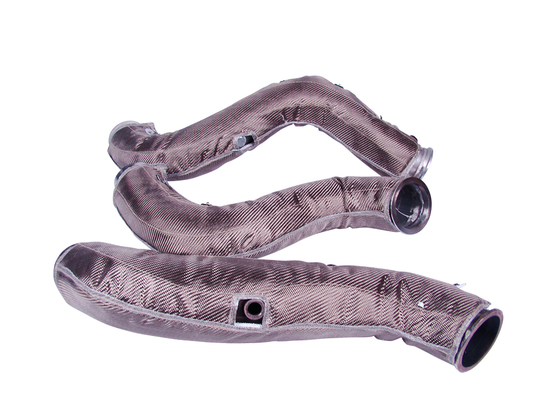
Marine exhaust blankets are engineered thermal protection products used to control heat around high-temperature exhaust components on marine engines and power systems. They are commonly installed over exhaust pipes, manifolds, elbows, turbocharger connections, mufflers and other components where excessive heat can affect surrounding equipment or create unsafe surface temperatures.
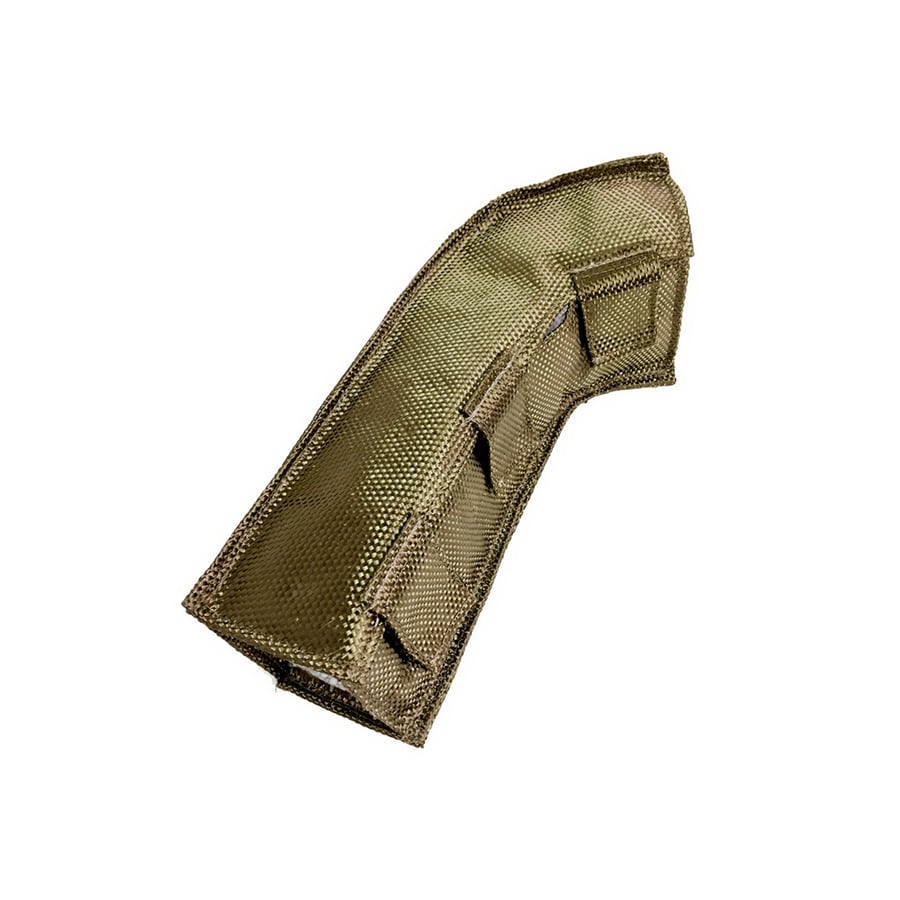
Unlike simple exhaust wraps, a marine exhaust blanket is normally fabricated as a fitted, multi-layer insulation cover. The construction can be tailored to the geometry of the exhaust component, the operating temperature, available clearance and maintenance requirements of the vessel or engine system.
For marine applications, thermal insulation must also withstand continuous vibration, repeated heating and cooling cycles, moisture and demanding engine-room conditions. A properly engineered blanket therefore needs to balance thermal performance with mechanical durability and serviceability.
BSTFLEX manufactures custom marine exhaust blankets for different engine configurations and marine power applications, including diesel engines, auxiliary engines, marine generators and commercial vessel exhaust systems.
Marine Exhaust Blankets for Engine-Room Heat Management
An uninsulated exhaust component can transfer a considerable amount of heat into the surrounding engine compartment. This is especially important when exhaust pipes or manifolds are located close to wiring, hoses, sensors, fuel-system components or structural parts.
A marine exhaust blanket reduces direct heat transfer from the exhaust surface to the surrounding environment.
The main functions include:
Reducing external exhaust surface temperature
Limiting radiant heat inside the engine compartment
Protecting nearby components from excessive heat
Improving thermal management around marine engines
Reducing heat exposure to electrical and fluid systems
Providing a safer working environment for maintenance personnel
Maintaining insulation performance around complex exhaust components
The actual thermal performance depends on the exhaust temperature, insulation material, blanket thickness, component geometry and installation conditions.
Where Marine Exhaust Blankets Are Used
Marine exhaust blankets can be manufactured for individual components or integrated into a larger exhaust thermal-management system.
Exhaust Pipes
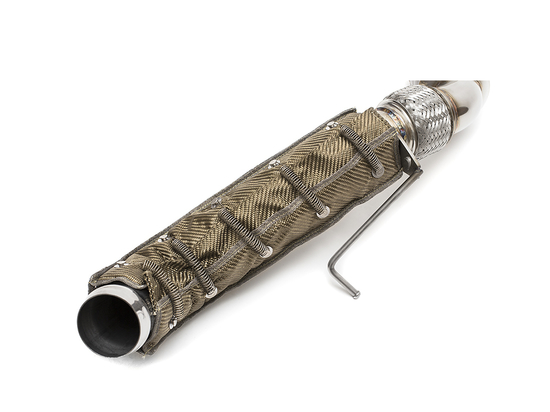
Straight exhaust pipes are among the simplest components to insulate. A fitted blanket can provide complete circumferential coverage while incorporating a practical fastening system for removal.
Exhaust Elbows
Elbows and bends are difficult to cover with standard sleeves because their geometry changes along the length of the component. Custom blanket construction allows the insulation to follow the actual shape.
Exhaust Manifolds
Marine engine manifolds can contain multiple outlets and connection points within a relatively small space. Individual sections or a specially shaped blanket can be designed to cover the manifold while maintaining access to critical areas.
Turbocharger Exhaust Connections
High-temperature areas around turbochargers often require additional thermal protection. A custom blanket can be fabricated around the available clearances and adjacent components.
Marine Mufflers
Large marine mufflers can generate substantial heat and may be located in confined engine-room spaces. Removable insulation blankets provide thermal protection without permanently restricting access to the muffler.
Flanges and Connection Points
Special openings and separate blanket sections can be incorporated around exhaust flanges, inspection points and service connections.
Why Removable Marine Exhaust Blankets Are Useful
Marine equipment requires regular inspection and maintenance. Exhaust components may need to be disconnected, inspected or replaced during the operating life of the vessel.
For this reason, removable construction is often preferable to permanent insulation.
A removable exhaust blanket can be opened, removed and reinstalled without destroying the insulation material. This makes it possible to maintain thermal protection while preserving access to the exhaust system.
The blanket can also be divided into multiple sections.
For example, a complex exhaust assembly may use separate covers for:
Exhaust manifold
Exhaust elbow
Straight pipe
Flange
Turbocharger connection
Muffler
This modular approach can simplify installation and reduce the amount of insulation that needs to be removed during maintenance.
Materials Used in Marine Exhaust Blankets
The material construction should be selected according to the operating temperature and installation environment.
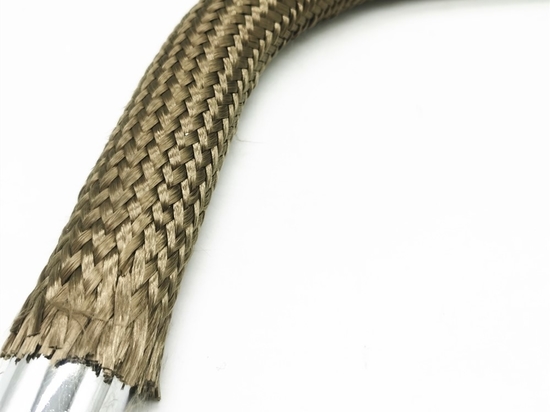
Fiberglass fabric is widely used for high-temperature insulation covers where flexibility and thermal resistance are required.
Silica fabric can be used for higher-temperature applications where additional resistance to thermal exposure is required.
Ceramic fiber insulation is suitable for demanding high-temperature exhaust components requiring a high level of thermal resistance.
Silicone-coated fiberglass fabric can provide a flexible and durable outer surface for applications requiring additional protection against abrasion and handling.
Aluminized fabric can be selected when reflective heat management is required around the exhaust system.
Stainless steel fastening components can be used to secure the blanket and improve durability under continuous engine vibration.
The final construction can combine different materials to meet the thermal and mechanical requirements of a particular marine exhaust system.
Marine Exhaust Blanket Construction
A typical custom blanket may contain several functional layers.
The outer cover protects the insulation from handling and environmental exposure.
The insulation core provides the primary thermal resistance.
The inner layer is selected according to the temperature and exhaust component conditions.
The fastening system holds the blanket around the component and allows it to be removed when required.
Different construction methods can be used depending on the component geometry. Flat panels are suitable for relatively simple shapes, while multi-piece patterns are more appropriate for elbows, manifolds and irregular exhaust assemblies.
Managing Vibration in Marine Exhaust Systems
Vibration is an important consideration when designing marine exhaust blankets.
Unlike stationary industrial piping, marine engine exhaust systems can experience continuous mechanical movement. The blanket therefore needs to remain securely attached without placing excessive stress on the insulation or stitching.
Fastening systems can be selected according to the component shape and service requirements.
Possible fastening methods include:
Stainless steel wire
Metal straps
Hooks and loops
Buckles
Lacing systems
Mechanical closures
Combination fastening systems
The selected system should allow the blanket to remain stable during operation while still permitting removal during service.
Marine Exhaust Blanket Customization
Standard insulation products may not fit marine exhaust assemblies accurately because vessel layouts and engine configurations vary considerably.
Custom marine exhaust blankets can be produced according to:
Component dimensions
Exhaust pipe diameter
Component drawings
Installation photographs
Templates
CAD data
Required insulation thickness
Operating temperature
Available clearance
Fastening requirements
Custom cutouts can also be provided for sensors, fittings, brackets, clamps and other components.
This approach is particularly useful when several exhaust components are located close together and there is limited space for insulation.
Marine Exhaust Blankets for Different Vessel Applications
Marine exhaust insulation can be applied to a wide range of equipment, including:
Commercial vessels
Workboats
Tugboats
Fishing vessels
Passenger vessels
Offshore equipment
Marine diesel engines
Auxiliary engines
Marine generators
Engine-room exhaust systems
The insulation design can be adjusted according to the equipment size and operating conditions.
Marine Exhaust Blanket Selection Guide
When selecting a marine exhaust blanket, several engineering parameters should be considered.
First, determine the normal and maximum exhaust temperature. This establishes the required temperature capability of the insulation system.
Next, measure the component geometry. Diameter alone is not sufficient for complex components because bends, flanges and connection points affect the blanket pattern.
Available clearance should also be measured. A thicker insulation system may provide greater thermal resistance, but it requires additional installation space.
The fastening arrangement should then be considered based on vibration, maintenance frequency and accessibility.
Finally, the marine environment should be taken into account when selecting the outer fabric and fastening hardware.
Important selection parameters include:
Parameter Consideration
Exhaust temperature Determines suitable insulation materials
Component geometry Defines the blanket pattern
Insulation thickness Influences thermal performance and clearance
Vibration Determines fastening and construction requirements
Moisture exposure Influences outer fabric selection
Maintenance Determines removable or sectional design
Available space Limits blanket thickness
Component access Determines openings and separate sections
Custom Marine Exhaust Insulation Manufacturer
BSTFLEX provides custom high-temperature marine exhaust blankets for engine thermal-management applications. The blankets can be designed for individual exhaust components or supplied as a coordinated insulation system for multiple sections of a marine exhaust assembly.
Depending on the application, construction can incorporate fiberglass, silica, ceramic fiber, aluminized fabric, silicone-coated fiberglass and other high-temperature materials.
The objective is to provide a practical thermal barrier while maintaining the flexibility required for inspection, maintenance and repeated installation.
For a marine exhaust blanket project, useful information includes the exhaust component dimensions, operating temperature, photographs or drawings, insulation thickness requirements and available installation space.
Based on these parameters, a custom marine exhaust blanket can be developed for the specific engine and exhaust configuration.