#Product Trends
Marine Exhaust Blanket Wrap for High Temperature Exhaust Systems
marine exhaust blanket wrap
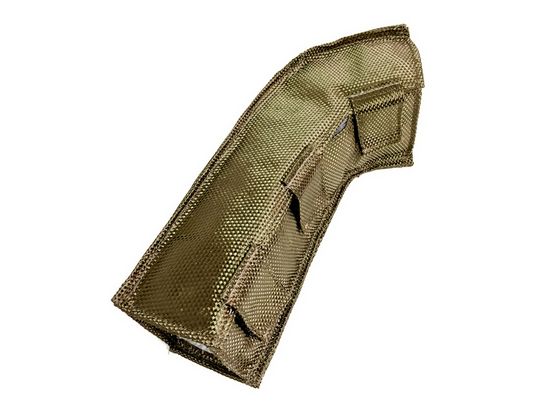
Marine exhaust blanket wrap is a high-temperature thermal protection solution designed to cover hot exhaust components on marine engines and power systems. It combines the heat-control function of exhaust insulation with a fitted blanket-style construction that can be installed around complex exhaust components and removed when maintenance is required.
Marine engine exhaust systems are often installed in compact engine rooms where hot surfaces are located close to electrical wiring, hoses, sensors, fuel-system components and other equipment. Controlling radiant and surface heat can therefore be an important part of marine engine thermal management.
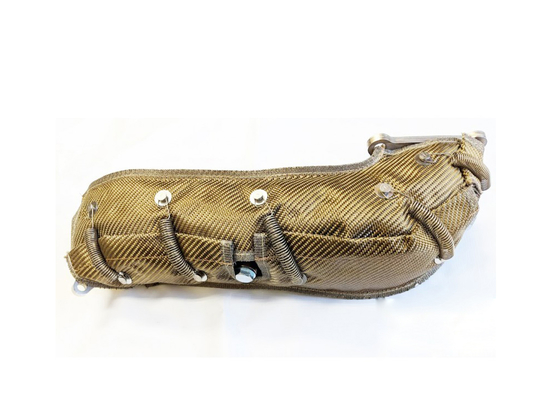
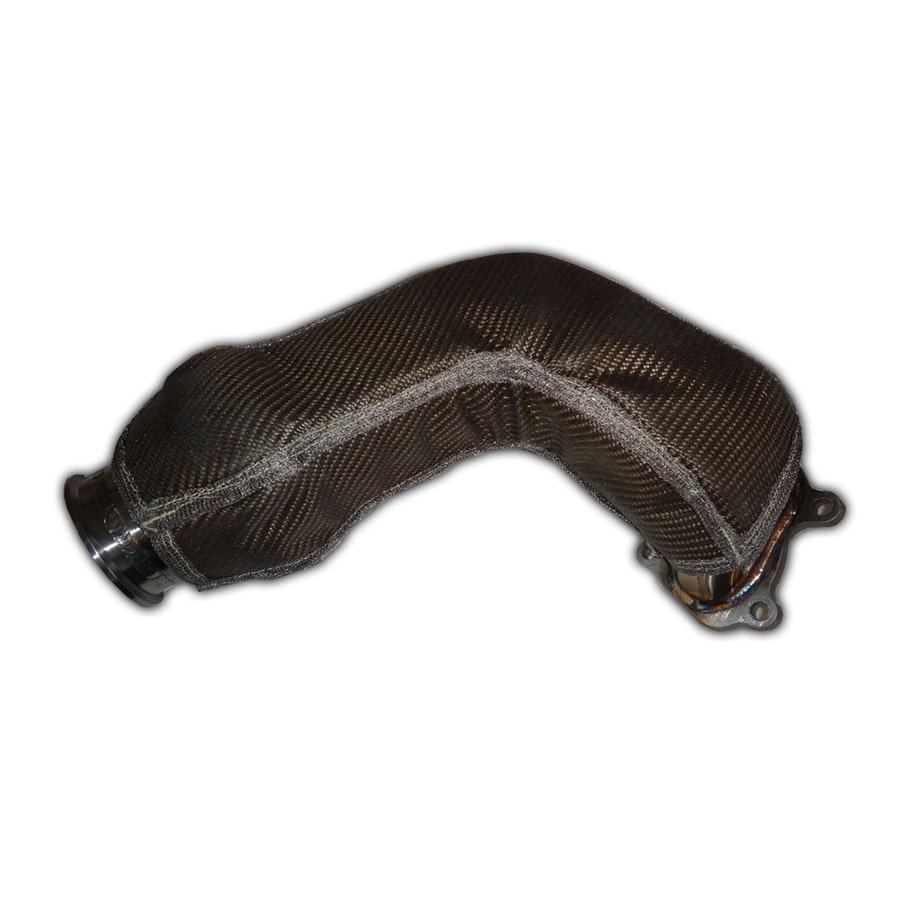
Unlike a simple exhaust wrap that is continuously wound around a pipe, a custom marine exhaust blanket wrap can be fabricated as individual sections shaped to the actual component. This makes it possible to insulate not only straight exhaust pipes, but also elbows, manifolds, flanges, turbocharger connections, mufflers and other irregular components.
BSTFLEX manufactures custom marine exhaust blanket wrap solutions for diesel engines, marine generators, workboats, commercial vessels and other high-temperature marine equipment.
What Is Marine Exhaust Blanket Wrap?
Marine exhaust blanket wrap is a removable or semi-removable thermal insulation cover installed around a high-temperature exhaust component.
The term "blanket wrap" describes the way the insulation surrounds the exhaust component while remaining a separate protective cover rather than being permanently bonded to the pipe.
A typical construction can include:
High-temperature outer fabric
Thermal insulation core
Inner heat-resistant fabric
Stainless steel fastening components
Custom openings and cutouts
Multiple removable sections
The construction can be adjusted according to the exhaust temperature, component geometry, available clearance and service requirements.
This makes blanket-wrap insulation suitable for marine exhaust systems where both thermal protection and maintenance accessibility are important.
Why Use Blanket Wrap on a Marine Exhaust System?
A marine engine can generate substantial heat through its exhaust system. When hot exhaust components are installed inside an enclosed or partially enclosed engine room, that heat can affect the surrounding environment.
Marine exhaust blanket wrap helps create a thermal barrier between the hot exhaust surface and adjacent equipment.
Potential benefits include:
Reduced external exhaust surface temperature
Lower radiant heat transfer
Improved engine-room heat management
Protection of nearby components
Reduced heat exposure to wiring and hoses
Improved maintenance safety
Thermal protection in restricted installation spaces
Removable access to exhaust components
The actual thermal performance depends on the complete insulation design. Insulation material, thickness, operating temperature, surface area and installation conditions all influence the result.
Marine Exhaust Blanket Wrap vs Traditional Exhaust Wrap
Traditional exhaust wrap is generally supplied as a flexible strip or tape that is wound around an exhaust pipe.
This construction can be useful for relatively simple pipe sections, but it becomes less convenient when the exhaust assembly contains:
Sharp bends
Large flanges
Multiple branches
Turbocharger connections
Inspection points
Irregular manifolds
Large mufflers
A marine exhaust blanket wrap is instead fabricated as a shaped cover.
The blanket can be opened or removed, and individual sections can be replaced without necessarily disturbing the entire exhaust insulation system.
For marine equipment requiring regular inspection, this difference can be significant.
Components Suitable for Marine Exhaust Blanket Wrap
Marine exhaust blanket wrap can be manufactured for a broad range of exhaust components.
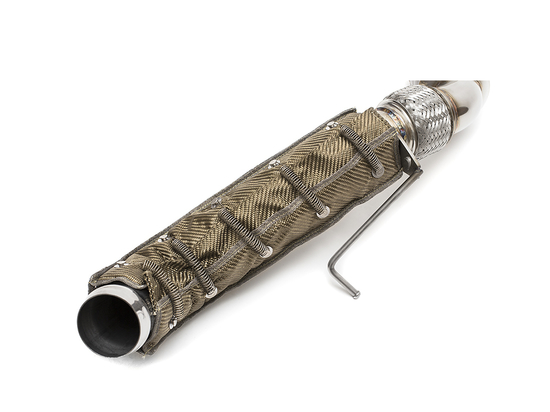
Exhaust Pipes
Straight exhaust pipes can be covered with cylindrical or sectional blanket designs. The fastening arrangement can be selected according to pipe diameter and maintenance requirements.
Exhaust Elbows
Bends require a shaped pattern because the exhaust direction changes along the component.
A custom blanket can be divided into several panels so that the insulation follows the elbow without creating excessive folds.
Exhaust Manifolds
Marine exhaust manifolds can contain several branches and connection points.
A custom manifold blanket can be patterned around these features while providing openings for fittings and service access.
Turbocharger Exhaust Sections
Turbocharger exhaust connections can produce concentrated heat in relatively small areas.
A high-temperature blanket wrap can be designed around the available clearance while maintaining access to required service locations.
Mufflers
Marine mufflers can have large surfaces that contribute to heat accumulation in the engine room.
A removable blanket can cover the main body while leaving flanges, brackets and connection points accessible.
Flanges and Exhaust Connections
Individual blanket sections can be designed around exhaust flanges and joints.
This allows the thermal insulation system to remain serviceable instead of requiring the entire blanket to be removed whenever a connection needs inspection.
Marine Exhaust Blanket Wrap Materials
The material selection depends primarily on operating temperature and environmental conditions.
Fiberglass
Fiberglass fabric and insulation provide a flexible option for many marine exhaust applications. They can be used where the temperature is within the specified range of the selected fiberglass construction.
Silica
Silica fabric and silica insulation provide higher-temperature capability for demanding exhaust applications.
They can be selected for hot exhaust manifolds, turbocharger areas and other components where greater thermal resistance is required.
Ceramic Fiber
Ceramic fiber provides high-temperature insulation performance and can be used as the core material for demanding marine exhaust blanket systems.
Aluminized Fabric
An aluminized outer surface can provide reflective thermal protection and is useful where radiant heat management is a major consideration.
Silicone-Coated Fiberglass
Silicone-coated fiberglass can be used as an outer protective fabric where flexibility, handling durability and fabric protection are important.
Stainless Steel Hardware
Stainless steel wire, straps, buckles, hooks or other fastening components can be incorporated into the blanket construction depending on the installation requirements.
Marine Environment and Blanket Construction
Marine exhaust insulation operates in an environment that can differ substantially from indoor industrial piping.
The insulation may be exposed to:
Humidity
Condensation
Salt-containing air
Engine vibration
Repeated thermal cycling
Mechanical handling
Restricted ventilation
These conditions should be considered when selecting the outer fabric, stitching and fastening system.
The insulation core should also be protected by an appropriate outer construction so that normal handling and installation do not unnecessarily damage the thermal layer.
Removable Design for Marine Engine Maintenance
One of the main advantages of marine exhaust blanket wrap is serviceability.
Marine engines require inspection and maintenance throughout their operating life. Exhaust components may need to be disconnected, repaired or replaced.
A removable blanket can be opened or detached from the component without destroying the entire insulation system.
For larger exhaust assemblies, the insulation can be divided into multiple sections.
For example:
Exhaust Component Possible Blanket Design
Straight exhaust pipe Cylindrical removable section
Exhaust elbow Multi-panel shaped blanket
Exhaust manifold Custom molded-pattern blanket
Turbocharger outlet High-temperature fitted cover
Muffler Large sectional blanket
Flange Removable flange cover
Exhaust joint Separate service section
This modular construction makes the insulation easier to install and maintain.
Designing a Custom Marine Exhaust Blanket Wrap
A successful custom blanket starts with accurate information about the exhaust component.
Important parameters include:
Exhaust component dimensions
Operating temperature
Maximum temperature
Component geometry
Available clearance
Required insulation thickness
Engine vibration
Maintenance requirements
Marine environmental exposure
Required fastening system
For irregular components, photographs, drawings or templates can be used to develop the blanket pattern.
The blanket can then be divided into practical sections based on installation and maintenance requirements.
Thermal Protection in Confined Marine Engine Rooms
Marine engine rooms often have limited space around the exhaust system.
In these conditions, reducing heat transfer from the exhaust surface can help manage the thermal environment around nearby equipment.
This is particularly relevant when an exhaust pipe passes close to:
Electrical cables
Hydraulic hoses
Fuel lines
Rubber components
Sensors
Control equipment
Plastic components
Structural surfaces
A custom exhaust insulation blanket creates a controlled thermal barrier without requiring the exhaust system to be completely redesigned.
Marine Exhaust Blanket Wrap for Retrofit Projects
Marine exhaust insulation does not have to be installed only on new equipment.
Existing vessels can also benefit from custom blanket-wrap insulation.
A retrofit project may be considered when:
Engine-room temperatures are excessive
Existing insulation has deteriorated
Exhaust components have been modified
A replacement engine has changed the exhaust layout
Nearby equipment requires additional heat protection
Existing permanent insulation makes maintenance difficult
For retrofit applications, the blanket can be designed around the installed exhaust component.
Measurements, photographs and drawings can provide the information needed to develop the custom pattern.
Marine Exhaust Blanket Wrap Applications
Custom marine exhaust blanket wrap can be used on:
Marine diesel engines
Marine generators
Auxiliary engines
Commercial vessels
Workboats
Tugboats
Fishing vessels
Offshore equipment
Ship engine rooms
Marine power systems
The same design principles can also be adapted to other industrial high-temperature exhaust applications where removable thermal protection is required.
Choosing the Right Marine Exhaust Blanket Wrap
The most suitable blanket should be selected according to the actual exhaust system rather than simply choosing the highest-temperature material available.
A high-temperature insulation material may not be appropriate if the blanket thickness interferes with surrounding components.
Similarly, a thin blanket may not provide sufficient thermal performance for a high-temperature exhaust component.
The design should therefore balance:
Temperature capability
Thermal resistance
Blanket thickness
Component geometry
Available clearance
Vibration resistance
Environmental exposure
Maintenance access
Fastening method
Expected service conditions
This engineering approach allows the blanket construction to be optimized for the specific marine exhaust system.
Custom Marine Exhaust Blanket Wrap Manufacturer
BSTFLEX manufactures custom marine exhaust blanket wrap for high-temperature marine engine and exhaust applications.
The company can produce insulation covers for exhaust pipes, manifolds, elbows, turbocharger connections, mufflers, flanges and other exhaust components.
Depending on the application, the construction can incorporate fiberglass, silica, ceramic fiber, aluminized fabric, silicone-coated fiberglass and other high-temperature materials.
Custom dimensions, insulation thicknesses, openings, sectional designs and fastening systems can be specified according to the installation requirements.
For a marine exhaust blanket wrap project, customers can provide component dimensions, operating temperatures, photographs, drawings or templates.
The insulation can then be designed around the actual exhaust geometry to provide thermal protection while retaining the accessibility required for marine engine inspection and maintenance.