#Product Trends
Automotive Exhaust Pipe Insulation for High Temperature Thermal Protection
Automotive Exhaust Pipe Insulation
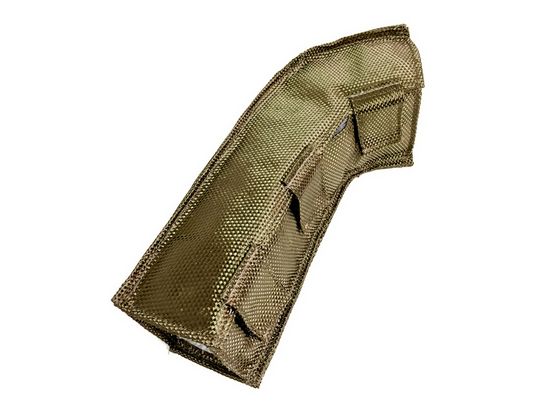
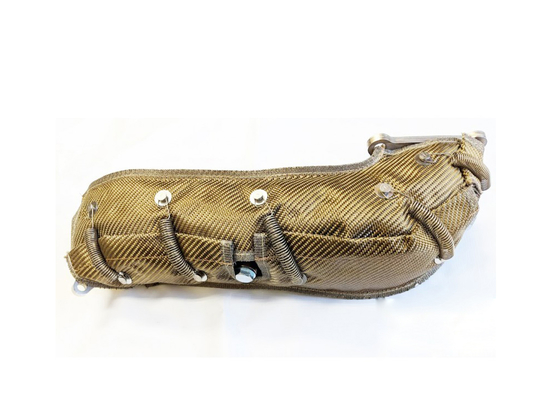
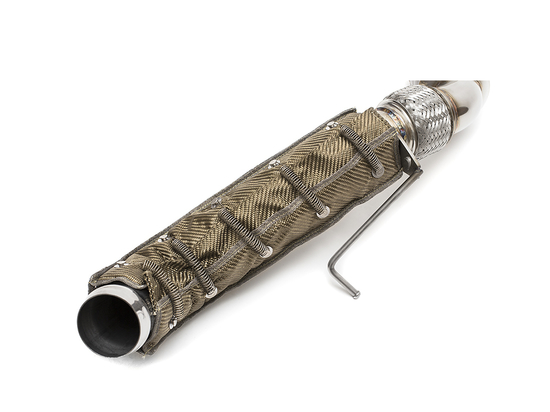
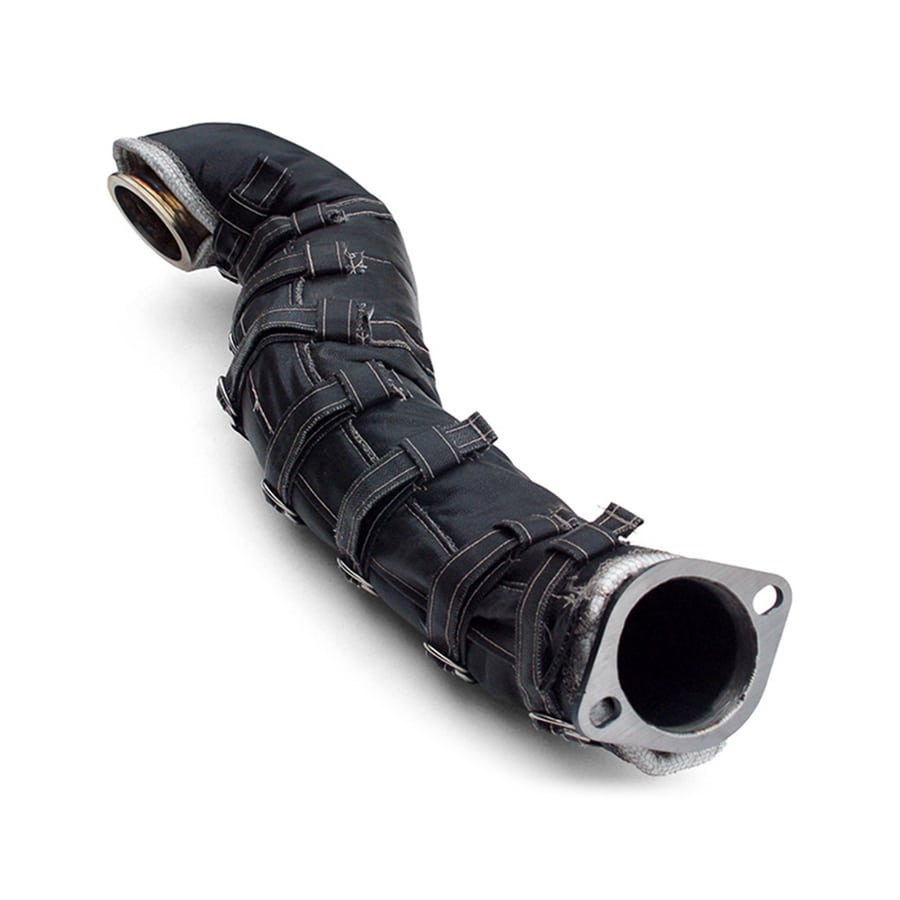
Automotive exhaust pipe insulation is used to control heat generated by vehicle exhaust systems and reduce thermal exposure to components located around hot exhaust piping. It can be applied to exhaust pipes, downpipes, exhaust tubes, elbows and other sections of an automotive exhaust system.
As engine output increases and engine compartments become more compact, exhaust temperature management becomes increasingly important. Hot exhaust piping can radiate heat toward wiring, hoses, intake components, sensors, body panels and other nearby parts.
Automotive exhaust pipe insulation creates a thermal barrier around the exhaust pipe. Depending on the design, it can reduce radiant heat transfer, lower the external surface temperature and help manage heat within the engine compartment or underbody area.
Different insulation constructions can be used depending on the exhaust temperature, pipe geometry, available clearance and maintenance requirements.
BSTFLEX manufactures custom automotive exhaust pipe insulation for passenger vehicles, commercial vehicles, diesel engines, turbocharged engines, performance vehicles and other automotive applications.
Why Is Automotive Exhaust Pipe Insulation Important?
An exhaust pipe carries high-temperature exhaust gases away from the engine.
Although the exhaust pipe is designed to withstand these temperatures, nearby components may not have the same temperature resistance.
Heat radiated from an exposed exhaust pipe can affect:
Wiring harnesses
Electrical connectors
Rubber hoses
Fuel lines
Intake components
Sensors
Plastic components
Underbody components
Engine-bay structures
Automotive exhaust pipe insulation helps separate the hot exhaust surface from these surrounding components.
The main purposes of insulation can include:
Reducing radiant heat transfer
Lowering external exhaust surface temperature
Protecting nearby components
Improving engine-bay thermal management
Controlling underbody heat
Reducing thermal exposure to wiring and hoses
Improving thermal protection around turbocharged engines
The actual thermal performance depends on the insulation material, construction, thickness, exhaust temperature and installation environment.
Where Automotive Exhaust Pipe Insulation Is Used
Automotive exhaust pipe insulation can be applied to different sections of the exhaust system.
Downpipes
Downpipes are often positioned close to the engine and turbocharger.
Because of their location, they can become an important source of radiant heat in a restricted engine compartment.
A custom insulation cover can reduce heat transfer from the downpipe to surrounding components.
Exhaust Tubes
Long exhaust tubes can also be insulated when they pass close to heat-sensitive components or vehicle structures.
The insulation can be manufactured in continuous or sectional configurations.
Exhaust Elbows
Elbows and bends require shaped insulation because their geometry changes along the exhaust path.
A custom multi-piece construction can provide more consistent coverage than a standard straight sleeve.
Exhaust Pipes Under the Vehicle
Underbody exhaust piping can also require thermal protection when it is located close to body panels, fuel-system components or other heat-sensitive equipment.
The outer material should be selected according to the mechanical and environmental conditions of the installation.
Automotive Exhaust Pipe Insulation Material
The appropriate automotive exhaust pipe insulation material depends on the exhaust temperature and installation requirements.
Common material options include fiberglass, silica, ceramic fiber, aluminized fabric and silicone-coated fiberglass.
Fiberglass
Fiberglass is a widely used high-temperature insulation material.
It offers a combination of flexibility, thermal resistance and cost efficiency for many automotive exhaust applications.
Fiberglass fabric can be used as an outer cover, while fiberglass insulation can provide thermal resistance within the insulation assembly.
Silica
Silica fabric and silica insulation are suitable for higher-temperature applications.
They can be used around demanding exhaust components where increased resistance to thermal exposure is required.
Ceramic Fiber
Ceramic fiber provides high-temperature insulation performance for demanding exhaust applications.
It can be used as an insulation core when the operating conditions exceed the practical range of conventional fiberglass constructions.
Aluminized Fabric
Aluminized fabric can be selected where radiant heat reflection is an important part of the thermal-management strategy.
It can be used as an outer surface of an automotive exhaust insulation assembly.
Silicone-Coated Fiberglass
Silicone-coated fiberglass can provide a flexible and durable outer surface.
It is useful where the insulation product will be handled during installation or exposed to mechanical contact.
The final automotive exhaust pipe insulation material combination should always be selected according to the actual operating conditions.
Automotive Exhaust Pipe Insulation vs Exhaust Heat Shield
Exhaust pipe insulation and exhaust heat shields both provide thermal protection, but they operate differently.
An exhaust heat shield is normally positioned between the exhaust component and the component that needs protection. It creates a physical barrier that can reduce radiant heat transfer.
Exhaust pipe insulation surrounds the hot exhaust pipe itself.
This means the insulation can reduce the amount of heat radiated from the exhaust surface.
The two technologies can also be used together.
For example, a vehicle may use insulation around a hot downpipe while also using a heat shield between the exhaust system and a nearby intake or body panel.
The appropriate solution depends on the available space and thermal-management objectives.
How Automotive Exhaust Pipe Insulation Works
The basic principle is to introduce a layer of thermally resistant material between the hot exhaust surface and the surrounding environment.
The insulation reduces heat transfer through the material.
At the same time, the outer surface of the insulation can be designed to provide additional protection against radiant heat.
The overall performance is influenced by:
Exhaust temperature
Insulation material
Insulation thickness
Outer surface construction
Pipe diameter
Airflow around the component
Available clearance
Installation quality
Increasing insulation thickness can improve thermal resistance, but automotive applications often have strict space limitations.
Therefore, the insulation should be engineered according to the actual vehicle configuration.
Automotive Exhaust Pipe Insulation in Compact Engine Bays
Modern vehicles often place multiple systems within a limited engine-bay volume.
The exhaust pipe may be positioned close to the intake system, electrical wiring, hoses or other components.
This creates a challenging thermal environment.
A custom insulation system can be designed around the exhaust pipe while maintaining the clearance required by nearby components.
This is particularly useful for turbocharged engines where the exhaust and intake systems may be located relatively close together.
Insulating the exhaust pipe can help reduce radiant heat reaching adjacent components.
Custom Automotive Exhaust Pipe Insulation
Universal insulation products cannot always accommodate the geometry of a vehicle exhaust system.
A custom automotive exhaust pipe insulation product can be fabricated according to the actual component.
Design information can include:
Pipe diameter
Pipe length
Bend radius
Elbow geometry
Flange dimensions
Sensor locations
Clamp locations
Mounting brackets
Operating temperature
Available clearance
For complex exhaust assemblies, multiple sections can be used.
This makes installation easier and allows individual sections to be removed during vehicle maintenance.
Removable Automotive Exhaust Pipe Insulation
Maintenance is an important consideration when designing automotive exhaust insulation.
Exhaust pipes, turbochargers, sensors and other components may require periodic inspection or replacement.
A removable insulation design allows technicians to access the exhaust component without destroying the complete insulation system.
Possible fastening methods include:
Stainless steel wire
Stainless steel straps
Buckles
Hooks
Lacing systems
Mechanical closures
The fastening system can be selected according to the geometry and expected operating conditions.
Automotive Exhaust Pipe Insulation for Turbocharged Engines
Turbocharged engines can generate particularly high exhaust temperatures.
The exhaust pipe or downpipe may therefore become one of the most important thermal sources in the engine compartment.
Heat from the exhaust system can affect nearby:
Air intake components
Wiring
Sensors
Fuel-system components
Brake components
Cooling components
Rubber parts
High-temperature automotive exhaust pipe insulation can be designed around these areas to help control radiant heat.
For higher-temperature applications, silica or ceramic fiber constructions may be considered instead of conventional fiberglass.
Automotive Exhaust Pipe Insulation for Diesel Engines
Diesel exhaust systems also require effective thermal management, particularly in turbocharged engines and high-load applications.
Diesel engine exhaust pipes may be positioned close to hoses, wiring, sensors and other equipment.
A custom insulation system can be designed according to the exhaust temperature and vehicle configuration.
The same approach can be applied to commercial diesel vehicles and specialty automotive equipment.
Insulation Thickness Considerations
Insulation thickness should not be selected independently of the vehicle layout.
A thicker insulation layer generally provides greater thermal resistance, but it also increases the overall outside diameter of the insulated exhaust pipe.
This can become a problem when the exhaust is installed close to:
Body panels
Chassis components
Wiring
Hoses
Suspension components
Heat-sensitive equipment
The goal is to achieve the required thermal performance within the available installation space.
For this reason, custom insulation construction is often more practical for automotive applications than simply selecting the thickest available material.
Automotive Exhaust Pipe Insulation for Retrofit Applications
Exhaust pipe insulation can also be added to an existing vehicle.
Retrofit applications may arise when:
Engine-bay temperatures are excessive
Nearby components are exposed to too much heat
The exhaust system has been modified
A turbocharger has been upgraded
The vehicle has been converted to a different engine
Existing thermal protection has deteriorated
Additional exhaust heat management is required
Measurements and photographs of the installed exhaust system can be used to develop a custom insulation solution.
This allows the insulation to match the existing exhaust configuration.
Automotive Exhaust Pipe Insulation Selection Guide
Before selecting insulation, the following parameters should be evaluated:
Parameter Design Consideration
Exhaust temperature Determines material requirements
Peak temperature Establishes maximum temperature capability
Pipe diameter Determines insulation dimensions
Pipe geometry Defines the insulation pattern
Available clearance Limits insulation thickness
Nearby components Identifies thermal protection requirements
Vibration Influences fastening design
Maintenance Determines removable construction
Environment Influences outer material selection
Required thermal performance Helps determine insulation construction
This information provides a practical basis for selecting the appropriate automotive exhaust pipe insulation.
Custom Automotive Exhaust Insulation Manufacturer
BSTFLEX manufactures custom automotive exhaust pipe insulation and high-temperature exhaust thermal protection products.
Solutions can be designed for exhaust pipes, downpipes, elbows, exhaust tubes and other high-temperature automotive components.
Depending on the application, materials can include fiberglass, silica, ceramic fiber, aluminized fabric, silicone-coated fiberglass and other high-temperature textiles.
The insulation can be produced in custom lengths, diameters, thicknesses and sectional configurations.
Openings can also be incorporated for sensors, clamps, brackets and connection points.
For an automotive exhaust pipe insulation project, customers can provide component dimensions, photographs, drawings, operating temperature and available installation clearance.
Based on these requirements, BSTFLEX can develop a custom insulation construction designed for the actual automotive exhaust system.