#Product Trends
Automotive Pipe Insulation for High Temperature Engine Compartments
Automotive Pipe Insulation
Automotive Pipe Insulation for High Temperature Engine Compartments
Thermal Protection for Exhaust, Turbo and High Temperature Vehicle Piping
Automotive pipe insulation is used to control heat around high-temperature pipes installed in vehicle engine compartments and exhaust systems.
Exhaust pipes, turbocharger piping, EGR pipes, and other hot components can transfer substantial heat to nearby wiring, hoses, sensors, intake components, body structures, and other temperature-sensitive parts.
An appropriately designed insulation system creates a thermal barrier around the pipe and helps control the temperature of the surrounding environment.
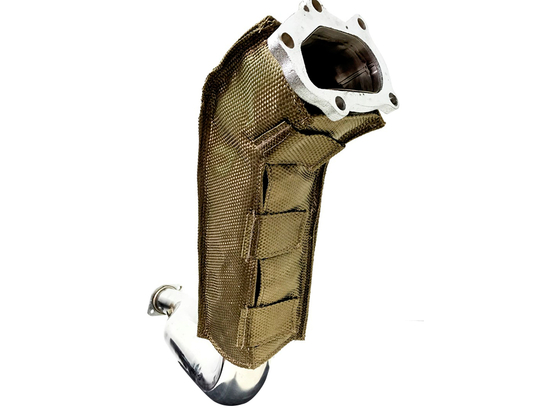
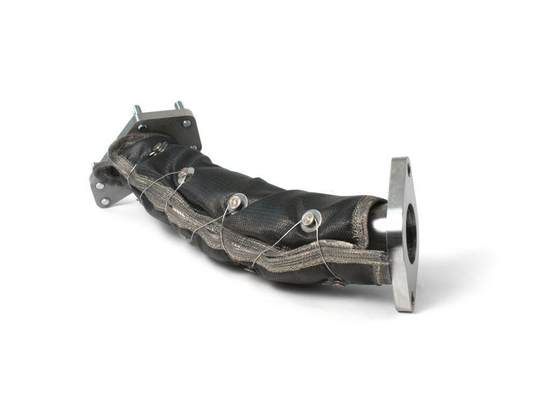
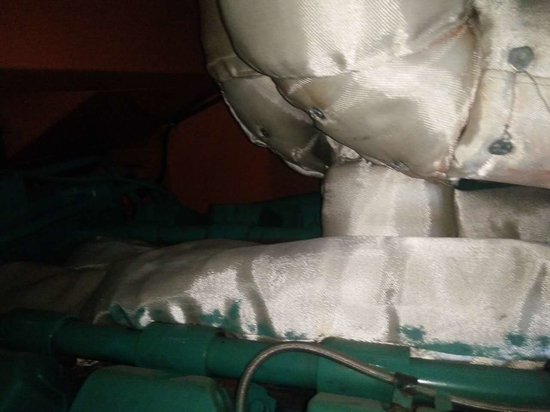
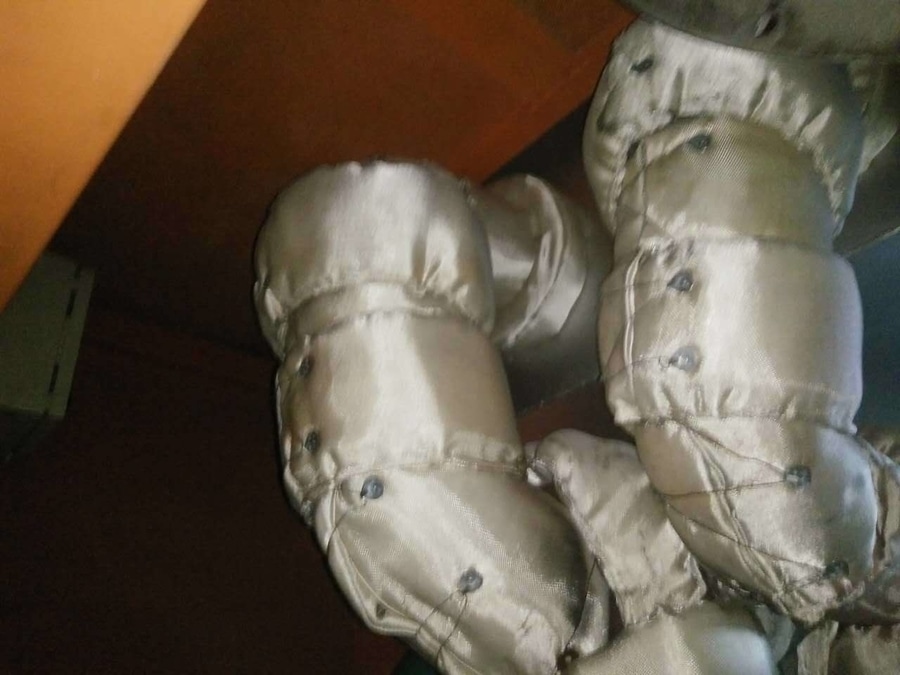
Depending on the application, automotive pipe insulation can be supplied as a flexible sleeve, wrapped insulation, removable blanket, multilayer thermal cover, or custom-fabricated protection system.
What Is Automotive Pipe Insulation?
Automotive pipe insulation is a thermal protection material or assembly installed around a vehicle pipe to reduce unwanted heat transfer.
The pipe itself may carry hot exhaust gas or operate at elevated surface temperature. Insulation introduces thermal resistance between the hot pipe and the surrounding environment.
A typical system can contain several layers:
Component Main Function
Inner fabric High-temperature contact protection
Insulation layer Reduces heat transfer
Reflective layer Controls radiant heat
Outer cover Protects the insulation
Fastening system Keeps the insulation securely installed
Not every automotive application requires all of these layers.
The construction should be selected according to the pipe temperature, available space, mechanical conditions, and required level of thermal protection.
Why Is Automotive Pipe Insulation Important?
Modern vehicle engine compartments are increasingly compact.
More components are installed in a limited space, while turbocharged engines, emissions-control systems, and high-performance exhaust systems generate substantial heat.
This creates a situation where a hot pipe may be located only a short distance from a temperature-sensitive component.
Automotive pipe insulation can help reduce this thermal interaction.
Typical objectives include:
Reducing exhaust pipe surface temperature
Limiting heat transfer to nearby components
Reducing radiant heat exposure
Protecting electrical wiring
Protecting rubber and polymer components
Managing engine compartment temperature
Improving thermal separation between components
Increasing protection around high-temperature piping
The insulation does not eliminate the heat generated by the exhaust system. Instead, it controls how that heat is transferred to the surrounding environment.
Which Automotive Pipes Can Be Insulated?
Automotive pipe insulation is not limited to conventional exhaust pipes.
Depending on the vehicle and thermal-management requirements, insulation can be applied to several types of high-temperature piping.
Exhaust Pipes
Exhaust piping is one of the most common applications.
The pipe may run from the exhaust manifold or turbocharger toward the catalytic converter, muffler, or exhaust outlet.
Insulation can be applied to selected sections where heat transfer creates a specific engineering problem.
Turbocharger Pipes
Turbocharger-related exhaust components can operate at particularly high temperatures.
Thermal protection around these sections can help reduce heat exposure to nearby engine components.
EGR Pipes
EGR piping carries hot exhaust gas and may be routed through areas containing temperature-sensitive components.
A properly selected insulation system can reduce external heat transfer from the EGR pipe.
Exhaust Elbows
Elbows can be more difficult to protect using standard sleeves because of their curved geometry.
Custom insulation covers can be fabricated to follow the bend.
Muffler and Exhaust Connections
Insulation can also be applied around selected muffler sections, exhaust connections, and other components where heat concentration is high.
Automotive Pipe Insulation Materials
Material selection depends on the thermal and mechanical requirements of the application.
Common materials include fiberglass, silica fabric, ceramic fiber, aluminized fabric, aluminum foil, and stainless steel reinforcement.
Material Typical Role
Fiberglass fabric Flexible high-temperature textile protection
Silica fabric Higher-temperature textile applications
Ceramic fiber High-performance thermal insulation
Aluminum foil Reflective radiant heat barrier
Aluminized fabric Flexible reflective outer protection
Stainless steel mesh Mechanical reinforcement
Silicone-coated fabric Protective flexible outer layer
The materials can be combined to create a multilayer construction.
For example, an automotive exhaust pipe may use a high-temperature inner fabric, thermal insulation, reflective layer, and protective outer cover.
Fiberglass Automotive Pipe Insulation
Fiberglass is frequently selected for automotive thermal protection because it offers flexibility and good high-temperature performance.
It can be used as a fabric layer surrounding the insulation or as part of a flexible sleeve construction.
Fiberglass-based insulation is suitable for many exhaust and engine-compartment applications where the operating temperature is within the material's specified range.
It is also useful when the insulation needs to conform to curved or irregular pipe geometry.
Silica-Based Automotive Pipe Insulation
Silica fabric is suitable for more demanding high-temperature applications.
It can be incorporated into insulation blankets, sleeves, wraps, and other thermal protection assemblies.
For exhaust components operating at particularly high temperatures, silica fabric can provide a high-temperature textile barrier while maintaining flexibility.
The actual material grade should be selected based on the continuous and peak operating conditions.
Ceramic Fiber for High Temperature Pipes
Ceramic fiber is generally used as a high-performance insulation layer rather than simply as an exposed outer fabric.
Its low thermal conductivity relative to many conventional materials makes it useful when substantial thermal resistance is required.
The thickness can be selected according to the required heat reduction and the available clearance around the pipe.
This is important in automotive applications because excessive insulation thickness may interfere with nearby components.
Reflective Automotive Pipe Insulation
Thermal insulation and radiant heat shielding perform different functions.
A thick insulation layer primarily reduces heat transfer through the protective system.
A reflective layer can help reduce radiant heat transfer from a hot surface toward nearby components.
For this reason, automotive pipe insulation may combine both technologies.
A typical multilayer construction might be:
Hot pipe → high-temperature fabric → insulation → reflective barrier → protective outer layer
This configuration can be useful where a hot exhaust pipe is positioned close to wiring, hoses, plastic parts, or other heat-sensitive components.
Automotive Pipe Insulation vs Exhaust Wrap
Automotive pipe insulation and exhaust wrap are related but not necessarily identical.
Exhaust wrap is generally a flexible material wrapped directly around the pipe.
Automotive pipe insulation can be engineered as a more structured system, including insulation layers, reflective barriers, protective fabrics, and removable fastening.
Characteristic Exhaust Wrap Automotive Pipe Insulation
Basic construction Wrapped material Single or multilayer system
Thermal insulation Application dependent Designed specifically for insulation
Reflective layer Optional Can be integrated
Custom geometry Moderate High
Removable design Limited Common
Service access Can be inconvenient Can be engineered
Complex automotive systems Suitable in selected cases Highly adaptable
The appropriate solution depends on the specific pipe and the thermal-management objective.
Removable Automotive Pipe Insulation
Removability is particularly useful in development vehicles, commercial vehicles, industrial vehicles, and engine systems requiring periodic maintenance.
A removable insulation cover can be opened without destroying the insulation material.
This can be useful around:
Exhaust flanges
Turbocharger outlets
EGR connections
Exhaust elbows
Sensors
Pipe joints
Inspection points
Fastening methods may include straps, buckles, hooks, lacing, wire, or other mechanical systems.
The fastening design must account for engine vibration and thermal expansion.
Custom Automotive Pipe Insulation
Vehicle piping frequently contains bends, offsets, brackets, flanges, sensors, and connection points.
A standard cylindrical sleeve may therefore leave gaps or create interference with surrounding components.
Custom automotive pipe insulation can be fabricated around the actual geometry.
A custom pattern can accommodate:
Straight pipe sections
Tight-radius bends
Elbows
Flanges
Reducers
Brackets
Sensor locations
Connection points
Adjacent components
The insulation can also be divided into several sections to simplify installation and servicing.
Automotive Pipe Insulation for Compact Engine Compartments
The thermal environment of a modern engine compartment can be highly concentrated.
A hot exhaust pipe may be routed near an intake system or electrical harness. Heat from the exhaust can then influence the surrounding components even when there is no direct physical contact.
Insulating selected sections of the pipe can create greater thermal separation.
This approach is especially useful when redesigning the entire exhaust routing is impractical.
Instead of moving the pipe, engineers can use localized thermal protection to manage the heat generated by the existing configuration.
Automotive Exhaust Pipe Insulation
Exhaust pipe insulation can be installed around selected portions of the exhaust system.
Not every section necessarily requires identical insulation.
For example, a system may require higher-performance insulation around the turbocharger outlet while using a lighter construction farther downstream.
This allows the thermal protection system to be optimized according to actual heat concentration.
The design can therefore use different insulation thicknesses, fabrics, or reflective layers for different sections.
EGR and High Temperature Automotive Piping
EGR systems create another important automotive pipe-insulation application.
An EGR pipe carries hot exhaust gases between engine components and the emissions-control system.
Because EGR piping can be routed close to wiring, hoses, intake components, and other systems, external heat management may be necessary.
The insulation design should consider:
EGR pipe temperature
Available installation space
Vibration
Thermal expansion
Required surface temperature
Nearby component sensitivity
Service requirements
A custom sleeve or removable blanket can be designed around the EGR pipe geometry.
How to Select Automotive Pipe Insulation
Material selection should start with the actual operating conditions.
Temperature
Determine both normal and maximum pipe surface temperature.
The selected insulation system should provide an appropriate operating margin.
Geometry
Measure the pipe diameter, length, bends, flanges, and connection points.
Complex geometry may require a custom-fabricated cover.
Clearance
Measure the distance between the hot pipe and nearby components.
This determines how much insulation can realistically be installed.
Vibration
Vehicle engines and exhaust systems experience continuous vibration.
The insulation and fastening system must remain secure during operation.
Environment
Consider exposure to moisture, oil, dirt, abrasion, road debris, and other environmental factors.
The outer material should be selected accordingly.
Maintenance
If the component must be accessed regularly, a removable insulation design is usually more practical.
Common Automotive Pipe Insulation Mistakes
Selecting Only by Maximum Temperature
A material's maximum temperature rating does not automatically make it suitable for every automotive environment.
Mechanical durability and environmental resistance must also be considered.
Ignoring Clearance
An insulated pipe has a larger outside diameter than the original pipe.
Insufficient clearance can cause contact with nearby components.
Using the Same Construction Everywhere
Different areas of the exhaust system may experience very different thermal conditions.
A zoned insulation strategy can be more effective.
Forgetting Radiant Heat
Thermal insulation alone may not address all radiant heat exposure.
A reflective layer can be useful when sensitive components are located close to the exhaust.
Making the Blanket Too Difficult to Remove
If service access is important, the insulation should be designed around maintenance from the beginning.
Custom Automotive Pipe Insulation from BSTFLEX
Automotive pipe insulation can be manufactured in different forms depending on the vehicle and component requirements.
BSTFLEX can develop custom thermal protection for exhaust pipes, EGR pipes, turbocharger components, elbows, manifolds, mufflers, and other high-temperature automotive piping.
Available constructions can combine fiberglass, silica, ceramic insulation, aluminized materials, reflective foil, protective fabrics, and mechanical fastening systems.
Custom dimensions can be developed from drawings, measurements, photographs, samples, or component specifications.
The objective is to provide a thermal protection system that fits the actual pipe geometry while maintaining the required temperature resistance, flexibility, clearance, and serviceability.