#Industry News
How food retailers can reinvent logistics and overcome supply chain challenges by 2025
Empowering retailers to master cold logistics while meeting new sustainability and customer expectations
Ensuring consistent product availability on supermarket shelves — especially for chilled and frozen goods — remains one of the biggest challenges in food retail. Managing cold chain logistics is a delicate balance between efficiency, sustainability, and reliability.
According to the FAO (Food and Agriculture Organization of the United Nations), nearly 14% of global food production is lost before reaching consumers, representing an estimated $400 billion in wasted value each year. From growers to distributors, every step of the supply chain is affected.
This article explores how supply chains function in large-scale food retail, how to reduce cold chain risks, and what trends are shaping logistics by 2025 — with sustainability at the center of innovation.
1. Understanding Supply Chains in Modern Food Retail
In large-scale retail, supply chain management covers the entire journey of goods — from harvest to the consumer’s plate. It coordinates the flow of dry, fresh, and frozen products across multiple stages: sourcing, storage, order fulfillment, transportation, and store replenishment.
The Key Stages of the Food Retail Supply Chain
Sourcing and purchasing: Retailers place supplier orders based on sales forecasts and market demand. Accurate demand planning keeps shelves stocked while minimizing waste.
Receiving and storage: Products arrive at temperature-controlled warehouses. Strict inspections ensure that goods are compliant, safe, and properly stored.
Order preparation: Items are sorted and assembled for individual store needs, following FIFO (first-in, first-out) principles and optimized delivery routes.
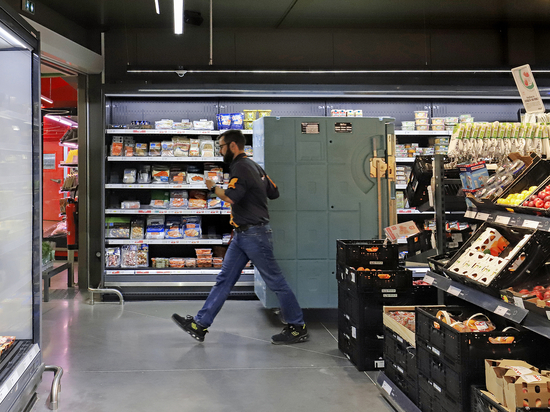
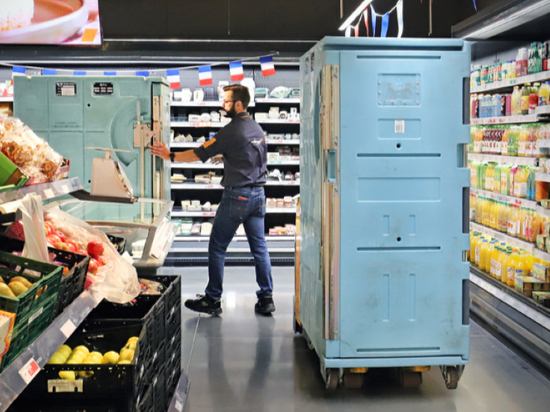
Distribution and delivery: Prepared orders are transported in refrigerated trucks or insulated containers, keeping the cold chain intact through the final mile.
In-store management: Once delivered, products are stocked quickly to maintain freshness and comply with rotation and hygiene standards.
The Core Requirements
A successful retail supply chain must be:
Responsive, to adapt to demand fluctuations,
Flexible, to adjust to new market conditions,
Compliant, with food safety and temperature regulations.
2. Key Levers to Optimize Cold Logistics
To guarantee consistent product availability while minimizing waste and costs, retailers can rely on several core strategies:
Accurate Demand Forecasting
Advanced planning tools help retailers predict consumer behavior based on real-time data, promotions, and seasonality. This ensures optimal stock levels — reducing both overstocking and shortages, particularly for perishable and temperature-sensitive goods.
Cold Chain Integrity
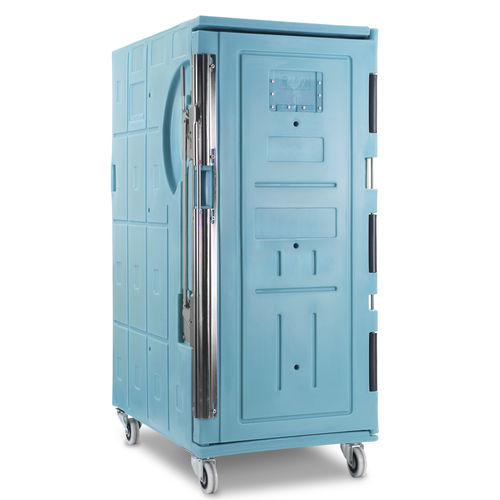
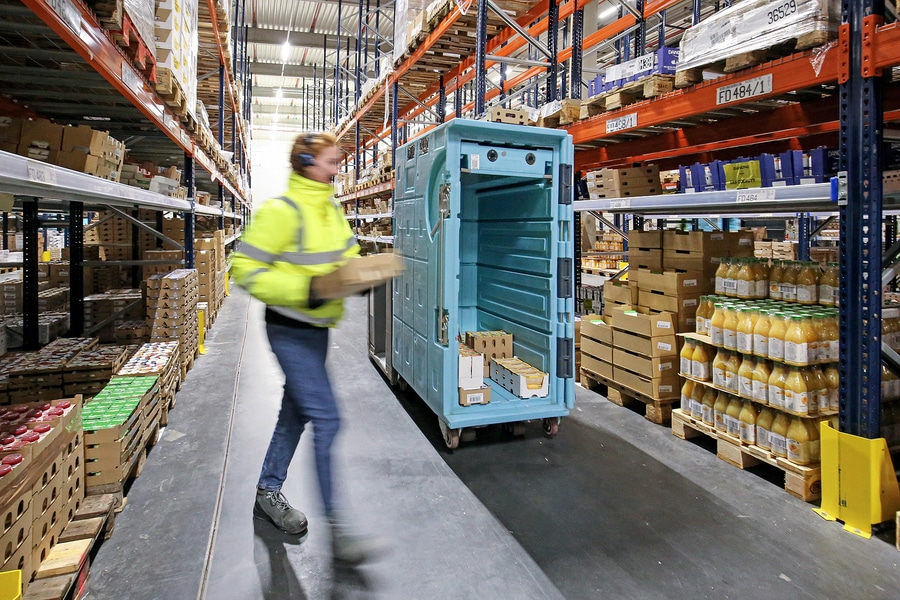
Preserving the cold chain is fundamental for product quality and safety. Temperature control must be continuous — from production to delivery. Using insulated containers or passive cooling systems adds reliability and reduces dependence on powered refrigeration.
Real-Time Monitoring and Traceability
IoT technologies and connected sensors now provide real-time visibility of products throughout the supply chain. They track temperature, humidity, and location, issuing alerts when deviations occur.
Traceability enhances both food safety and operational performance — enabling faster corrective actions and better decision-making.
Optimized logistics flows not only lower costs but also improve customer satisfaction and operational resilience.
3. Anticipating Tomorrow’s Logistics Trends
The retail sector is evolving rapidly, driven by environmental targets, shifting consumer expectations, and regulatory changes. By 2025, sustainability and technology are set to reshape the cold logistics landscape.
Sustainable Cold Logistics
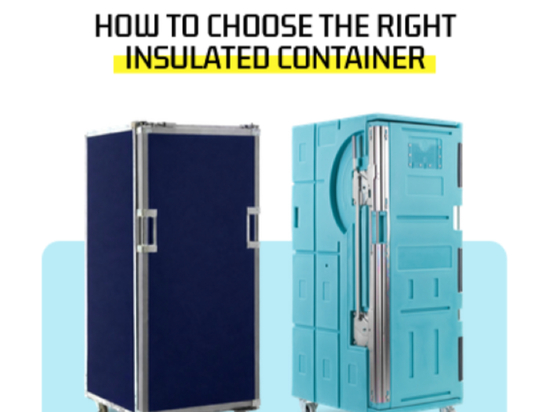
Environmental impact reduction has become a strategic priority. Energy-intensive refrigeration systems are being replaced or complemented by insulated containers offering passive thermal performance — such as those developed by Olivo. These containers maintain stable internal temperatures for extended periods, reducing both energy use and carbon emissions during transport.
What if logistics could be both cost-efficient and eco-friendly?
2025 Supply Chain Trends to Watch
Automation and Robotics
Smart warehouses are becoming more common. Robotics streamline order picking, packing, and sorting, improving accuracy while reducing manual workload.
IoT and Connected Traceability
Real-time data from IoT sensors enables precise temperature monitoring and shipment tracking. However, effectiveness depends on focusing on key indicators — temperature, door openings, and location — rather than overwhelming systems with excess data.
Multimodal and Collaborative Transport
Combining multiple transport modes (road, rail, sea) reduces costs and increases flexibility. Paired with insulated container technology, it supports energy-efficient cold transport.
Additionally, pooling logistics flows among different partners fosters resource sharing, lowers costs, and contributes to a collective, sustainable logistics ecosystem.
4. Building the Supply Chain of the Future
To master supply chain complexity in large-scale food retail, companies must focus on:
Anticipation, through predictive analytics that adjust stock levels in real time.
Cold chain reliability, enabled by robust, insulated transport solutions such as Olivo containers.
Prioritization, by organizing flows around high-turnover and short-shelf-life products.
Collaboration, by leveraging multimodal logistics and shared transport networks to reduce emissions and costs.
These pillars help retailers strengthen performance, improve sustainability, and deliver a better experience for both stores and end consumers.
Want to future-proof your cold supply chain?
Discover how optimized, energy-efficient logistics solutions can help your business stay competitive — and sustainable — by 2025.