#Product Trends
Insulated container supplier or cold chain logistics partner ?
rethinking a strategic decision
In many organizations, selecting an insulated container supplier is still treated as a
purely technical procurement decision. The container is chosen, integrated into
operations, and quickly becomes part of the background, rarely questioned as long
as it appears to “work.”
This perception is increasingly outdated.
Under growing regulatory pressure, stricter food safety requirements, and rising
logistics costs, insulated containers are no longer neutral assets. They are becoming
critical control points within the cold chain, directly influencing operational
performance, compliance, and cost structure.
This shift raises a more strategic question: are you working with a supplier, or with a
partner capable of supporting your cold chain performance over time?
When equipment becomes either a performance driver,
or a hidden risk
At the quotation stage, differences between suppliers often appear marginal. Specifications
may seem comparable, and pricing differences relatively small. However, these gaps tend to
widen significantly under real operating conditions.
A supplier typically focuses on delivering a compliant product that meets initial technical
requirements. A cold chain logistics partner, by contrast, looks beyond the product itself and
considers how it will perform in real-life conditions: rotation frequency, daily usage duration,
cleaning constraints, quality requirements, and evolving flow volumes.
This distinction is rarely visible at the beginning of a project. It becomes apparent over time,
particularly as operations scale, become more complex, or require consistent performance
without constant corrective adjustments.
Why technology alone is not a sufficient decision
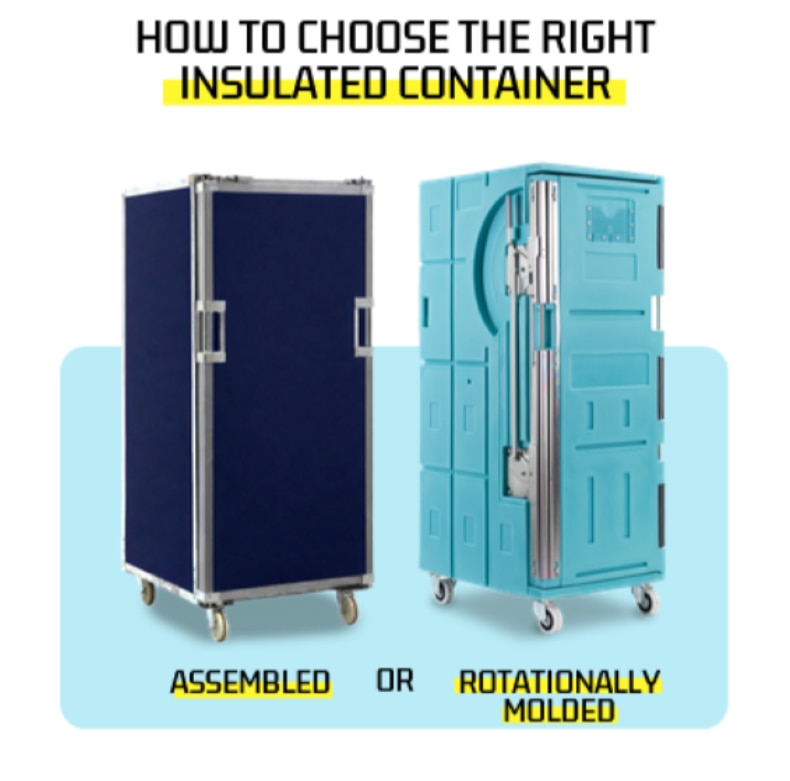
The choice between manufacturing technologies, such as assembled versus rotationally
molded containers, is often framed as a binary decision. In reality, performance is highly
context-dependent.
No technology is inherently superior in all situations. Thermal stability, hygiene performance,
and durability only reveal their true impact after several months of intensive use, when
containers are exposed to real operational constraints.
At that point, the limits of a purely technical selection approach become clear. What matters
is not the technology itself, but how well it aligns with actual usage conditions. This is where
a partner approach becomes critical: not to impose a predefined solution, but to ensure
coherence between technical choices and operational reality.
The insulated container : a strategic operational asset
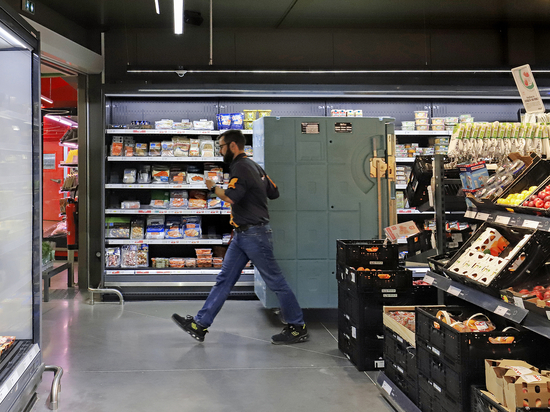
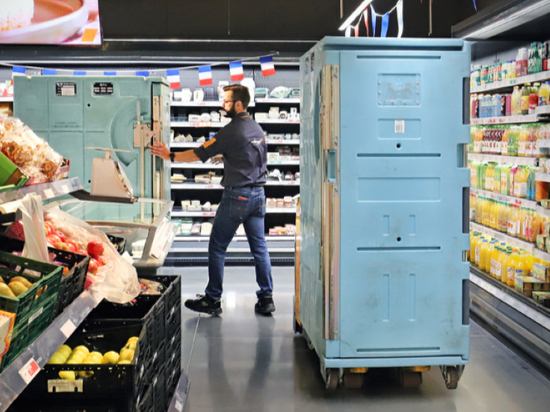
From an organizational standpoint, insulated containers are far from passive. They are
handled, moved, opened, cleaned, stacked, and transported across multiple environments,
warehouses, loading docks, trucks, and intermediate storage areas.
As a result, they have a direct impact on several key performance drivers.
They influence temperature stability, which remains the core requirement of any cold chain.
They affect operator workload, through ergonomics and handling efficiency. They shape the
fluidity of logistics flows, particularly in high-frequency or multi-site operations. They also
contribute to the occurrence, or prevention, of incidents, non-compliance events, and
product losses.
These effects are rarely visible at the time of purchase. They emerge gradually, often
becoming apparent only when issues arise, during audits, product losses, or operational
disruptions.
Total cost of ownership : the missing metric in many
decisions
Total Cost of Ownership (TCO) remains underutilized in equipment decisions, despite being
one of the few indicators capable of capturing the true economic impact of insulated
containers over time.
Beyond the initial purchase price, TCO includes product losses linked to temperature
deviations, operational time and labor costs, maintenance requirements, actual equipment
lifespan, and end-of-life management.
These costs do not appear immediately. They accumulate over time, often silently, until they
become structurally significant. Organizations that focus solely on upfront cost risk
overlooking these hidden drivers.
The difference between a supplier and a partner lies precisely in the ability to anticipate
these effects, rather than reacting once they have already impacted performance.
Moving toward a more strategic supplier relationship
Cold chain performance is not determined at the moment equipment is deployed. It is built
over time, through the alignment between equipment capabilities, operational practices, and
organizational objectives.
This is why some organizations are shifting their expectations. Rather than looking for a
simple insulated container supplier, they seek a partner capable of challenging their
assumptions, understanding their constraints, and guiding them toward more robust and
sustainable decisions.
Such an approach requires a deeper level of engagement, including operational analysis,
feedback loops, and continuous improvement.
Turning your equipment strategy into a competitive
advantage
For organizations operating in temperature-controlled logistics, insulated containers are no
longer a secondary concern. They are a lever for performance, compliance, and cost
optimization.
The question is no longer whether your containers meet specifications, but whether they are
actively contributing to the efficiency and resilience of your cold chain.
Next step : evaluate your current setup
If your insulated containers are currently treated as standard equipment, there is a strong
possibility that optimization opportunities remain untapped.
A structured assessment can help you identify whether your current setup:
● aligns with your real operational constraints
● minimizes total cost of ownership over time
● supports long-term cold chain performance without hidden risks
Contact us to review your current equipment strategy and explore how a partner-
driven approach can improve your cold chain performance.