#Product Trends
Transporting fresh products without refrigerated trucks
A scalable alternative to traditional cold chain logistics
Colruyt use case
Transporting fresh and frozen goods without refrigerated trucks is no longer theoretical.
Some logistics networks are already operating at scale under these conditions, maintaining
strict temperature control for up to 20 hours, without relying on active refrigeration during
transport or at store level.
This raises a strategic question for supply chain leaders: can you maintain cold chain
compliance while reducing dependence on energy-intensive infrastructure ?
Why traditional cold chain models are under pressure ?
Conventional cold chain logistics rely heavily on refrigerated trucks, cold storage facilities,
and in-store refrigeration. While effective, this model is capital-intensive and increasingly
exposed to energy cost volatility.
As networks scale, these constraints become structural. Daily deliveries, extended routes,
and large product assortments amplify both operational complexity and cost exposure.
A proven alternative: passive cold chain at scale
A fully operational example of this model is deployed by Colruyt France, in partnership with
Olivo cold logistics.
The key figures illustrate the scale and constraints of the system :
- 102 stores supplied daily from a single distribution center
- 5 delivery days per week, without exception
- Delivery routes reaching up to 350 km (approx. 3.5 hours transit time)
- Around 9,000 SKUs per store, including fresh and frozen products
- Approximately 2,500 employees depending on the system daily
- Daily flows of around 500 chilled containers and 100 frozen containers
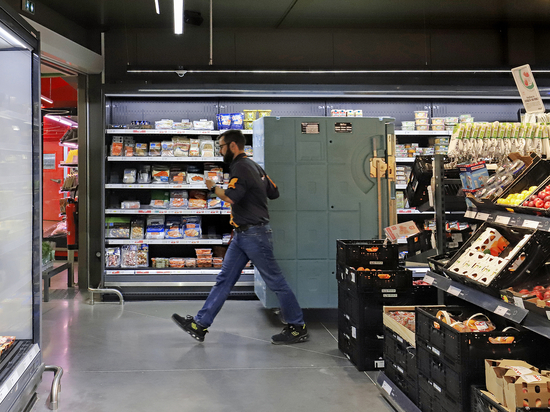
Critically, this entire network operates without refrigerated trucks and without cold rooms in
stores.
How it works : moving temperature control into the container
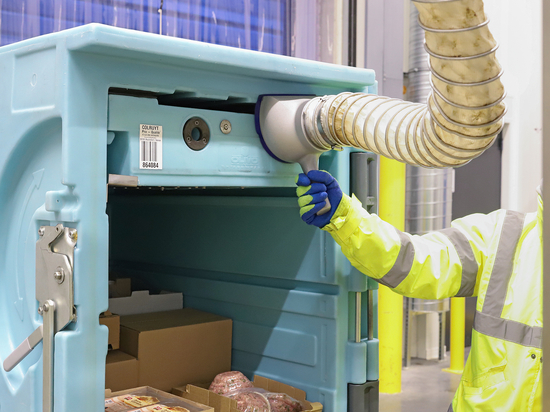
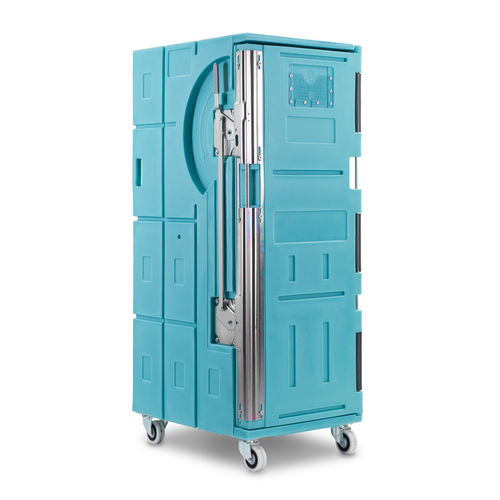
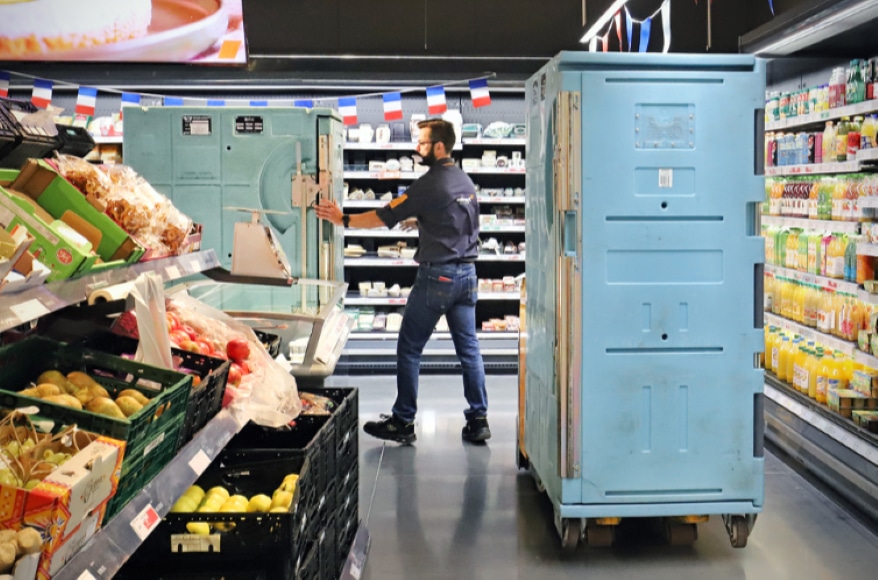
Instead of relying on refrigerated vehicles, temperature control is embedded directly into
insulated roll containers.
These containers are pre-conditioned at 0°C for approximately 2 hours and 40 minutes,
ensuring sufficient thermal inertia before loading. Products are then prepared in a +3°C
environment, before an automated cooling injection process is applied.
Once loaded, the containers maintain the required temperature throughout the entire
logistics cycle, from warehouse picking to in-store shelf replenishment, despite being
transported and stored in ambient conditions.
In-store operations typically follow a tight schedule. Deliveries are received between 5:00
AM and 7:30 AM, with shelf replenishment completed by 11:00 AM, while maintaining full
cold chain integrity.
What this changes for your operations
This model fundamentally shifts where cold is produced and controlled. Instead of being tied
to infrastructure, temperature management becomes mobile and modular.
The immediate impact is a reduction in infrastructure dependency. Eliminating refrigerated
trucks and in-store cold rooms significantly lowers both capital expenditure and operating
costs. At the same time, using standard vehicles increases transport flexibility and simplifies
fleet management.
However, this approach introduces new operational requirements. Performance depends on
strict adherence to pre-conditioning protocols, precise handling processes, and reliable
automation systems. In effect, infrastructure complexity is replaced by process discipline.
Is this model relevant for you ?
This approach is particularly relevant for organizations facing:
- high infrastructure or energy costs
- constraints on store space
- increasing delivery frequency
- the need to scale operations without heavy capital investment
If your network shares similar characteristics, multi-site distribution, mixed fresh and frozen
flows, and daily delivery cycles, this model becomes a credible alternative rather than a
marginal innovation.
From feasibility to deployment
Adopting a passive cold chain model requires more than equipment. It involves redesigning
logistics flows, validating thermal performance, and ensuring operational consistency at
scale.
The key question is not whether it works, it already does at scale, but whether it can be
adapted to your specific constraints.
Next step : evaluate your cold chain strategy
If you are exploring alternatives to refrigerated transport, the next step is to assess your
current logistics model against these parameters.
A structured evaluation can help determine :
- whether your delivery routes are compatible with up to 20 hours of thermal autonomy
- how to optimize loading, pre-conditioning, and delivery sequencing
- what level of operational discipline is required to ensure compliance
Contact us to assess your logistics setup and identify whether a passive cold chain mode
can reduce your costs while maintaining performance.